
Investigating Our Expanding Universe
The universe is expanding — but we’re still not sure how quickly! A new study investigates whether we can resolve the conflict between measurements of its expansion rate.

The universe is expanding — but we’re still not sure how quickly! A new study investigates whether we can resolve the conflict between measurements of its expansion rate.
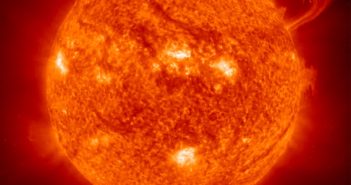
Astrobites reports on why we need to better understand the bubbling, broiling surfaces of stars in order to interpret tortoise-speed velocity shifts in starlight.

The CHIME radio telescope has a new goal: to hunt for the elusive fast radio bursts thought to occur across the sky.
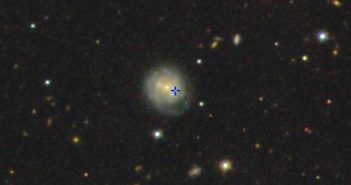
What do we know so far about the unusual transient event AT2018cow, nicknamed “the Cow”?
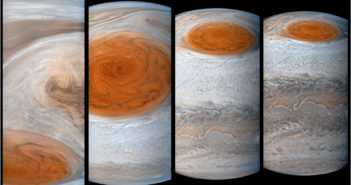
JunoCam has returned stunning high-resolution images of Jupiter’s Great Red Spot. What can we learn about the properties of this long-lived storm?
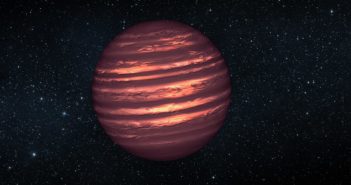
Astrobites reports on a mysterious brown dwarf, CWW 89Ab, that is significantly brighter than expected.
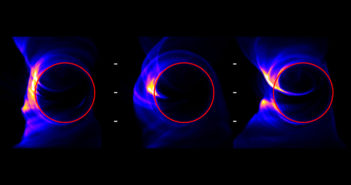
In 2006 an ambitious project was begun: creating the world’s largest telescope with the goal of imaging the shadow of a black hole. But how will we analyze the images this project produces?
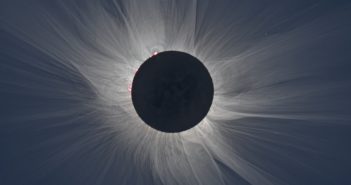
A deep-imaging campaign reveals intricate structures in the solar corona.
Modern astronomy is conducted via computers — and the Astropy project is a community resource designed for astronomers interacting with data.
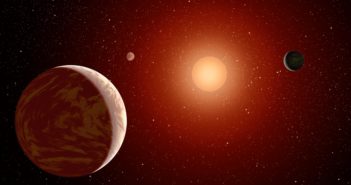
A guest author for astrobites reports on how Jupiter analogs in planetary systems might affect the development of planets closer to the star.
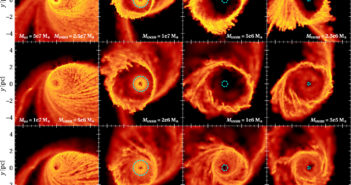
New simulations demonstrate what happens to gas caught in a gravitational tug-of-war in the nucleus of a galaxy.
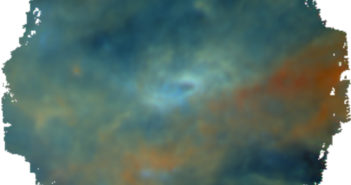
Scientists have made new detections of our galaxy’s supermassive black hole in far-infrared wavelengths, helping us to piece together a picture of this monster.