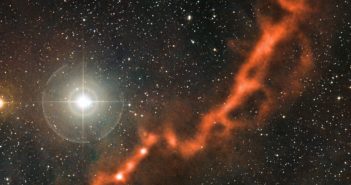
The Elder Generation of Taurus
Astrobites reports on the stellar membership roster for Taurus-Auriga, the nearest large star-forming region.

Astrobites reports on the stellar membership roster for Taurus-Auriga, the nearest large star-forming region.
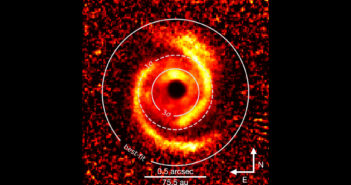
A new study hunts for a planetary-mass companion that may be driving the creation of these large-scale spiral arms.
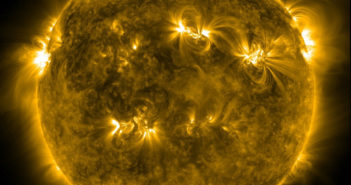
What causes the variability in the Sun’s mean magnetic field — the imbalance left over after averaging out all the magnetic flux regions on the Sun’s disk?
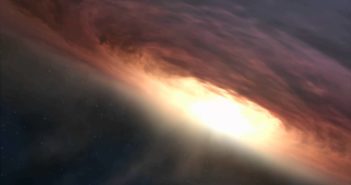
How can stellar-mass black holes attain the large sizes we’ve recently observed in merging binaries? The accretion disks surrounding supermassive black holes may help out!
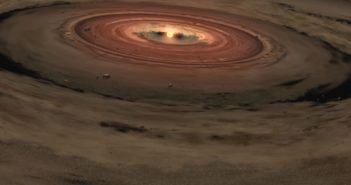
The outer reaches of our solar system harbor a number of mysterious features. Astrobites reports on whether a single stellar fly-by could help explain them all.
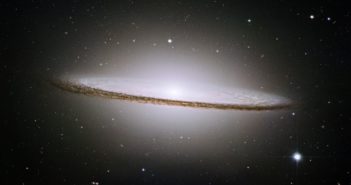
The Milky Way’s central bulge plays host to a population of old, red stars. What can a closer look at these stars tell us about their origin and distribution?
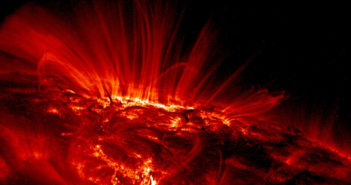
Shocks in the Sun’s atmosphere may be contributing to its mysteriously high temperatures. A new study explores these phenomena in more detail.
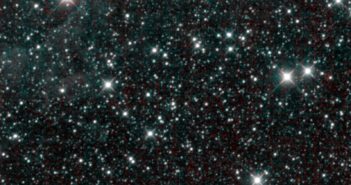
What sorts of variable objects can be found in a trove of infrared data? Astrobites reports on five years of WISE observations.
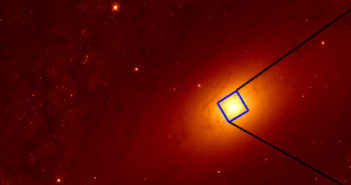
NGC 6744 is a twin of the Milky Way — but with a more active supermassive black hole at its center.

Could we hunt for planets around the black holes, neutron stars, and white dwarfs that live in binaries with companion stars?
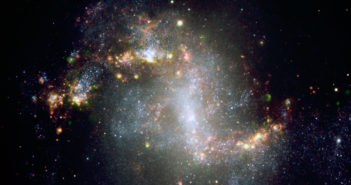
At some point in a galaxy’s life, it probably transitions from a star-forming factory into an old, red, inactive relic. What drives this change?
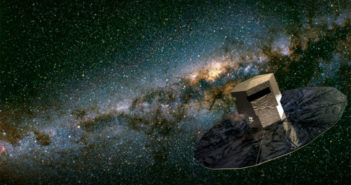
Astrobites reports on how the new Gaia data impacts our understanding of Kepler stars and planets.