Support for Today’s Reality of Astronomy Data
Modern astronomy is conducted via computers — and the Astropy project is a community resource designed for astronomers interacting with data.

Modern astronomy is conducted via computers — and the Astropy project is a community resource designed for astronomers interacting with data.
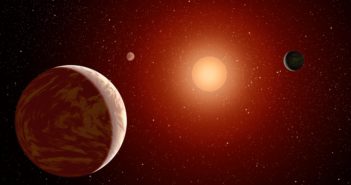
A guest author for astrobites reports on how Jupiter analogs in planetary systems might affect the development of planets closer to the star.
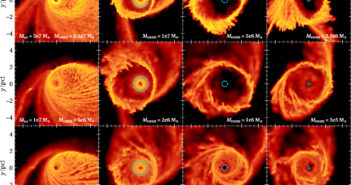
New simulations demonstrate what happens to gas caught in a gravitational tug-of-war in the nucleus of a galaxy.
Scientists have made new detections of our galaxy’s supermassive black hole in far-infrared wavelengths, helping us to piece together a picture of this monster.
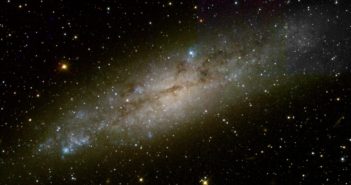
An amateur astronomer’s recent images led to the discovery of a supernova that occurred 14 years ago in a distant galaxy.
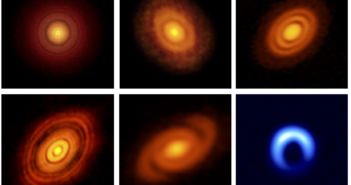
With the awesome power of ALMA, scientists have observed a variety of dust gaps in protoplanetary disks. Astrobites reports on a study of how these gaps might relate to planet formation.
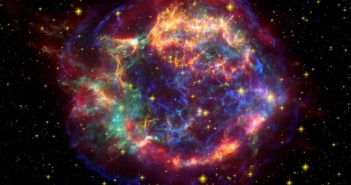
A guest author for Astrobites reports on how the ratio of various elements can inform our view of what happens during a supernova.
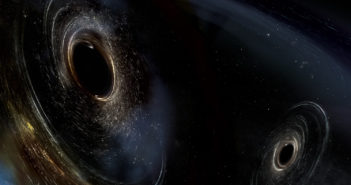
Has the rate at which black holes merge changed over time? And if so, how can we tell?
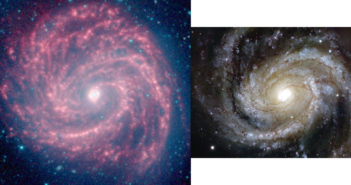
This stunning Spitzer infrared image of the galaxy M100 reveals star-forming clumps throughout its spiral arms.
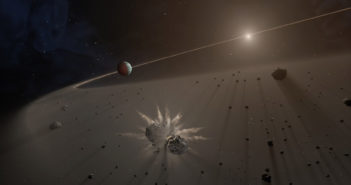
Pebbles may play a crucial role in the formation of gas-giant planets. Astrobites reports on how strong magnetic winds impact this process.
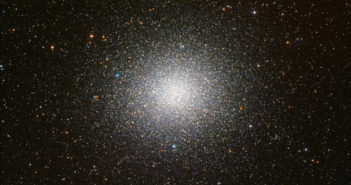
Globular clusters in the Milky Way are shedding their stars. How can we tell when this process began?
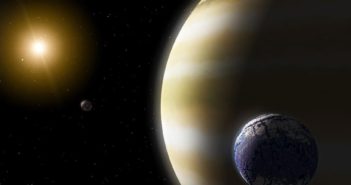
A new study explores the possibility of habitable moons orbiting gas-giant exoplanets.