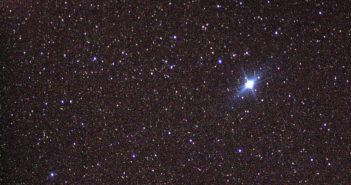
Perfect Blackbodies in the Sky
A recent study has uncovered 17 stars with truly blackbody spectra. What are these unexpected spherical cows, and what can we use them for?

A recent study has uncovered 17 stars with truly blackbody spectra. What are these unexpected spherical cows, and what can we use them for?
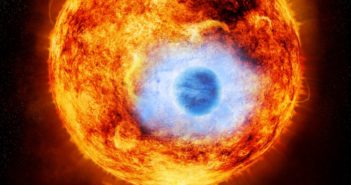
Astrobites reports on a new approach for mapping out the atmospheres and surfaces of distant exoplanets.
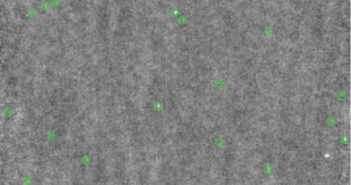
Look closely — what do you see in the center of this 4° x 4° stacked radio image?
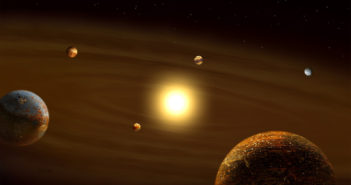
A new study has revealed that there may be a treasure trove of small planets hiding close in around low-metallicity stars.
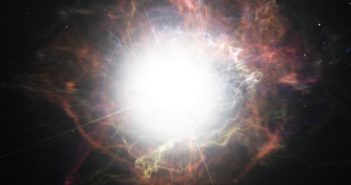
Three of the fastest known stars in the Milky Way have been discovered in Gaia data. What can they tell us about Type Ia supernova explosions?
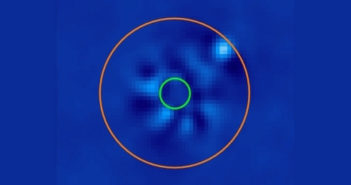
Exoplanet imaging has become progressively more advanced — but are we using the right statistics as we search for planets close in to their hosts? Astrobites reports.
Happy birthday, Research Notes of the AAS! RNAAS Editor Chris Lintott takes a look back at the past year.
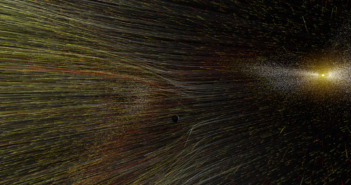
The solar wind has traditionally been separated into two states — the slow solar wind and the fast solar wind — based on its velocity. Does this simple categorization tell the whole story?
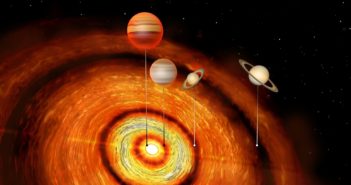
New observations of a young hot Jupiter — likely surrounded by a set of three gas-giant siblings — is raising questions about the formation of giant planets.
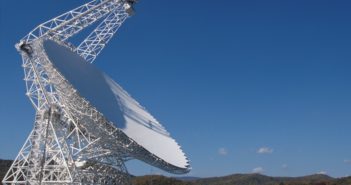
Astrobites reports on how machine learning has been used to find dozens of fast radio bursts previously hiding in data.
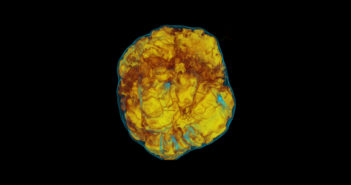
New simulations provide a stunning view of a collapsing star, revealing behavior that’s only evident in three-dimensional modeling.
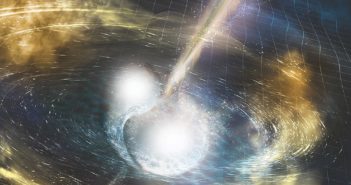
Could a burst of gamma rays from 2015 help us to understand the strange emission from the merging neutron stars observed last year?