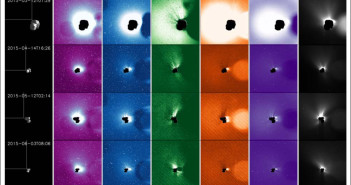
Featured Image: A Comet’s Coma
These images of comet 67P mark the first time we’ve been able to study the inner coma of a comet at this level of detail.

These images of comet 67P mark the first time we’ve been able to study the inner coma of a comet at this level of detail.
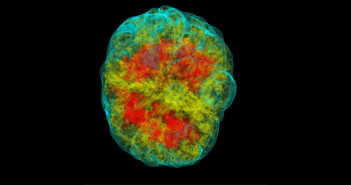
This stunning snapshot is from a complex computer simulation of a core-collapse supernova.
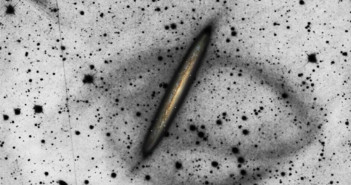
This negative image of NGC 5907 reveals the faint stellar stream that encircles the galaxy, forming loops around it — a fossil of a recent merger.
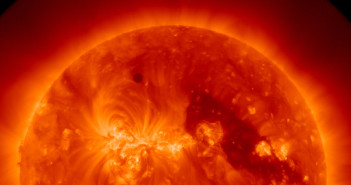
Imaging of Venus during its 2012 transit across the Sun revealed X-ray emission coming from the planet’s dark side. What was the source of this light?
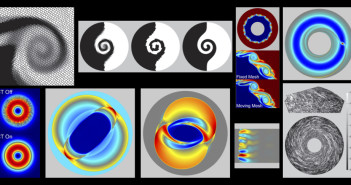
Creating the codes that are used to numerically model astrophysical systems takes a lot of work — and a lot of testing! Here’s a brief look at the some of the entrancing test outputs from the new DISCO code.

Hubble’s STIS instrument has made several new observations of debris disks around three nearby solar-analog stars.
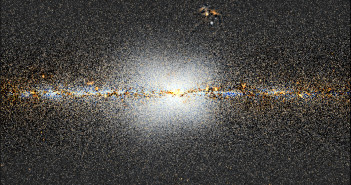
This contrast-enhanced image of the Milky Way from the WISE satellite reveals the X-shaped morphology of our galactic bulge.
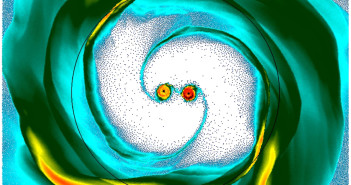
This image captures a scene from a simulation of a binary star system surrounded by a circumbinary disk.
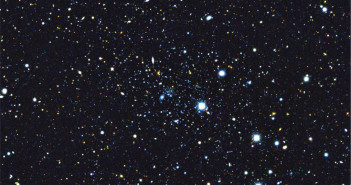
This beautiful image features Eridanus II, an ultra-faint dwarf galaxy that is orbiting the Milky Way.

These vibrant images of supernova remnants in the Large Magellanic Cloud were created to explore the galaxy’s interstellar medium.