Features RSS

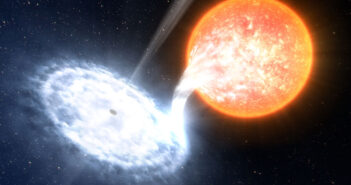
Artist's rendition of a brown dwarf.

Somewhere between planets and stars is a cool, cloudy class of objects called brown dwarfs. A new study suggests that swirling clouds at the poles of these intriguing objects may provide clarity on their observed characteristics.

Trendy Brown Dwarfs

Not quite big enough to spark hydrogen fusion, but not quite small enough to lump in with gas giant planets, brown dwarfs sit in a perplexing in-between space and are not yet fully understood. As space-based observations of brown dwarfs have evolved, recent studies have revealed long-term variations in the brightness of brown dwarfs as well as unexplained trends in their color and spectral characteristics depending on from which angle we happen to view them. 

Previous studies have theorized that these variations are driven by changes in atmospheric properties of brown dwarfs. Changes in the rotation of clouds in a brown dwarf’s atmosphere can explain the observed short-term variability, but the observed long-term variations are not well explained by this same property. Could there be a single contributor driving both the observed short- and long-term variations in brown dwarfs? 

Brown dwarf atmosphere components

Three modeled atmosphere components, which include the evolving polar vortex that changes with time, the ambient atmosphere that is stable, and the bands of active clouds that change and evolve on short timescales. The top panel shows a 30 degree inclination angle where the polar vortex is clearly visible and will impact the observed photometric and spectroscopic properties of the brown dwarf. The bottom panel shows an 80 degree inclination angle where the equatorial bands cover most of the brown dwarf’s disk. Click to enlarge. [Fuda & Apai 2024]

Polar Vortex Potential

Two astronomers at the University of Arizona, Nguyen Fuda and Dániel Apai, posit that the color– and spectral–inclination trends observed in brown dwarfs could be driven by polar vortices — an expanse of swirling air sitting atop the pole of a planet. To test this hypothesis, the authors explore three model atmospheres (no vortex, evolving vortex, and stationary vortex) and compare the simulated observations of each to understand how the presence or absence of a polar vortex may impact brown dwarf observations over time.

Depending on the viewing angle, we may see primarily equatorial cloud bands or we may see a significant portion or all of the brown dwarf’s pole. By making simulated observations across a series of inclinations, the authors find that both the evolving and stationary vortex models produce color–inclination variations that align with previous observations of brown dwarfs — polar vortices tend to have bluer infrared colors compared to the redder equatorial regions.

Brown dwarf trends with no vortex, evolving vortex, and stationary vortex.

Resulting variability–inclination (top) and color–inclination (bottom) trends across various inclinations for short-term (left) and long-term (right) simulated observations of each modeled scenario. Click to enlarge. [Fuda & Apai 2024]

All three scenarios, over short-term monitoring, exhibit variability–inclination trends. As more and more active equatorial bands become visible, short-term variations in brightness increase. On the other hand, over long-term monitoring, the evolving vortex scenario produces a variability-inclination trend opposite to that seen in the stationary and no vortex scenarios.

Solar System Similarities

Brown dwarfs share similar characteristics to gas giants, like those in our own solar system. Many observations of Jupiter, Saturn, Uranus, and Neptune reveal clear vortex-dominated poles that produce similar color and brightness variability. These planets, though smaller than brown dwarfs, show variations from pole to equator that grant validity to the idea of polar vortices being present in brown dwarf atmospheres.

Jupiter's South Pole

Jupiter’s bright blue south pole covered in vortices, swirling around like hurricanes. [NASA/JPL-Caltech/SwRI/MSSS/Betsy Asher Hall/Gervasio Robles]

What does this mean moving forward? The authors suggest that, based on their results, brown dwarf atmospheres are more complex than simpler, non-changing brown dwarf atmosphere models that have traditionally been used. As more long-term space-based observations of brown dwarfs become available, the polar vortex hypothesis can be tested further, allowing astronomers to unwind some of the mysteries of brown dwarfs. 

Citation

“The Polar Vortex Hypothesis: Evolving, Spectrally Distinct Polar Regions Explain Short- and Long-Term Light-Curve Evolution and Color–Inclination Trends in Brown Dwarfs and Giant Exoplanets,” Nguyen Fuda and Dániel Apai 2024 ApJL 975 L32. doi: 10.3847/2041-8213/ad87e9

illustration of a neutron star merger

With the Neil Gehrels Swift Observatory nearing the 20th anniversary of its launch, astronomers have demonstrated a new way to use the seasoned telescope. The technique, which involves rapidly slewing to the location of a gravitational wave signal, could open a window onto the critical first minutes after a neutron-star merger.

When Gravitational Waves and Radiation Meet

gravitational wave signal from a neutron-star merger

The “chirp” signal of the neutron-star merger GW170817, as seen by the Laser Interferometer Gravitational-wave Observatory in Livingston, Louisiana. [Caltech/MIT/LIGO Laboratory]

In 2017, researchers detected gravitational waves and electromagnetic radiation from the collision of two neutron stars for the first time. Just 1.7 seconds after the gravitational wave signal was detected, two all-sky gamma-ray observatories — the Fermi Gamma-ray Space Telescope and the INTErnational Gamma-Ray Astrophysics Laboratory (INTEGRAL) — happened to detect a burst of gamma rays from the collision.

As fortuitous as this detection was, Fermi and INTEGRAL lacked the localization ability needed to pinpoint the burst’s position. The delay in localization cost astronomers precious time, and it wasn’t until another 12 hours had passed that optical and ultraviolet emission from the collision was identified — wavelengths that are critical to collect as soon as possible to understand the physics of the merger and the cascade of element formation that follows. Is there a way to find a neutron-star merger faster?

Swift Follow-Up

In a recent article, Aaron Tohuvavohu (University of Toronto; California Institute of Technology) and collaborators showed how we can rapidly locate neutron-star mergers on the sky with an existing tool: the 20-year-old Swift Observatory. Gamma rays, which are produced just seconds after a neutron-star collision, are ideal for quickly spotting the radiation from a merger — and Swift has the most sensitive gamma-ray detector currently in operation. Once a gamma-ray source falls within Swift’s field of view, which spans 17% of the sky, the telescope has the ability to localize the source to within 1–3 arcminutes, giving follow-up telescopes sensitive to other wavelengths a small area to search. But unlike all-sky gamma-ray telescopes, Swift can’t look everywhere at once, raising the question of how to get the telescope to point toward the right place at the right time.

maps of on-sky localizations of gravitational wave signals

Demonstration of how the localization of a gravitational wave signal evolves as the time to merger decreases. Click to enlarge. [Tohuvavohu et al. 2024]

Tohuvavohu and collaborators outlined a way to use Swift to rapidly follow up on early-warning events — gravitational waves detected from inspiraling neutron stars before they merge. Essentially, after receiving notice of an impending neutron-star merger and a rough map of the merger’s location on the sky, Swift reorients to the likely location of the event, aiming to catch the gamma rays from the collision and pinpoint its location. But when is the best time for Swift to start turning toward the source? Current gravitational wave instruments can give up to 70 seconds of lead time before a neutron-star merger, but at that early time, they can only localize the event to an area spanning thousands of square degrees. As the merger draws nearer, the map of potential on-sky locations gets more precise, but waiting for better location information leaves Swift less time to move — and once the observatory begins slewing, it can’t be redirected until it’s finished moving.

Doubling the Odds

After being alerted to an imminent neutron-star merger, should Swift immediately race to the likeliest location, or should it wait to get a better idea of where the event is happening? Given the time required to wend toward the signal’s origin, curving to avoid forbidden zones too close to Earth or the Sun, Tohuvavohu’s team finds that it’s best for Swift to act on the earliest possible knowledge of where the merger is likely to happen, even though later maps are more accurate.

plot showing the fraction of gravitational wave events falling within the Burst Alert Telescope field of view as a function of time until merger

Fraction of gravitational wave events encompassed by the Swift Burst Alert Telescope field of view as a function of the notice given in advance of the merger. [Adapted from Tohuvavohu et al. 2024]

This method isn’t foolproof — Swift will sometimes rush to a location, only for it to become clear that the merger happened elsewhere — but the team estimated that it could more than double the rate at which neutron-star mergers are precisely localized. Quick localization, in turn, enables the rapid follow-up at optical and ultraviolet wavelengths that is key to distinguishing between competing merger models.

Future, more sensitive gravitational wave observatories will be able to detect the faint hum of spiraling neutron stars even longer before impact, helping Swift get into position more frequently. In the meantime, Tohuvavohu and coauthors recommend working to improve the speed at which notice of an impending neutron-star merger can be transmitted to Swift.

Citation

“Swiftly Chasing Gravitational Waves Across the Sky in Real Time,” Aaron Tohuvavohu et al 2024 ApJL 975 L19. doi:10.3847/2041-8213/ad87ce

odd radio circle ORC-1

Discovered in 2019, odd radio circles (ORCs) are among the newest and most mysterious astrophysical phenomena. New research examines how bubbles blown by black hole jets could create these striking features.

Stumped by Space ORCs

ORCs are faint extragalactic circles of radio emission that appear to be invisible at other wavelengths. As the number of known ORCs slowly climbs, researchers have begun to test possible formation mechanisms. Among the many possibilities are the jets of active galactic nuclei: luminous galactic centers powered by accreting supermassive black holes.

active galaxy Hercules A

The active galactic nucleus of the galaxy Hercules A powers the pair of immense jets emanating from the galactic center. [X-ray: NASA/CXC/SAO, Optical: NASA/STScI, Radio: NSF/NRAO/VLA]

In this hypothesis, active galactic nucleus jets filled with fast-moving charged particles carve out bubbles in the surrounding gas of the intracluster medium. When the cosmic rays smash into the intracluster gas, they produce electrons and positrons, which spiral around tangled magnetic field lines and emit radio waves. If the jets are viewed precisely on-axis, the resulting radio bubbles would be circular. Previous simulations of active galactic nucleus jets colliding with surrounding gas have created bubbles, but these bubbles haven’t reached the size of ORCs, which are hundreds of thousands or millions of light-years across.

Now, Yen-Hsing Lin (National Tsing Hua University) and Hsiang-Yi Karen Yang (National Tsing Hua University and National Center for Theoretical Sciences, Taiwan) have shown how active galactic nuclei can blow ORC-sized bubbles.

Galaxies Blowing Bubbles

Using three-dimensional magnetohydrodynamics simulations, Lin and Yang shot bipolar jets into intracluster gas, tracking the jet evolution and bubble formation across 200 million years of simulation time. The team focused on two of their simulation runs, which created bright-edged circles of radio emission that are roughly the size of known ORCs.

simulated and observed ORCs

Comparison of simulated radio images (left column) and observations (right column) of ORCs. [Lin & Yang 2024]

These simulated ORCs arise from jet-inflated bubbles viewed straight down the axis, as predicted, but further simulations showed that the bubbles produce ORCs when viewed up to 30 degrees off-axis. (At larger angles, they still produce intriguing radio structures but lose their distinct circular shape.) This result relaxes the requirement that the jets be viewed exactly on-axis.

A critical factor in determining whether a galaxy’s jets produce an ORC is the ability of the tenuous jets to completely excavate the higher-density intracluster gas that it interacts with. For this reason, low-mass galaxy clusters, which contain less intracluster gas, may be more likely to host ORCs.

Another Way of Looking

simulated X-ray observations of odd radio circles

Simulated X-ray observations by Chandra (top), AXIS (middle), and Athena (bottom). The planned AXIS and Athena missions could achieve higher signal to noise than Chandra can in far less time. [Lin & Yang 2024]

Lin and Yang explored other characteristics that could support the jet-blown bubble hypothesis. They found that the simulated radio rings are clumpy, varying in brightness around the ring, which could potentially be seen in high-resolution observations.

As for observations outside radio wavelengths, the team found that only certain ORCs would produce enough X-rays to be picked up by the Chandra X-ray Observatory, and even those would require 11.5 days of observing time. Based on these results, it’s unsurprising that ORCs have so far appeared invisible at X-ray wavelengths — but that might change. Two X-ray telescopes slated to launch in the 2030s, NASA’s Advanced X-ray Imaging Satellite (AXIS) and the European Space Agency’s Advanced Telescope for High-ENergy Astrophysics (Athena), could reduce the necessary observing time to just 4 hours.

Going forward, Lin and Yang aim to continue their simulations, investigating the absolute brightness, polarization, and other properties of the radio emission, allowing for better comparisons with observations and a greater understanding of ORC origins.

Citation

“Active Galactic Nucleus Jet-Inflated Bubbles as Possible Origin of Odd Radio Circles,” Yen-Hsing Lin and H.-Y. Karen Yang 2024 ApJ 974 269. doi:10.3847/1538-4357/ad70af

dwarf galaxy UGCA 307

Researchers have discovered an extremely isolated galaxy. The galaxy, dubbed “Hedgehog” for its small size and isolated nature, lies roughly 5.5 million light-years from the nearest galaxy group and isn’t forming any stars, making it a rarity among dwarf galaxies.

Messier 63 with a stellar stream

Messier 63’s faint, looping stellar stream, highlighted by the negative image surrounding the main body of the galaxy, is thought to be a disrupted dwarf galaxy. [Adapted from Giuseppe Donatiello / Michele Trungadi; Public Domain]

One Is the Loneliest Number

Small but fascinating, dwarf galaxies are the most common type of galaxy in our universe. At most containing roughly 1% as many stars as the Milky Way, these delicate galaxies are easily disrupted by the gravitational pull of larger galaxies. These interactions can pull dwarf galaxies apart into stellar streams or put a stop to their star formation.

Far from the influence of larger galaxies, though, isolated dwarf galaxies tend to churn out new stars; only 0.06% of isolated dwarf galaxies are quiescent, lacking new stars. When a quiescent dwarf galaxy is found far from other galaxies, astronomers attempt to puzzle out why the galaxy is dormant.

Discovering a Hedgehog

A Princeton University team led by Jiaxuan Li (李嘉轩) was searching for dwarf galaxies orbiting the galaxy NGC 5068 when they spotted a small galaxy cataloged as dw1322m2053. Initially flagged as a possible satellite of NGC 5068, placing it 17 million light-years away, dw1322m2053’s mottled appearance suggested that the galaxy was far closer — close enough for its irregular distribution of stars and star clusters to be faintly visible.

three views of dw1322m2053 aka the Hedgehog galaxy

Three views of dw1322m2053 aka Hedgehog. The galaxy is visible at optical and near-infrared wavelengths (left and center images) but has not been detected in the ultraviolet (right image). Click to enlarge. [Li et al. 2024]

After performing follow-up observations with the 6.5-meter Magellan Baade Telescope, the team estimated the distance to the galaxy using the surface brightness fluctuation method. This method leverages the fact that galaxies aren’t equally bright across their surfaces, and these variations in brightness are more clearly visible in nearby galaxies than faraway ones. By calculating the pixel-to-pixel variation in surface brightness, Li’s team found that dw1322m2053 was far closer than initially thought, just 7.8 million light-years away.

An investigation into the galaxy’s neighborhood earned it a new moniker: Hedgehog. Like its adorably prickly namesake, Hedgehog is small and solitary: there are no galaxies within 3.3 million light-years and no galaxy groups within 5.5 million light-years, making it one of the most isolated dwarf galaxies known.

How to Quench an Isolated Galaxy

location of the Hedgehog galaxy relative to other galaxies

A view of Hedgehog’s neighborhood. The galaxy’s closest neighbors are shown in orange. The purple circles show the virial radii of the galaxy groups. You can view an interactive version of this figure here. [Adapted from Li et al. 2024]

In addition to its remarkably remote location, Hedgehog is also notable for its lack of star formation. The galaxy is reddish with no visible star-forming regions or dark dust lanes that could harbor young stars. The lack of ultraviolet emission, as demonstrated by archival data, suggests that there has been no star formation in this galaxy in the past 100 million years — but why?

Li’s team found that Hedgehog is most likely a backsplash galaxy, meaning that it passed close enough to a galaxy group to have its star-forming gas stripped away before being slingshotted into empty space. Given the distance to the closest galaxy group, Centaurus A, and the age of Hedgehog’s stars, this scenario is possible, but a more refined estimate of Hedgehog’s age is necessary to fully assess this possibility.

There could be an even simpler explanation, though: with a stellar mass of just 631,000 solar masses, Hedgehog is on the small side, even for a dwarf galaxy. At such a small size, it’s possible for star formation to be halted in various ways, including by passing through a patch of intergalactic gas or by evaporating away its own star-forming gas. Future observations will help to explain why Hedgehog has been hibernating.

Citation

“Hedgehog: An Isolated Quiescent Dwarf Galaxy at 2.4 Mpc,” Jiaxuan Li et al 2024 ApJL 975 L23. doi:10.3847/2041-8213/ad5b59

Sculptor Dwarf Galaxy

Though the majority of the mass in the universe lies in dark matter, many mysteries remain about its nature. A new study suggests that the smallest and faintest galaxies hold the key to unlocking how dark matter interacts within the universe.

Core-Cusp Conundrum

Surrounding the Milky Way are tiny faint galaxies — known as satellite galaxies — millions of times smaller than the massive galaxy they orbit. Despite their small sizes, these satellites are of huge importance in understanding the behavior of dark matter. In the leading cosmological model, called lambda cold dark matter (ΛCDM), dark matter is cold, collisionless, and interacts with normal matter only by way of gravity.

Core vs cusp diagram

From simulations, the expected shape (cusp) of a galaxy’s dark matter density profile is shown with the red curve, while the observed shape (core) is shown with the blue curve. As we approach the galactic center, a cuspy profile peaks at high density, and the cored profile levels off at a lower density. Click to enlarge. [Lexi Gault]

Galaxy formation and evolution simulations using the ΛCDM model predict galaxies to form within dark matter halos that have density distributions that peak in the center, or reach a cusp. While this seems to be true on large scales like galaxy clusters, individual galaxies often appear to have smoother dark matter distributions. When enough normal matter enters the picture, feedback from newborn stars, tidal interactions, and other processes can flatten out the dark matter distribution, transforming the central cusp into a central core.

However, according to ΛCDM, there should exist very low-mass galaxies — like the faintest satellite galaxies that orbit the Milky Way — that do not have enough mass to change an originally cuspy dark matter distribution into a cored one. If observations reveal that even these small galaxies have cored dark matter distributions, that may mean that dark matter may not behave as expected in the ΛCDM paradigm.

Dark Matter Distributions

In order to investigate dark matter distributions at the smallest scales, Jorge Sánchez Almeida (Institute of Astrophysics of the Canary Islands; University of La Laguna) and collaborators analyze the stellar count distribution of six ultra-faint dwarf satellites of the Milky Way and the Large Magellanic Cloud. These galaxies have cored stellar surface density distributions, suggesting that their underlying dark matter distributions may be cored as well.

Histograms showing slope distributions

Histograms showing how each considered dark matter profile compares to the observations, where NFW corresponds to a cuspy distribution, Plummer corresponds to a cored distribution, and the ρ230 is in the middle of the two. The the histograms plot the distributions of the innermost slopes for the fits where a slope close to 0 means the profile flattens, and a more negative slope means a steeper rise in the center. The cored (Plummer) fit aligns best with the observed galaxies. Click to enlarge. [Modified from Sánchez Almeida et al 2024]

Through estimating the dark matter distribution function — a function that describes how dark matter is spread out in a given galaxy — for the given sample galaxies’ stellar surface densities, the authors find that a cored dark matter distribution agrees with the observations. The expected cusp profile fit is significantly different from the observed properties of these small galaxies. 

Beyond Standard

Given that a cored dark matter distribution seems to fit best for these ultra-faint galaxies, the authors suggest that dark matter may not behave as the standard cold dark matter model anticipates. Instead, dark matter may be warm, self-interacting, or fuzzy. However, could other factors be driving the cored distributions of these galaxies?

The author’s analysis hinges on several assumptions that could blur their results. To address these concerns, they carefully consider properties like stellar feedback contributions, tidal interactions, velocity distributions, and other properties important to their analysis. When changing these assumptions slightly, in ways still physically reasonable for very low-mass galaxies, the ultra-faint dwarfs still appear to reside in cored dark matter distributions.

What does this mean? While the standard ΛCDM model explains large-scale structures of the universe well, it does not adequately characterize what is observed on smaller scales — like the Milky Way’s satellites. Though the exact nature of dark matter is still unknown, cold and collisionless dark matter does not likely produce the ultra-faint galaxies’ cored profiles. Thus, further studying the lowest-mass galaxies in the universe may reveal new characteristics of dark matter beyond the standard model.

Citation

“The Stellar Distribution in Ultrafaint Dwarf Galaxies Suggests Deviations from the Collisionless Cold Dark Matter Paradigm,” Jorge Sánchez Almeida et al 2024 ApJL 973 L15. doi:10.3847/2041-8213/ad66bc

simulation of a tidal disruption event

There are many ways for a star to meet its end: suddenly and spectacularly, as a supernova; gradually and gracefully, as a white dwarf wreathed in a planetary nebula; and gruesomely, torn apart by a black hole. Tidal disruption events, in which a star gets too close to a black hole and is ripped apart by tidal forces, play out over the course of months or years in galaxies across the universe.

First predicted by theorists in the 1970s, the first tidal disruption event candidate was discovered in X-ray data collected in 1990–1991 by the ROSAT All Sky Survey. While early candidates were identified by their bright, transient X-ray emission, the majority of candidates today are found by optical surveys. As the number of known tidal disruption events grows, so does the diversity of these events, creating new sub-classes like partial tidal disruption events, in which just a fraction of a star’s atmosphere is torn away, or repeating tidal disruption events, in which a star is progressively peeled apart each time it draws near a black hole.

Researchers have analyzed observations of dozens of tidal disruption events, and the number of known events is growing rapidly thanks to wide-field searches for astrophysical transients. The upcoming Rubin Observatory’s Legacy Survey of Space and Time alone is predicted to discover 1,000 tidal disruption events per year. Today, we’ll explore three research articles that probe various aspects of tidal disruption events, seeking to understand these untimely ends of unsuspecting stars.

Signature of a Tilted Disk

When a supermassive black hole rips a star apart, some of the star’s gas is cast off into the galaxy, and some of it collects in an accretion disk around the black hole. This searingly hot disk is the source of the ultraviolet and X-ray emission we see from afar, and variations in the disk’s emission can tell us about the particular characteristics of a tidal disruption event.

plot of X-ray counts per second and ultraviolet flux density for AT2020ocn

Demonstration of the event’s different behavior at X-ray (top) and ultraviolet (bottom) wavelengths. Click to enlarge. [Adapted from Cao et al. 2024]

Zheng Cao (SRON Netherlands Institute for Space Research; Radboud University) and collaborators used models of a tilted accretion disk to interpret observations of a highly variable tidal disruption event candidate discovered in 2020. In the first hundred days after its discovery, AT 2020ocn churned out multiple X-ray flares before settling down into calmer behavior. Some observations showed semi-regular X-ray brightness changes with a cadence of about 17 days, which the team suspected were due to precession of the accretion disk. Curiously, AT 2020ocn showed no sign of flares in the ultraviolet, instead fading gradually from its initial brightness at those wavelengths.

To learn more, Cao’s team analyzed and modeled ultraviolet and X-ray observations of AT 2020ocn from Swift Observatory, XMM-Newton, and the Neutron star Interior Composition Explorer (NICER). The team found that AT 2020ocn’s behavior can be explained by a star that was initially traveling at an angle relative to the direction of the black hole’s spin, producing an accretion disk tilted in the same direction as the star’s motion. Over time, the inner part of the disk becomes aligned with the black hole’s spin, making the disk precess over time and changing its orientation from our point of view. The timeframe of these changes match what’s predicted as well: flares lasting 1–10 days, with the flaring behavior persisting for less than 200 days overall.

Cao and coauthors noted that their modeling has limitations. For example, the model handles a change in the disk’s tilt by changing the observer’s position rather than manipulating the actual tilt of the disk, which may not fully capture the dynamic behavior of a tilted, precessing disk. Similarly, it’s possible that the inner disk is also warped, creating a complicated scenario in which the disk periodically partially obscures itself.

In addition to enhancing our understanding of AT 2020ocn’s behavior, the team’s findings may apply to other tidal disruption events with flares that turn off after a few months and ultraviolet emission that doesn’t flare at all.

Modeling a Missing Structure

While the bright ultraviolet and X-ray emission of a tidal disruption event is readily explained by a super-heated accretion disk circling a black hole, the origins of these events’ optical emission is less understood. The optical emission from a tidal disruption event appears to arise from surprisingly cool, slow-moving gas tens to hundreds of astronomical units from the black hole. Where is this emission coming from?

plots showing the evolution of the gas column density during a tidal disruption event

The evolution of the gas column density over the course of a year during a tidal disruption event. You can see an animation of this figure here. [Price et al. 2024]

To answer this question, a team led by Daniel Price (Monash University) modeled the destruction of a solar-mass star by a million-solar-mass black hole, tracing the changes in the debris and its emission properties over a full year of simulation time. Using general relativistic smoothed particle hydrodynamics modeling, the team observed the star being stretched into a stellar spaghetti noodle, half of which collects around the black hole and half of which is cast away. As the narrow stream of gas circles the black hole, it collides with itself, causing some of the material to fall toward the black hole and some of it to form an outflow.

Over time, the outflow takes the shape of a thin expanding bubble. This structure closely resembles a hypothesized featured called an Eddington envelope, which is thought to capture high-energy emission from the disk and accretion stream, reprocessing it to generate the optical emission researchers observe. This is the first time such a structure has formed self-consistently in simulations, representing a breakthrough in the understanding of tidal disruption event emissions.

A Chemical Conundrum

In addition to illuminating the physics of accretion and outflows in general, tidal disruption events can also clue us in to the properties of individual stars. Tidal disruption events often show prominent spectral lines, allowing researchers to study the chemical compositions of individual stars in the cores of distant galaxies — a population that’s otherwise difficult to examine closely.

The chemical analyses of certain tidal disruption events have revealed surprisingly large ratios of nitrogen to carbon (N/C ratio) in the disrupted stars. As Brenna Mockler (The Observatories of the Carnegie Institution for Science) and collaborators explain, a high N/C ratio seems to suggest that the disrupted star was a relatively massive one (>2 solar masses), bulky enough for the CNO cycle to take place in its interior. The CNO cycle produces energy by fusing hydrogen into helium and shifts the proportions of carbon and nitrogen, gradually increasing the amount of nitrogen relative to carbon. However, recent research suggests that the N/C ratios of certain events are even larger than what’s expected for the disruption of a massive star.

calculated N/C ratios for tidally disrupted stars

Comparison of the N/C ratios relative to the solar value for stripped stars (red lines; the different line styles represent stars at different stages of their helium-burning lifetimes) and normal stars (blue lines; the different line styles represent results for different metallicities). Click to enlarge. [Mockler et al. 2024]

To explore possible reasons, Mockler and collaborators simulated the disruption of a star that has lost its outer envelope — a stripped star. These stars are thought to be created in interacting binary systems. Unlike typical main-sequence stars, stripped stars have outer layers that are poor in hydrogen and rich in helium and nitrogen, and thus have higher N/C ratios. Mockler’s team compared the results of the simulated tidal disruptions of two main-sequence stars with masses of 2 solar masses (one with the same abundance of metals as the Sun and one with three times the metal abundance) and a stripped star that was initially 3 solar masses but has dwindled to just 0.58 solar mass.

The team found that the 2-solar-mass main-sequence stars, regardless of metallicity, could not attain the extreme N/C ratios seen in some events. For example, the tidal disruption event ASASSN-14li appears to have an N/C ratio greater than 300 times the Sun’s ratio. This is similar to the predicted N/C ratio for stripped stars but 10 or more times larger than predictions for a 2-solar-mass main-sequence star. The N/C ratios of tidally disrupted stripped stars appear to decrease over time, while the observed N/C ratios of normal main-sequence stars were found to increase over time, providing another avenue to determine the identity of a star after its demise.

Citation

“Tidal Disruption Event AT2020ocn: Early Time X-Ray Flares Caused by a Possible Disk Alignment Process,” Z. Cao et al 2024 ApJ 970 89. doi:10.3847/1538-4357/ad496f

“Eddington Envelopes: The Fate of Stars on Parabolic Orbits Tidally Disrupted by Supermassive Black Holes,” Daniel J. Price et al 2024 ApJL 971 L46. doi:10.3847/2041-8213/ad6862

“Tidal Disruption Events from Stripped Stars,” Brenna Mockler et al 2024 ApJL 973 L9. doi:10.3847/2041-8213/ad6c34

simulation snapshot showing neutron stars about to merge

The collapse of an extremely dense, highly magnetized stellar remnant into a black hole is an extreme event. New simulations explore what happens when a magnetar collapses into a black hole, providing a potential connection between these events and gamma-ray bursts.

Becoming a Black Hole

Crab Nebula

A multi-wavelength view of the Crab Nebula, the remnant of a supernova that birthed a neutron star. The neutron star powers a pulsar wind nebula, shown in blue. [X-Ray: NASA/CXC/J.Hester (ASU); Optical: NASA/ESA/J.Hester & A.Loll (ASU); Infrared: NASA/JPL-Caltech/R.Gehrz (Univ. Minn.)]

When massive stars die, they collapse in upon themselves and can leave behind their condensed cores in the form of neutron stars. For many stars, the journey ends here: over time, neutron stars slowly cool, spin down, and fade. Others have a different final destination: if one neutron star collides with another, the remnant of the merger can collapse further, becoming a black hole.

This process can be nearly instantaneous, the merger remnant shrinking down to a black hole in just milliseconds. Sometimes, though, the merger remnant survives for several hours, coalescing into a rapidly spinning, highly magnetized neutron star called a magnetar. As the magnetar sheds energy through its outflowing magnetized wind, it’s no longer able to support itself, and it collapses into a black hole. What a distant observer might see when this happens is not yet clear.

Waves, Shocks, and Rays

To understand what happens during a magnetar’s collapse, Elias Most (California Institute of Technology) and collaborators turned to complex general relativistic magnetohydrodynamic simulations. Magnetar collapse been modeled before, but this study improves upon previous work by tackling a full magnetohydrodynamic approach to the problem, allowing the team to investigate the role that shocks play during and after the collapse. Because astrophysical shocks provide a way to accelerate particles and generate high-energy radiation, a powerful shock from a collapsing magnetar could be a source of gamma-ray bursts: brief, powerful flashes of gamma rays of unknown origin.

plot of waves around a newborn black hole

Magnetohydrodynamic waves in the magnetosphere after the magnetar collapses. The newborn black hole is at the center, and its spin axis lies along the z-axis. Green lines show the magnetic field. [Most et al. 2024]

The team modeled a rotating magnetar with a surface magnetic field strength of 1016 Gauss, about 15 quadrillion times stronger than Earth’s magnetic field. After introducing a perturbation into the system, the magnetar collapsed, forming a black hole and launching a near-lightspeed wave into the magnetar’s magnetosphere. The wave then accelerated plasma trapped in the magnetosphere, launching a shock. The so-called “monster shock” generated by the collapse of a magnetar may be the strongest shock in the universe.

Bundles of Bursts

The team’s simulations showed that a hot, powerful, magnetized electron–positron plasma outflow explodes outward in the wake of the monster shock. As they hurry outward, the electron–positron pairs collide, annihilating one another and releasing gamma rays. This flash of gamma rays likely lasts a few milliseconds, similar to the duration of many gamma-ray bursts.

To make this possibility even more interesting, Most and collaborators showed that the newborn black hole’s ring-down — a fleeting period in which the event horizon of the black hole vibrates — would imprint slight variability on the gamma-ray signal. This could explain the tiny variations seen in some gamma-ray bursts.

Not only does this scenario predict the formation of a powerful gamma-ray burst, it might also produce another type of mysterious astrophysical signal: a fast radio burst. This connection is only tenuous, as Most’s team notes that plasma surrounding the collapsed magnetar would likely swallow the radio signal before it escaped. Only under certain conditions could a fast radio burst or a gamma-ray burst escape the plasma’s grasp and make its way to our telescopes.

Citation

“Monster Shocks, Gamma-Ray Bursts, and Black Hole Quasi-normal Modes from Neutron-Star Collapse,” Elias R. Most et al 2024 ApJL 974 L12. doi:10.3847/2041-8213/ad7e1f

galaxies of the Hubble Ultra Deep Field

Galaxies are arrayed along strands of dark matter. New research uses cosmological simulations to explore which galaxies are the best tracers of these dark-matter filaments.

Seeking the Invisible Trees

Trying to figure out the large-scale structure of the universe is a bit like trying to map a forest from within it — except most of the trees are invisible. The luminous galaxies that populate our universe tend to be arranged along strands of invisible dark matter: a hypothetical form of matter that appears to interact with normal matter only gravitationally. While we can readily spot the galactic beacons, the underlying structure is more difficult to determine.

Mapping out the large-scale dark-matter structure of the universe is critical for being able to test our theories of cosmology. What’s the best way to map the dark-matter distribution in our universe?

Simulating Structure

Sang Hyeok Im (Seoul National University) and collaborators investigated the dark-matter-tracing abilities of two types of galaxies: Lyman-alpha emitters and Lyman-break galaxies. These are high-redshift galaxies that can be identified using photometry rather than spectroscopy, requiring (relatively) little telescope time to map their positions.

spectral energy distributions of Lyman-break galaxies

Example spectral energy distributions for Lyman-break galaxies at three different redshifts. [Im et al. 2024]

To determine how well the locations of these galaxies match the hidden dark-matter distribution, Im’s team used the results of the Horizon Run 5 cosmological simulation, which gave them access to both the underlying dark-matter structure and the overlying galaxy distribution. They collected samples of Lyman-alpha emitters and Lyman-break galaxies at redshifts of z = 2.4, 3.1, and 4.5, corresponding to roughly 2.7, 2.1, and 1.3 billion years after the Big Bang, respectively. These are also the target redshifts of the One-hundred-deg2 DECam Imaging in Narrow-bands (ODIN) survey, an ongoing effort to map the large-scale structure of the universe using Lyman-alpha emitters.

Promising Probes

Using a structure-finding code, Im’s team first extracted the simulated three-dimensional dark-matter structure — the “invisible trees” that astronomers hope to probe through observations. Then, they determined the distributions of Lyman-alpha emitters and Lyman-break galaxies around those dark-matter filaments. As a comparison, they also calculated how concentrated the dark-matter particles themselves were around the dark-matter filaments.

comparison of filaments traced by dark matter, Lyman-alpha emitters, Lyman-break galaxies, and massive galaxies

Example of the filaments traced by dark matter (orange), Lyman-alpha emitters (red), Lyman-break galaxies (blue), and massive galaxies (green). The underlying dark-matter distribution is shown in the background of each image. Click to enlarge. [Im et al. 2024]

This analysis showed that Lyman-alpha emitters and Lyman-break galaxies both follow the filamentary structure of the dark matter. Remarkably, both types of galaxies are more concentrated around the underlying dark-matter filaments than the dark-matter particles themselves. This may be because galaxies develop only in the most dark-matter-dense regions, leading to a narrow distribution along the spine of the dark-matter filaments, while dark-matter particles have no such restriction.

Critically, Im’s team found that Lyman-alpha-emitting and Lyman-break galaxies mirror the distribution of the general galaxy population, showing that the galaxy types studied here are an appropriate tracer of the underlying dark-matter distribution. Im and collaborators suggest that Lyman-alpha emitters are an especially promising way to trace fine filamentary structures, since the narrow-band observations used to select these galaxies allow for a more refined redshift estimate.

This work has determined that two types of commonly detected high-redshift galaxies trace the three-dimensional structure of the cosmic web. Future work will examine the two-dimensional distributions of the different galaxy types to provide a way to compare the statistical properties of the distributions against observations, such as those from the ODIN survey.

Citation

“Testing Lyα Emitters and Lyman-Break Galaxies as Tracers of Large-Scale Structures at High Redshifts,” Sang Hyeok Im et al 2024 ApJ 972 196. doi:10.3847/1538-4357/ad67d2

Main-sequence stars with brighter than expected mid-infrared emission can signal the presence of a debris disk, rubble from planetary collisions, or even a theorized sign of a technologically advanced civilization. New research demonstrates a data-driven method to identify mid-infrared excesses in main-sequence stars.

An Excess of Emission

Fomalhaut debris disk

This image combines observations from the Hubble Space Telescope and the Atacama Large Millimeter/submillimeter Array to show the dusty debris disk surrounding the star Fomalhaut. [ALMA (ESO/NAOJ/NRAO). Visible light image: the NASA/ESA Hubble Space Telescope A. Fujii/Digitized Sky Survey 2. Acknowledgment: Davide De Martin (ESA/Hubble); CC BY 4.0]

Young stars swaddled in gas and dust are known to shine extra brightly in the mid-infrared, but as stars age, this mid-infrared exuberance is expected to fade. When it doesn’t, that signals something interesting. Extreme debris disks resulting from collisions between planets or planetesimals provide one explanation for excess infrared light from mature stars; as rubble and dust billow from the collision, the dust captures and reprocesses the star’s light, re-emitting it in the mid-infrared and causing a potentially detectable excess. Only a handful of extreme debris disk candidates have been identified.

Mid-infrared excesses are hypothesized to signal something even wilder: the presence of a Dyson sphere — a hypothetical artificial structure created by an advanced civilization to harness the power of their home star. Similar to dust and rubble, the components of a Dyson sphere would collect starlight and re-emit it at infrared wavelengths, potentially producing a mid-infrared bump.

Regardless of the cause, excess mid-infrared emission from mature Sun-like stars is something to investigate. But how do we find stars with this feature?

Taking Cues from Data

Gabriella Contardo (International School for Advanced Studies, Italy) and David Hogg (New York University; Flatiron Institute; Max Planck Institute for Astronomy) began their search for mid-infrared excesses with an expansive set of observations from the Gaia spacecraft, the Two Micron All Sky Survey, and the Wide-field Infrared Survey Explorer (WISE). After trimming these data sets down to include only main-sequence Sun-like stars, and to exclude objects that might be contaminated by close neighbors or are too dusty, they reduced the number of stars in their sample from 18,751,187 to 4,898,812.

plot showing the difference between observed and predicted magnitudes in two infrared bands

Difference between observed and predicted magnitude in the WISE W1 and W2 bands (3.4 and 4.6 microns, respectively). Click to enlarge. [Adapted from Contardo & Hogg 2024]

To identify mid-infrared excesses in this sample, the team needed an estimate of what the mid-infrared fluxes of these stars should be. Rather than using models, which can be computationally intensive and require making assumptions about the objects, Contardo and Hogg let the data lead the way.

Their data-driven method involves splitting the five million stars into eight sub-samples, each of which is used to train a separate random forest algorithm. Each algorithm “learns” what the mid-infrared emission “should” be from the stars in its sample, then predicts the mid-infrared emission of the stars in the other seven sub-samples. When a star’s actual mid-infrared emission is brighter than predicted, it gets flagged.

To Be Continued

locations of the 53 stars in the final sample

Locations of the 53 stars in the final mid-infrared excess sample. Click to enlarge. [Contardo & Hogg 2024]

This analysis yielded a preliminary sample of 127 objects with mid-infrared excess. Ultimately, after applying additional cuts to remove crowded objects, duplicate sources, and other complications, Contardo and Hogg landed on a sample of 53 objects with interesting infrared behavior. These objects’ mid-infrared emission ranged from 0.5% to 10% higher than expected, spanning the values predicted for extreme debris disks and rubble left over from planetary collisions. In fact, one of the 53 objects has already been highlighted by previous work as an extreme debris disk candidate.

What happens now? To identify the stars that are the most promising hosts of extreme debris disks, Contardo and Hogg listed ways to pin down the ages of the stars in their sample, which may rule out stars whose mid-infrared excess is due to their youth. They also proposed to compare the mid-infrared behavior of their stellar sample to Dyson sphere models, exploring whether the observed stellar behavior matches the predictions for these hypothetical structures.

Citation

“A Data-Driven Search for Mid-infrared Excesses Among Five Million Main-Sequence FGK Stars,” Gabriella Contardo and David W. Hogg 2024 AJ 168 157. doi:10.3847/1538-3881/ad6b90

Artist's rendition of white dwarf merger

As the Gaia spacecraft has mapped more and more of the Milky Way, astronomers have uncovered some of the fastest-moving stars in the galaxy. Can simulations link these stars to the elusive origins of Type Ia supernovae? 

Type Ia Supernova Origins

Occurring in binary star systems with at least one white dwarf, Type Ia supernovae are key cosmological distance indicators and have allowed astronomers to study the expansion of the universe. Despite their importance, the details behind these explosions and the characteristics of their progenitor systems remain unclear. 

One proposed mechanism to launch a Type Ia supernova is the double-detonation scenario, in which the white dwarf accretes helium from a helium-rich donor star. Forming a thin shell around the carbon-oxygen core, the siphoned helium eventually detonates, sending shock waves through the core, causing it to also detonate. In the wake of the powerful explosion, the donor star launches across the Milky Way, forever changed. 

Recent Gaia discoveries of a runaway helium-burning star and hypervelocity stars — stars that zoom through the galaxy much faster than the general stellar population — suggest that the double-detonation scenario may be responsible for a number of Type Ia supernovae. Can double-detonation simulations predict the observed properties of these fast-moving stars, further uncovering Type Ia supernova origins?   

Supernova Ejecta Effects

Simulation snapshots of helium white dwarf donor model.

Simulation snapshots showing fraction of donor material (left) and total density (right) for a helium white dwarf donor model. The bottom panel shows that, though much of the donor’s material has expanded, a large fraction is still bound to the donor star as indicated by the gray lines in the left panel. The impacts of shock waves can be seen as concentric shells in the density distribution on the right. Click to enlarge. [Wong et al. 2024]

As a helium-rich donor star is bombarded with material and energy from its exploding white dwarf companion, interactions with the supernova ejecta can leave lasting impacts on the donor star’s trajectory through the galaxy as well as the star’s properties and evolution. Motivated by this interaction and the Gaia observations of hypervelocity stars, Tin Long Sunny Wong (University of California, Santa Barbara) and collaborators performed hydrodynamical simulations that track, with novel clarity, the lasting imprints supernova ejecta leave on their companions. 

The authors’ analysis shows that as the supernova ejecta crashes into the donor star, some of the donor star’s material is swept up and pulled in the direction of the supernova’s propagation. The supernova shock wave passes through the donor star, both compressing and pushing the star away from the explosion center. As the shock front moves on, the donor star attempts to return to equilibrium, contracting and expanding, sending smaller shock waves into its surroundings. 

For each progenitor stellar type simulated, the authors find that the donor stars become puffed up with lower densities and larger radii. The donors also lose some of their original mass but acquire a small portion of supernova ejecta material — consistent with the observed metal-polluted atmospheres and larger radii of hypervelocity stars. 

HR diagram showing evolutionary tracks of simulated donor stars

Postexplosion evolution for each simulated donor star type (labeled in figure legend) in luminosity-temperature space (Hertzsprung-Russell diagram). Four observed stars of interest are plotted, showing intriguing agreement between the well-studied hypervelocity star D6-2 and the expected evolution for a helium white dwarf donor companion. Click to enlarge. [Wong et al. 2024]

Postexplosion Evolution

Particularly important to the identification of donor stars in the field is how these stars evolve over longer timescales and how we may observe them today. The authors performed further simulations to track the temperature and luminosity changes for each simulated donor star from ~10 years to 100 million years after the supernova event. Intriguingly, some of the observed hypervelocity stars seem to fall near the predicted evolutionary tracks, suggesting that these stars could have been ejected by Type Ia supernovae.

This study provides important evidence for the possible double-detonation scenario of Type Ia supernovae. As simulations continue to improve, the ability to identify the progenitor systems of these energetic events becomes more promising. 

Citation

“Shocking and Mass Loss of Compact Donor Stars in Type Ia Supernovae,” Tin Long Sunny Wong et al 2024 ApJ 973 65. doi:10.3847/1538-4357/ad6a11

1 15 16 17 18 19 118