
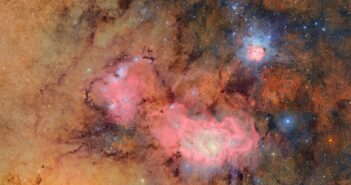
Astronomers Spot Possible Disk in Rubin Observatory First-Look Image
One of the first-look images from the Vera C. Rubin Observatory contained a rare find: a candidate circumstellar or protoplanetary disk in a region where few such disks have been discovered.
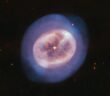
Researchers investigate a planetary nebula in a star cluster in the Andromeda Galaxy — one of just a handful of known extragalactic planetary nebula–open cluster pairs.
Dust Deal with It
Astrobites reports on why we might need a cosmic feather duster to see life on other worlds.

We’re excited to welcome Alexia Kubas and Lucas Brown to the team as AAS Media Fellows for 2026–2027!

A recent study has used spectroscopy from JWST to decipher the source of carbon oxides on the four largest moons of Uranus.
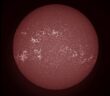
When Bright Spots Go Dark
New modeling tests a common assumption that’s important for interpreting exoplanet spectra: that stars of all spectral types exhibit bright magnetized regions called faculae.
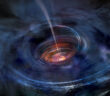
Astrobites reports on how synchrotron emission from thermal electrons could help to explain the behavior of certain tidal disruption events.
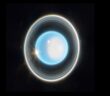
Who Needs Jupiter?
The original plan for an upcoming flagship mission to Uranus called for a slingshot around Jupiter. Now that the planet won’t be in the right position at launch time, the spacecraft will need to follow a different path.
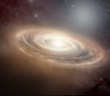
How early did planets form in the universe? A recent study used simulations to find that planetesimals could have formed significantly earlier than previously thought.