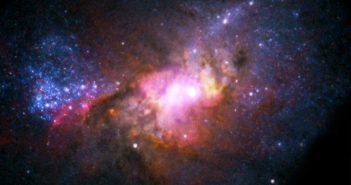
A Relic Black Hole in a Dwarf Galaxy
Could the recent discovery of a supermassive black hole in a low-mass galaxy be just the tip of the iceberg?

Could the recent discovery of a supermassive black hole in a low-mass galaxy be just the tip of the iceberg?
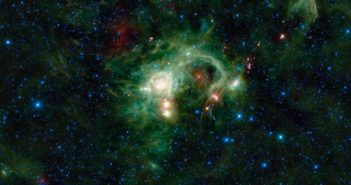
Astrobites explores what happens as balloons of ionized hydrogen inflate in space.
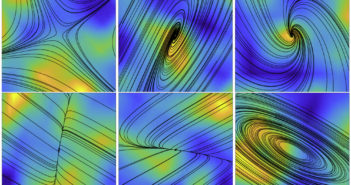
How can we identify the locations where magnetic fields break and reconnect in turbulent 3D plasmas?
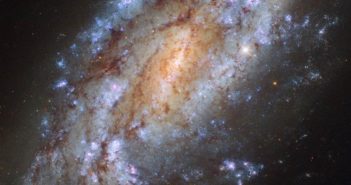
A recent study examines gas flows around galaxies during the most intense time of star formation in the universe.
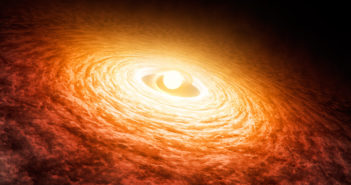
How does material move through an accretion disk to the young star at its center? Surprising detections from a fortuitously angled disk provide clues.
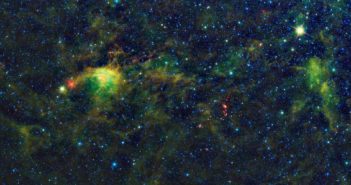
Astrobites discusses whether a well-known correlation in star formation holds on the scale of a single molecular cloud.
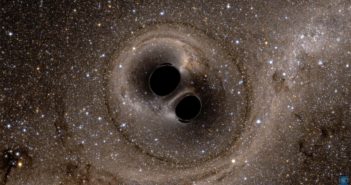
Gravitational-wave detectors may soon find a new population of huge black holes. What can we hope to learn from them?
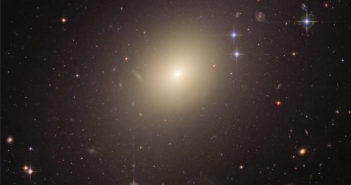
Is dark matter the cause of strange behavior in galactic outskirts? Or is something else at work? Scientists have turned to elliptical galaxies in search of new clues.

Applications are now open for a science communications position at the AAS.
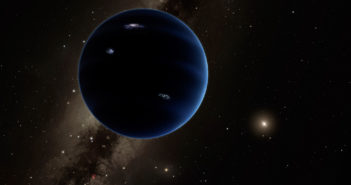
Astrobites provides a journey to the outer solar system to learn about the latest models describing the influence of the hypothesized Planet Nine.
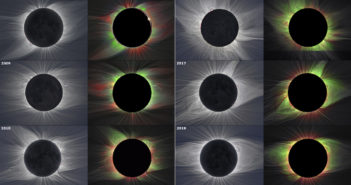
A detailed set of images of the eclipsed Sun has helped scientists to identify the source of streams of high-energy particles from our star.
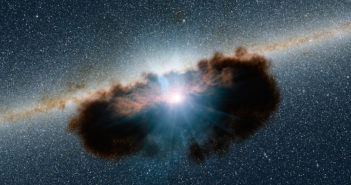
A recent study considers what sort of stars could live in the extreme environments surrounding supermassive black holes.