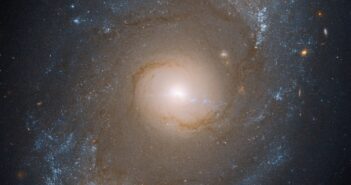
I Spy with My Large Binocular Eyes: A Dusty Torus Around a Supermassive Black Hole?
Astrobites reports on new mid-infrared observations that allow researchers to probe the structure of active galactic nuclei.

Astrobites reports on new mid-infrared observations that allow researchers to probe the structure of active galactic nuclei.
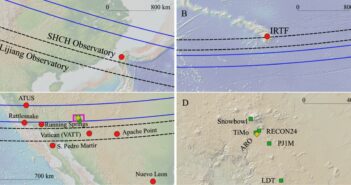
Researchers observed Weywot, the largest moon of the dwarf planet Quaoar, as it briefly blotted out the light from a star.
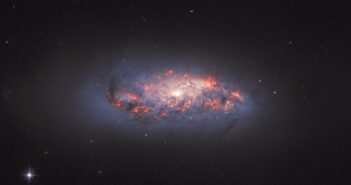
A recent study looks at the star and dust morphologies across samples of massive galaxies to understand how dusty star-forming galaxies fit into the picture of massive galaxy evolution.
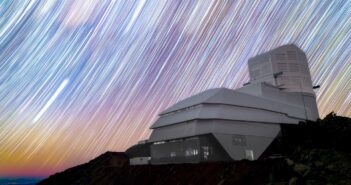
During its commissioning phase, the highly anticipated Vera C. Rubin Observatory serendipitously spotted the third known interstellar object.
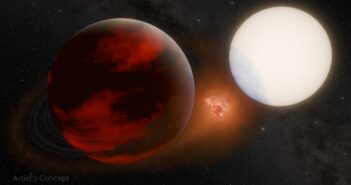
Astrobites reports on how JWST may be the key to finding moons around planets beyond our solar system.
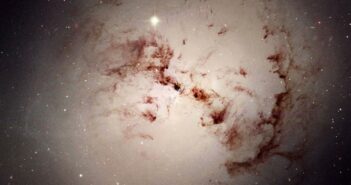
New observations from JWST and the Very Large Telescope illuminate the dark feature at the center of a galaxy cluster’s brightest occupant.
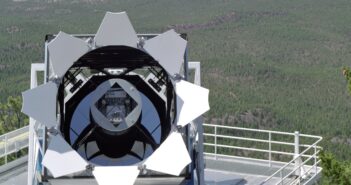
More than a quarter century ago, the Sloan Digital Sky Survey fundamentally changed the way modern astronomy research is done. The collaboration recently released their summary of the fifth generation of their landmark survey.
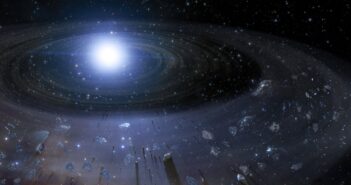
Recent work explores whether a commonly assumed source of data–model disagreement in simulations of stellar interiors is really to blame.
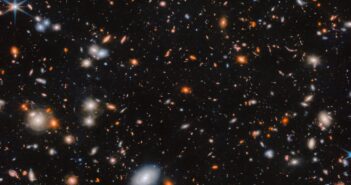
Astrobites reports on whether cosmic clumps are “homegrown” or fueled by fresh inflows.
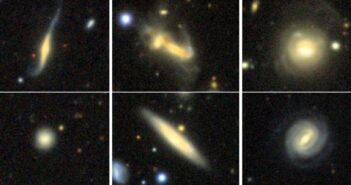
Are galaxies that travel through space in groups any different from those that fly solo? A new look at local galaxies provides clues.
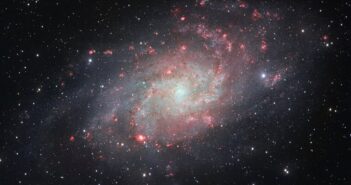
Gas flowing into a galaxy is hard to detect, but a recent study simulated a dusty galaxy to understand how we might be able to uncover inflows with emission line ratios.
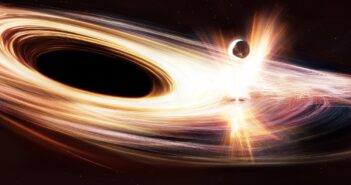
A supermassive black hole awakened seven years ago, and it’s now behaving in a way astronomers can’t explain.