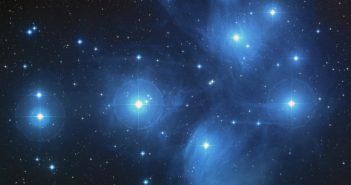
Clustering Star Groups Into Known Structures
Astronomers examine the velocity and sky location of the Theia groups to see if they’re actually part of known clusters.

Astronomers examine the velocity and sky location of the Theia groups to see if they’re actually part of known clusters.

Astronomers propose a new cause for the curiously extended gamma-ray burst discovered on Christmas day in 2010.

Astrobites reports on how magnetic fields affect winds in the atmospheres of ultra-hot Jupiter exoplanets.
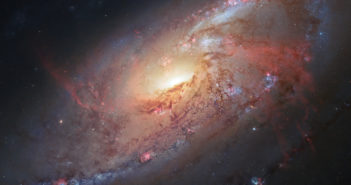
New observations from a 500-meter telescope reveal a stream of cold gas connecting a Milky Way-like galaxy to one of its satellites.
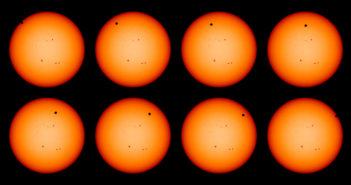
Astronomers use transiting exoplanets to detect starspots hundreds of light-years away and study the connection between these surface features and energetic stellar flares.

Where do exoplanets keep their water? A new study explores how water-rich magma oceans affect the properties of distant planets.
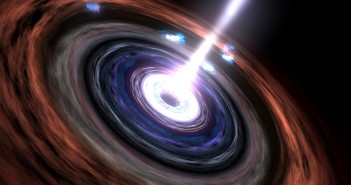
Astrobites reports on some of the brightest objects in the universe: active galactic nuclei. What is responsible for switching on these supermassive engines?
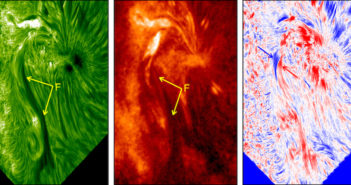
Astronomers examine a tightly coiled rope of plasma as it moves on the solar surface.
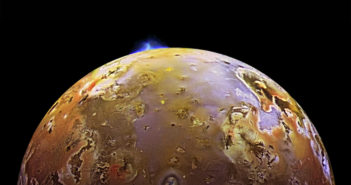
Astronomers have probed the volcanoes of Io at higher resolution than ever before, and their discoveries could help solve the mysteries of this dynamic world.
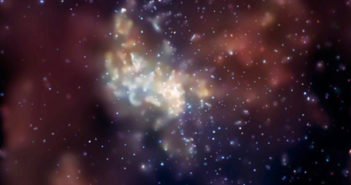
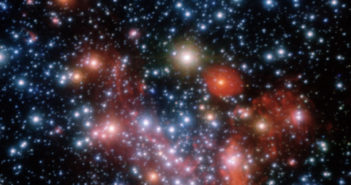
Astrobites gives us a preview of what future generations of giant telescopes might see when pointed toward the supermassive black hole at the center of the Milky Way.
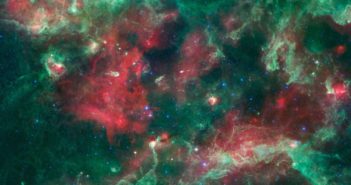
Astronomers are still trying to understand how stars form from molecular clouds hundreds of light-years across. What can we learn from one of the largest star-forming regions in the Milky Way?
Gravitational-wave “kicks” might eject black holes from star clusters, preventing them from forming even more massive black holes.