
A Recurring Character: RS Oph Shines Again in X-Rays
Hello again, RS Oph! What can X-ray observations tell us about one of the only known recurrent novae in the Milky Way?

Hello again, RS Oph! What can X-ray observations tell us about one of the only known recurrent novae in the Milky Way?
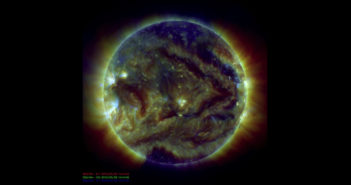
Astronomers combine spectra and images to track a strand of solar plasma as it escapes from the Sun’s atmosphere.
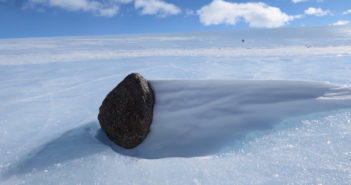
Meteorites that rain down on Earth provide a way to study the building blocks of the solar system. What can meteorites tell us about their parent asteroids?
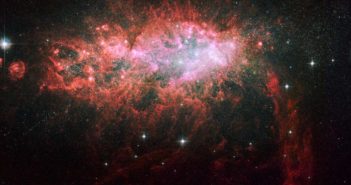
Astrobites reports on two dusty star-forming galaxies, which are likely high redshift and appear dark in the optical and near-infrared.
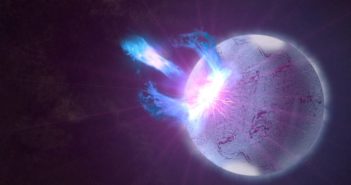
What caused the change in behavior of a certain magnetar? Crustal chaos, or magnetic field shifts?
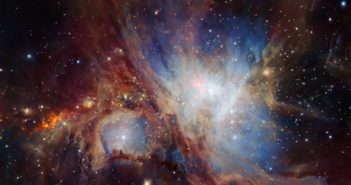
A team of astronomers has used sensitive radio arrays to probe the depths of dusty clouds and investigate the earliest stages of star formation.
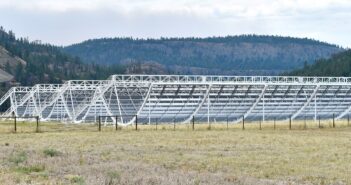
Astrobites reports on the new CHIME/FRB catalog, which includes 536 fast radio bursts and a number of exciting new sources.
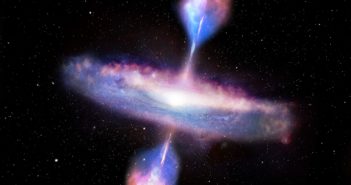
The most luminous objects in the universe can help us understand how supermassive black holes gained mass in the earliest galaxies.
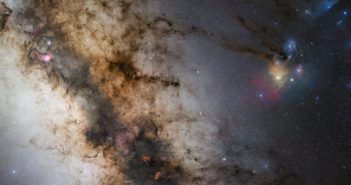
Astronomers study remarkably Sun-like stars to understand how the Milky Way gets its heavy metals.

Elusive black hole binaries can arise from isolated pairs of stars or in the heart of dense star clusters — and gravitational waves can reveal their secrets.
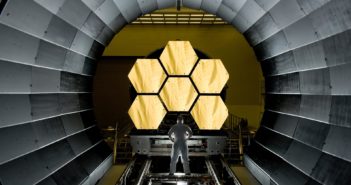
Astrobites reports on what JWST might bring for detections of biosignatures in the atmospheres of exoplanets.
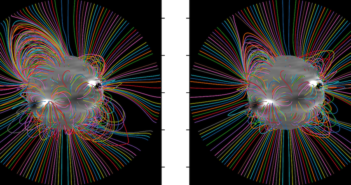
New models of the Sun’s magnetic field seek to solve a long-standing conflict between simulations and spacecraft observations.