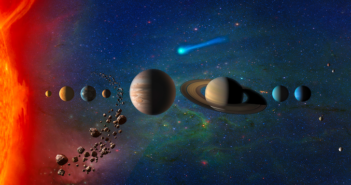
Selections from 2022: Would Changing Jupiter’s Orbit Affect Earth’s Habitability?
If the orbit of our solar system’s most massive planet were slightly different, would it make Earth more or less hospitable to life?

If the orbit of our solar system’s most massive planet were slightly different, would it make Earth more or less hospitable to life?
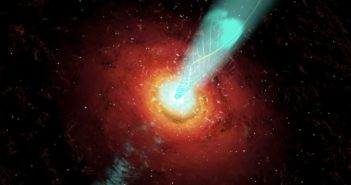
OJ 287 is an active galactic nucleus containing one of the most massive black holes currently known. New observations give insight into its magnetic field structure and jet creation.
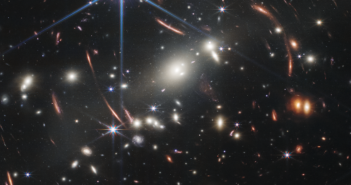
The very first image from JWST held plenty of surprises. Researchers investigated several “sparkles” that might be individual globular clusters seen from billions of light-years away.
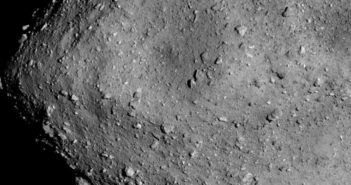
The loose surface material on certain types of asteroids contains small amounts of nutrients necessary for plants. But can Earth plants really grow in space “soil”?
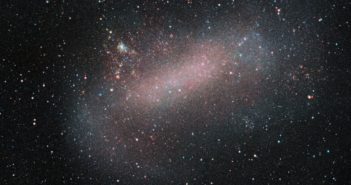
Astronomers found one of the most luminous known extragalactic radio pulsars, which may have previously escaped noticed due to its unusual pulse profile.
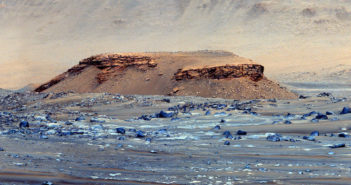
Would human-collected data lead us to the same conclusions as rover-collected data? Since we can’t (yet) send human geologists to Mars, scientists used human “rovers” on Earth to find out.
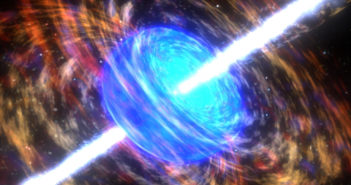
Massive stars that collapse to form black holes might be one way to make heavy metals. Now, astronomers have explored ways to identify heavy-metal creation from supernova light curves.
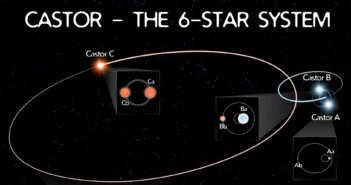
Astrobites reports on a sextuple star system and efforts to measure the six stars’ masses once and for all.
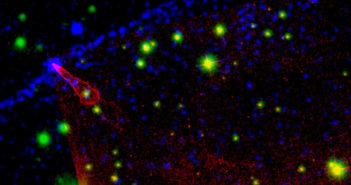
A fast-moving pulsar has created a spectacular guitar-shaped wake that astronomers have been studying for more than 25 years.
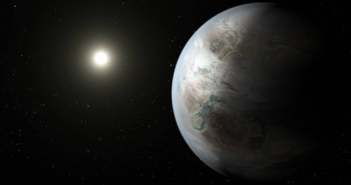
Fortune favors astronomers who take meticulous follow-up observations: sometimes you set out to confirm one planet candidate and end up authenticating two.
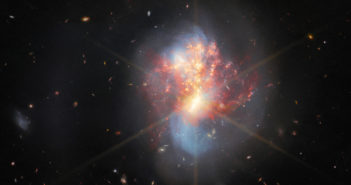
The interacting galaxies of VV 114 have been observed with many space- and ground-based telescopes, but astronomers have never seen them quite like this before.
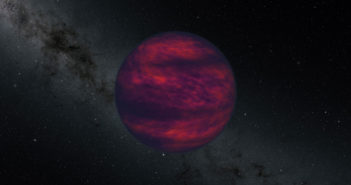
Astrobites reports on the detection of a possible transiting exoplanet around a brown dwarf.