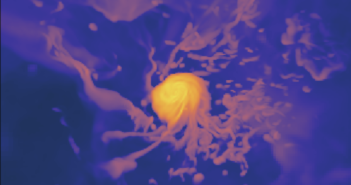
Making It Rain in the Circumgalactic Medium
Astrobites reports on how enhanced resolution in cosmological simulations has now revealed new structure in the circumgalactic medium.

Astrobites reports on how enhanced resolution in cosmological simulations has now revealed new structure in the circumgalactic medium.
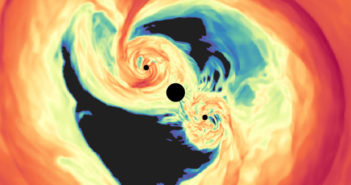
What happens to accreting gas when two supermassive black holes merge? Dramatic simulations provide new clues.
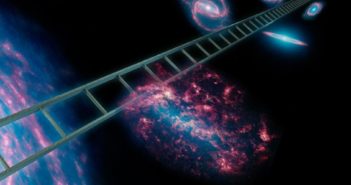
Astrobites reports on how the Tip of the Red Giant Branch (TRGB) allows for another measurement of the Hubble constant to enter the ring.
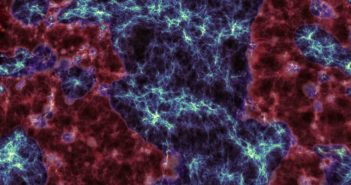
Astronomy is driven forward by a combination of novel observations and complex, inventive modeling. How can astronomers better analyze their models?
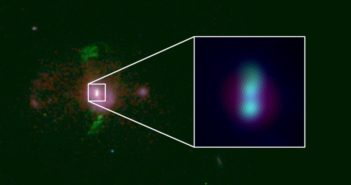
Astrobites reports on whether a suspicious pair of active black holes could improve the outlook for seeing the background of gravitational waves in our universe.
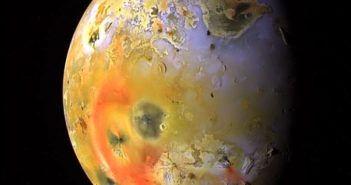
Five years of observations reveal drama on the most volcanically active world in our solar system: Jupiter’s moon Io.
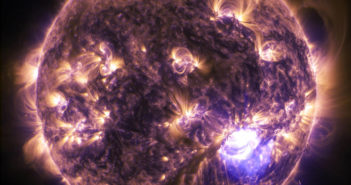
Just in time for a summer heatwave: What can models tell us about how solar flares are heated?
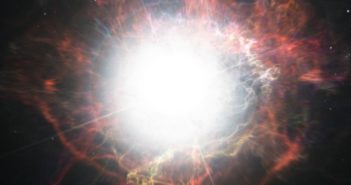
Massive stars can die in a lot of different ways! A new study explores one possible channel in more detail.
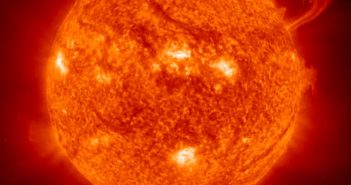
What does your uncle have in common with the Sun? Astrobites reports on a new discovery in the Sun’s atmosphere.
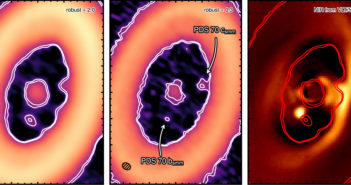
These ALMA images reveal emission from a disk of dust feeding a new planet and possibly providing material for future moons.
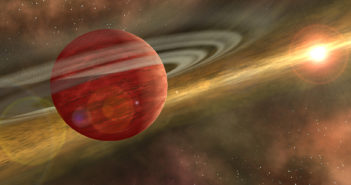
Astrobites reports on a new study that explores how hot Jupiters are built by examining where they are missing.
Why were the black holes spotted by LIGO so massive? A new study looks at what happens when black holes interact in star clusters.