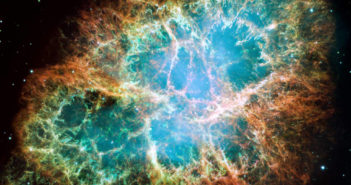
A New Measurement of Turbulence
A new study brings us a little closer to understanding a complex phenomenon that reaches across environments and scales in our universe.

A new study brings us a little closer to understanding a complex phenomenon that reaches across environments and scales in our universe.
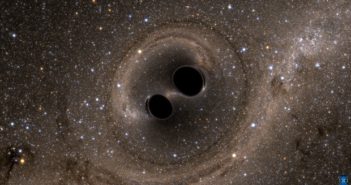
How can the gravitational waves from black hole mergers help us understand the universe’s evolution?
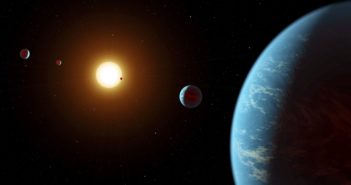
A set of four baby planets discovered around a young Sun-like star may provide insight into how planetary systems form and evolve.
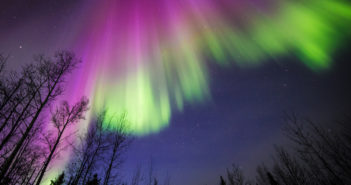
Astrobites reports on possible depictions of auroral activity found in ancient cuneiform tablets.
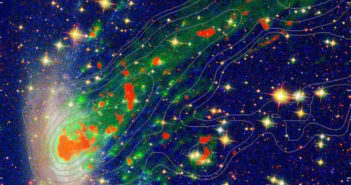
Feeling jelly? This detailed image reveals the molecular gas in the long tail of a jellyfish galaxy.
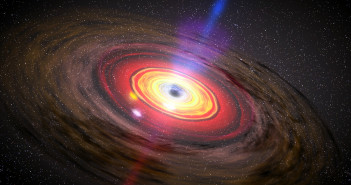
Astrobites reports on the surprising result of a search for radio active galaxy centers in nearby dwarf galaxies.
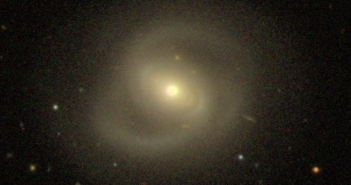
There’s lots of gas left — but these dead disk galaxies aren’t forming stars! Astrobites reports on a galactic conundrum.
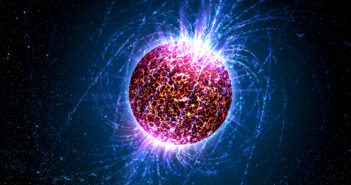
Astrobites explores the possible reasons why one magnetar is emitting bursts of energetic radio waves.
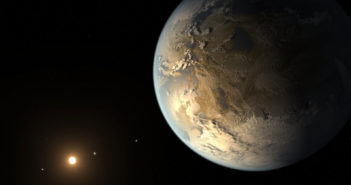
A new study explores whether a red edge in a planet’s reflected light could be used to identify life beyond Earth.
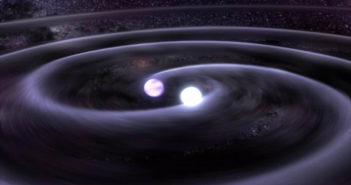
An avenue for understanding the occurrence of binary neutron stars is to carefully study their host galaxies. And one way to be sure a galaxy hosts binary neutron stars is to observe a neutron star merger happen there.
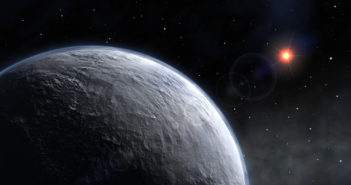
A new study explores whether tidally locked, habitable planets run the risk of experiencing sudden, global-scale ice ages.
Is the gravitational constant really constant? Astrobites reports on an investigation using an 11-billion-year-old star.