AAS News RSS

GWB190425

Editor’s Note: This week we’re at the 235th AAS Meeting in Honolulu, HI. Along with a team of authors from Astrobites, we will be writing updates on selected events at the meeting and posting each day. Follow along here or at astrobites.com. The usual posting schedule for AAS Nova will resume the week of January 20th.


AAS Prize Presentations and Plenary Lecture: The Role of Feedback in the Evolution of Galaxies (by Ellis Avallone)

This morning started off with Megan Donahue (Michigan State University) awarding AAS prizes. To read more about the prizes and their winners look out for a press release by AAS later this week!

Next, Tim Heckman (Johns Hopkins University) discussed where we’re at in understanding galaxy evolution. Heckman began by introducing this topic through the lens of cosmology. “We’re in the era of precision cosmology.” Because of this, we now have a very good understanding of the evolution of dark matter haloes that surround galaxies as they form and grow. However, we still don’t understand much of the underlying physics that’s involved in the current model of galactic evolution, in which galaxies grow primarily through a series of merger events. This is further complicated by current numerical models, which cannot reach the resolution needed to resolve these physical processes. 
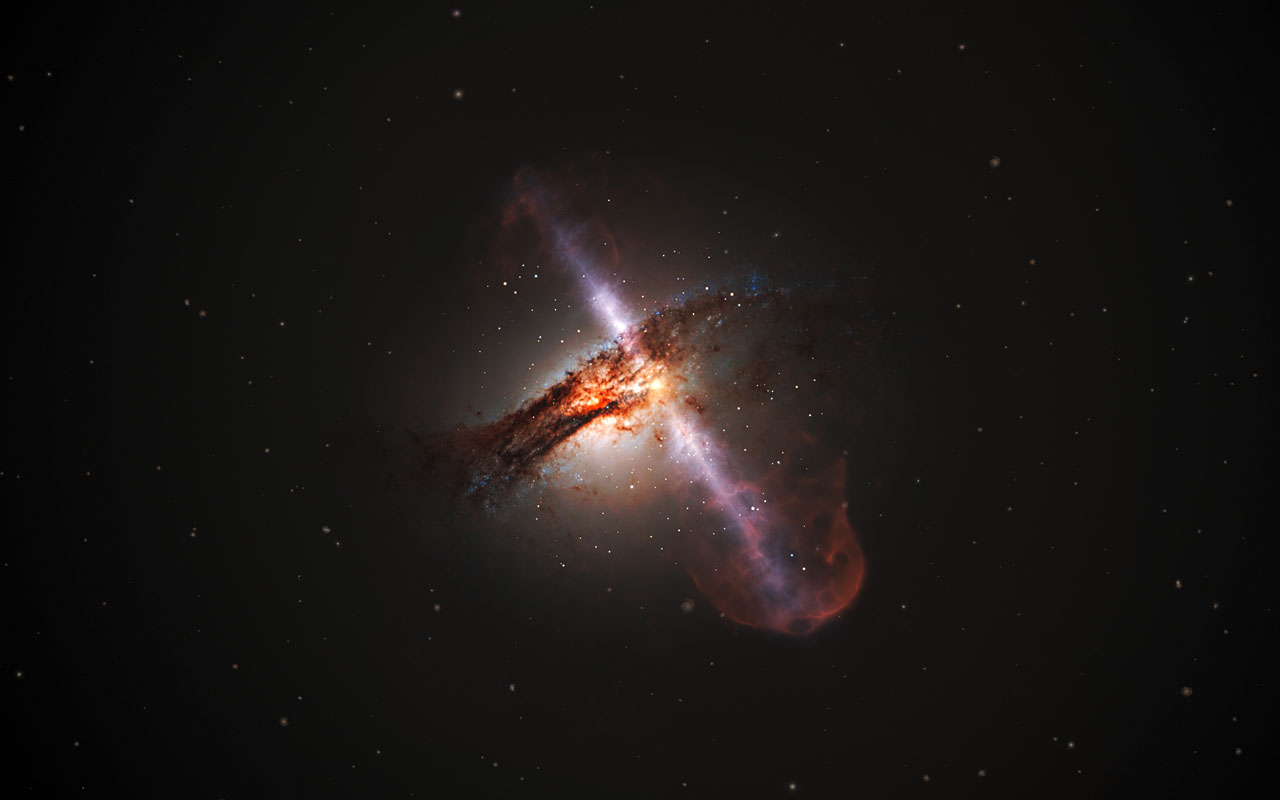
AGN

High-speed jets emitted from around supermassive black holes are one type of feedback that can affect galaxy evolution. [ESA/Hubble, L. Calçada (ESO)]

To address these outstanding uncertainties, Heckman focused on the role of feedback in galaxy evolution — the process by which energetic events like supernovae and active galactic nuclei affect the growth of galaxies. Galaxy feedback affects high-mass and low-mass galaxies differently. Low-mass galaxies are the most susceptible to stellar feedback, while feedback in high-mass galaxies is primarily driven by supermassive black hole activity. Heckman concluded this talk by discussing where feedback primarily influences galaxy evolution. Recent studies have determined that galaxies are most influenced by feedback in the circumgalactic medium. However, more observations need to be done to improve current simulations and uncover the mysteries of galaxy evolution. 


Workshop: Science Communication Through the Lens of Astrobites (by Kate Storey-Fisher and Briley Lewis)
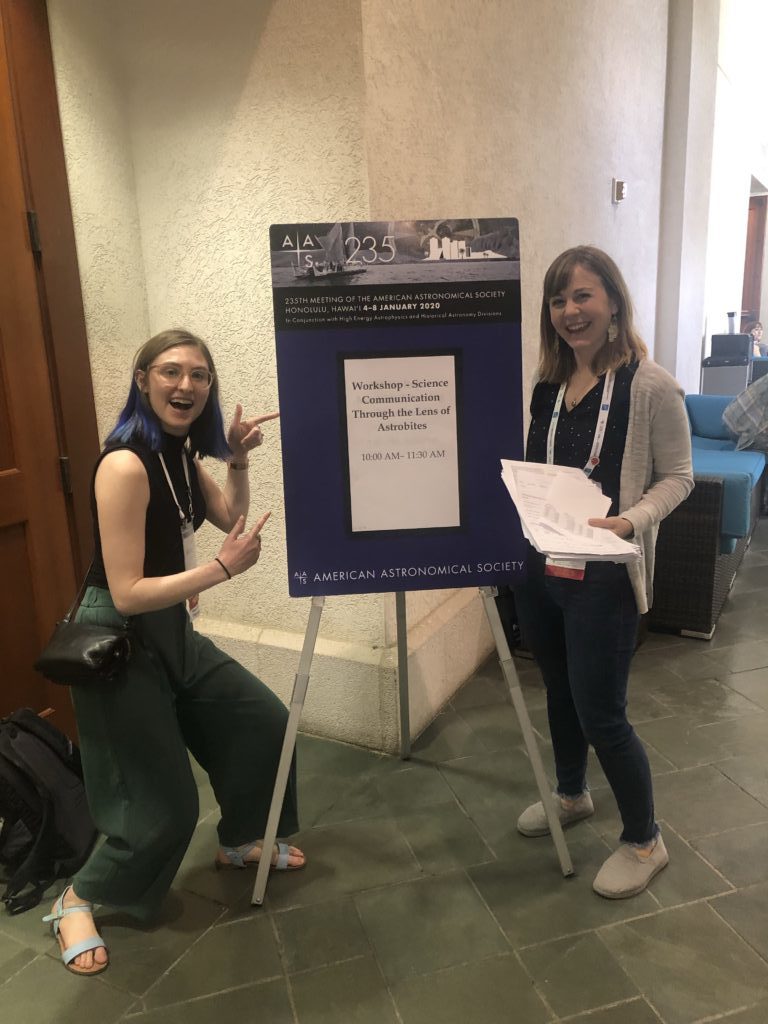
Astrobites workshop leaders

Astrobites authors Briley Lewis and Kate Storey-Fisher led today’s workshop (and had a lot of fun doing so!).

Today we had the chance to bring more Astrobites to AAS through our workshop “Science communication through the lens of Astrobites” led by Astrobites authors Kate Storey-Fisher and Briley Lewis

So, what makes an Astrobite? We started today’s workshop by discussing two main topics in science communication: language and storytelling. Language choices are particularly important in science writing, since we need to be careful about what jargon we use; deciding which words are appropriate for an article depends entirely on knowing your audience (who they are, why they care, what they already know). Storytelling is also important because it keeps your reader interested, and helps make the information memorable. Basic narrative structures (such as “and, but, therefore”) are great starting places for constructing the story of your science.
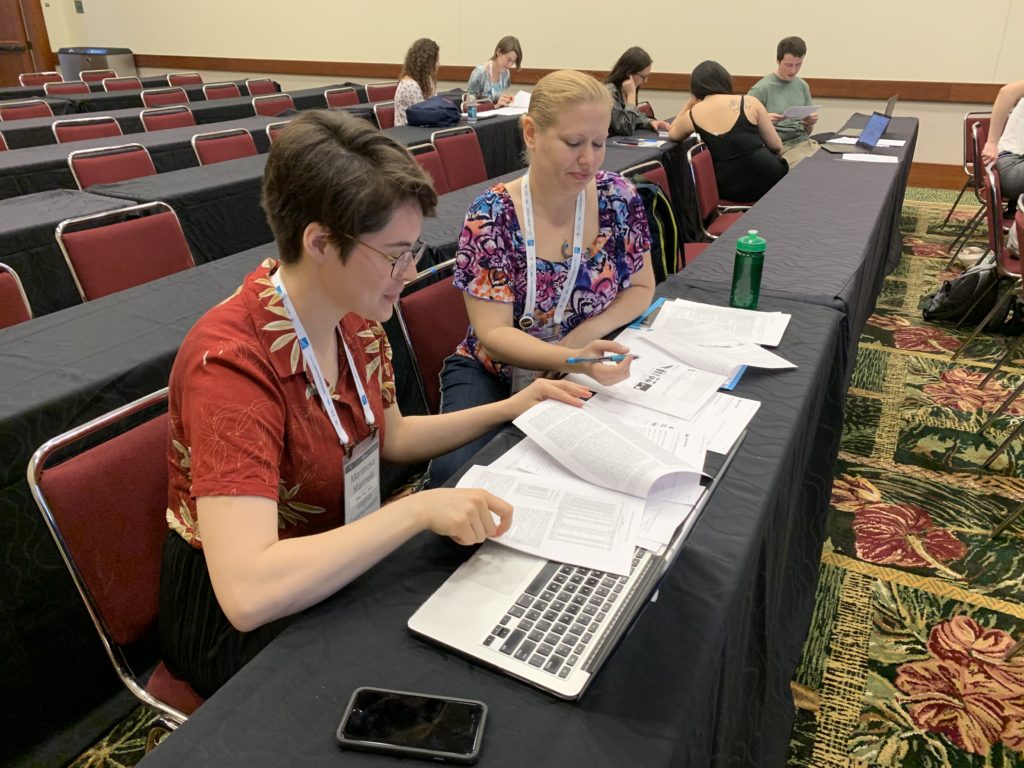
Astrobites workshop

Workshop participants analyzing an abstract to write an Astrobites-style article.

After a crash course in these fundamentals of science writing, we set our participants out to write an introduction to their very own Astrobite. Participants came up with compelling intros, steering clear of jargon and incorporating a narrative hook, and then engaged in peer editing and analysis of published Astrobites to improve their drafts. Overall, there was a lot of great discussion on the value of making science accessible, and how to actually accomplish that goal!

Participants were encouraged to write and submit guest posts to Astrobites — if you have a pitch, you can contact us here to submit one! If you’ve been walking around the posters at the exhibit hall, you may have noticed that we also accept undergraduate research submissions, which can be submitted here.


Press Conference: Things That Go Bump in the Night (by Susanna Kohler)

AAS Press Officer Rick Fienberg opened the first press conference of the day with “I think this is the most people I’ve ever fit up on this stage,” introducing the six speakers who were going to tell us about a variety of transient sources.
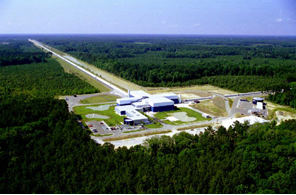
LIGO Livingston

The Livingston LIGO facility, which recently made the first single-detector gravitational-wave event detection. [Caltech/MIT/LIGO Lab]
What’s the latest from the Laser Interferometer Gravitational-wave Observatory (LIGO) and Virgo, its European counterpart? Katerina Chatziioannou (Flatiron Institute) announced the biggest news yet from the LIGO-Virgo O3 observing run: we’ve discovered gravitational waves from another binary neutron star pair, GW190425, and the pair combined weighs between 3.3 and 3.7 solar masses. This is heavier than any other known binary neutron star system — the largest known in our galaxy has a combined mass of 2.9 solar masses — and challenges theories of how these binaries form. Fun fact: this is also the first event identified via data from the LIGO Livingston detector alone, rather than via combined data from the LIGO Livingston and the LIGO Hanford detectors. Even with only one detector online at the time, the signal was strong enough for the team to be able to make an unambiguous detection. Press release

FRB 180916

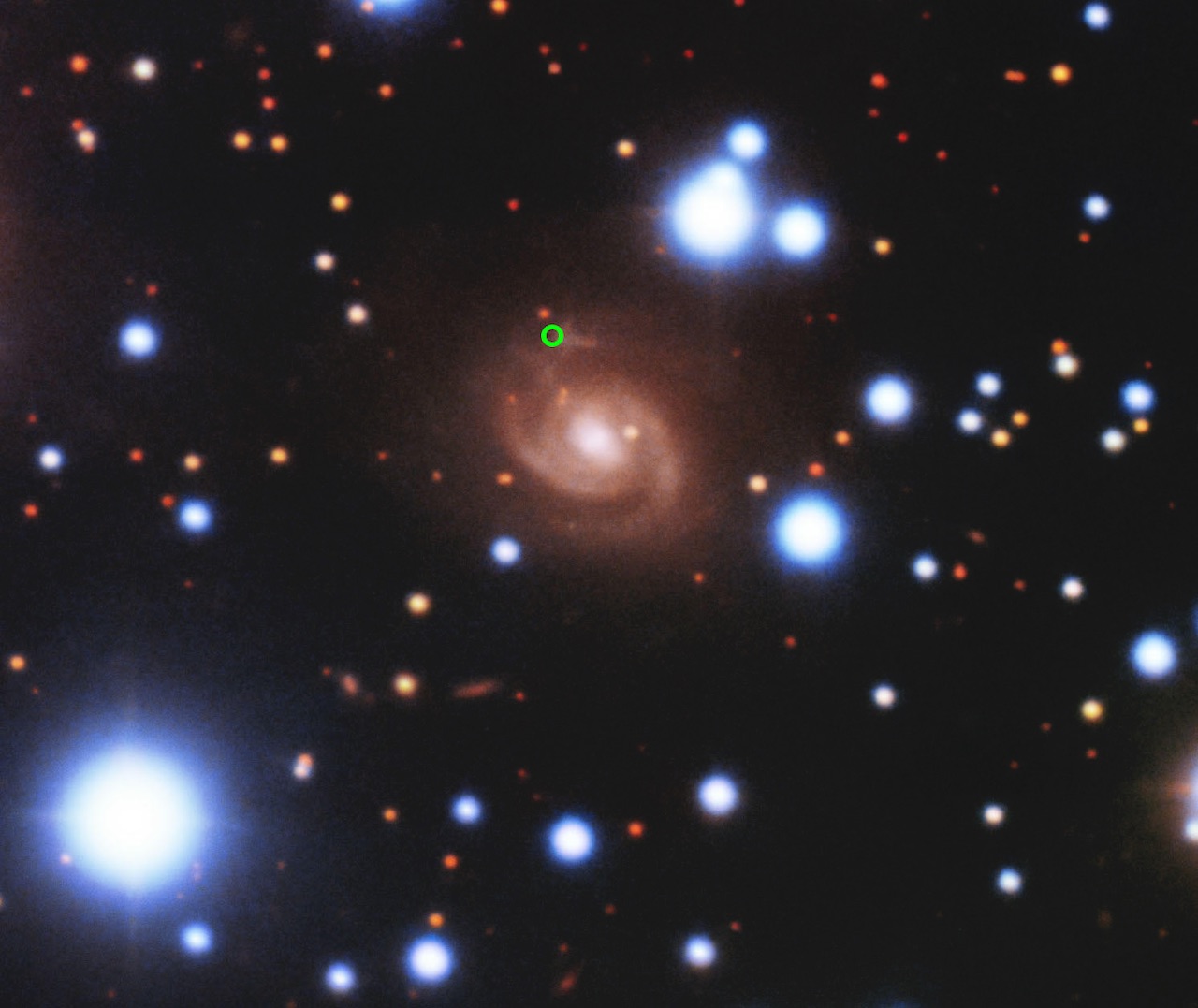
The location of FRB 180916 is in a galaxy’s spiral arm, marked with a green circle in this image from the Gemini-North telescope. [NSF’s Optical-Infrared Astronomy Research Laboratory/Gemini Observatory/AURA]
One type of transient source that has especially baffled astronomers is the fast radio burst (FRB) — an extremely bright flash of radio waves of extragalactic origin that lasts only a few milliseconds. We’ve detected about 100 of these, and we think they’re very common, occurring possibly once every 10 seconds across the whole sky. We’re not yet sure what causes an FRB — and the first step to solving this mystery is to localize FRBs, i.e., determine where they originated from. Benito Marcote (Joint Institute for VLBI ERIC [JIVE]) & Kenzie Nimmo (ASTRON & University of Amsterdam) presented on new work using the European VLBI Network (EVN) to localize a repeating burst, FRB 180916.J0158+65, to a star-forming arm of a spiral galaxy located 500 million light-years from Earth. This is just the second time we’ve ever localized an FRB, and FRB 180916.J0158+65 is by far the closest source we’ve pinned down. Perhaps we’ll be able to use it to better understand these mysterious, energetic flashes! Press release

M87 jet

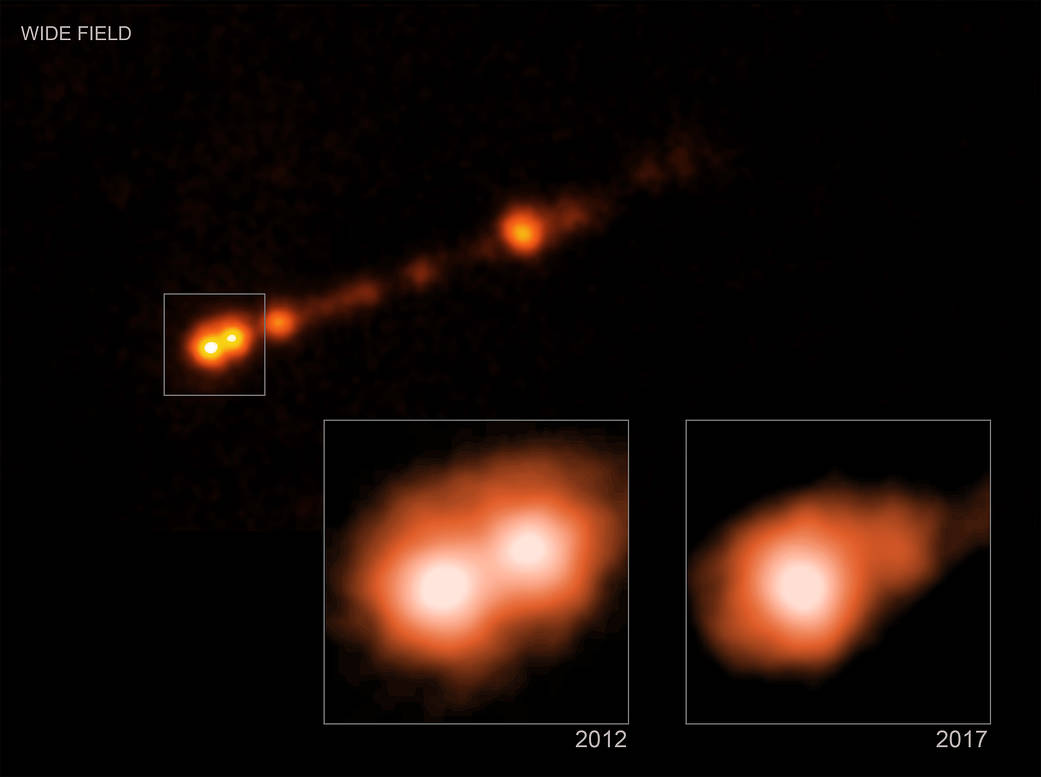
Chandra X-ray images reveal the motions of knots within M87’s jet. [NASA/CXC/SAO/B. Snios et al.]

Can’t get enough of the supermassive black hole in M87, the monster we recently imaged with the Event Horizon Telescope? Ralph Kraft (Center for Astrophysics) gives us more news to chew on from this famous black hole, in the form of recent Chandra X-ray observations of the powerful jets spewing from its poles. The observations allow us to measure the velocities of knots moving within the jet pointed closest to us; by de-projecting these motions, we can determine the speed of the underlying flow of the jet. These new measurements provide the first direct evidence that matter in the jet moves at relativistic speeds of more than 99% the speed of light. They also reveal useful information about the physics of jets like this one that commonly accompany active supermassive black holes. Press release

Switching gears, Thomas Fauchez (NASA Goddard Space Flight Center) presented on a new technique we can use to detect oxygen in the atmospheres of exoplanets, potentially advancing the search for life beyond the solar system. Oxygen levels similar to Earth’s were previously thought to be too faint to detect on exoplanets, but Fauchez and collaborators conducted simulations showing that an absorption feature at the infrared wavelength of 6.4 µm could give away the presence of oxygen in a planet’s atmosphere — and therefore possibly point to habitability of the world. They show that this feature could be detected in the spectra of nearby planets when observed with the upcoming James Webb Space Telescope. Press release
V Sagittae

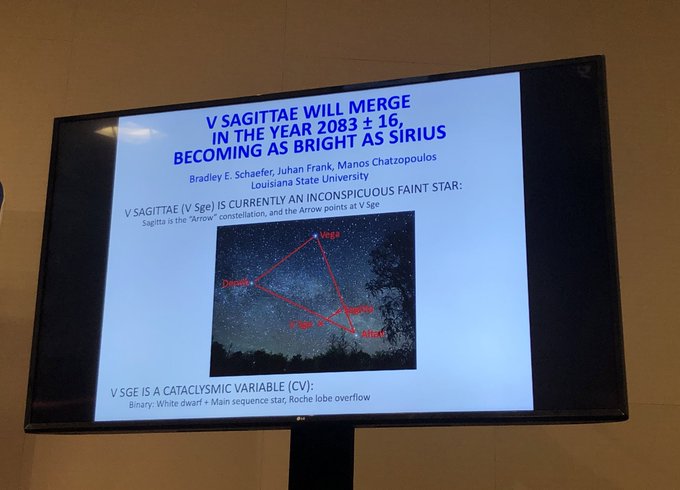
V Sagittae is predicted to merge within the next century.

Last up, Bradley Schaefer (Louisiana State University) opened with his exciting punchline: the binary star V Sagittae, which consists of a white dwarf fed by material from an ordinary star, is inspiraling ever more rapidly and is on course for a collision. Schaefer and collaborators’ best estimates suggest the binary will likely merge soon: in the year 2083, give or take 16 years. As it collides, the system will become as bright as Sirius or even possibly Venus — appearing as a guest star in our sky that will last roughly a month near peak brightness. Mark your calendars! Press release


Helen B. Warner Prize: Not Your Grandparents’ Galaxy: The Milky Way in the Era of Large Surveys (by Mia de los Reyes)

Jo Bovy (University of Toronto) started his plenary talk with a goal: “I want to take you on a journey through the Milky Way,” he said. He listed all the main visible parts of the Milky Way — the disk, the bulge, and the stellar halo — and explained how there are still some big open questions about the MIlky Way’s structure. How did all of these components form and evolve? Perhaps more importantly, how do they all fit together?

We’ve made a lot of strides towards answering these questions in the last decade. “The big difference between now and ten years ago,” said Bovy, are large surveys. Bigger is better when it comes to Milky Way surveys — and we’ve gotten a lot better. For example, we’ve obtained high-resolution spectra of thousands of stars using surveys like SDSS APOGEE, and positions and velocities for 1.7 billion stars with the Gaia satellite. 

What have we learned from these large data sets so far? Bovy laid out several of the main results in galactic studies over the past decade, focusing on the different components of the Milky Way. For example, chemical evolution patterns in the Milky Way’s disk indicate that the early disk was extremely uniform, thick, and turbulent — but that it cooled and became thin and chemically stratified (i.e. having more metal-poor stars near the outskirts) at later times. After this thin disk formed, radial mixing processes began to churn the disk, perturbing it and producing transient spiral patterns.

anatomy of the Milky Way

Artist’s impression of the Milky Way, showing its three main visible components: the disk, the halo, and the bulge. [ESA]

Meanwhile, chemical abundances have also been used to confirm that the stellar halo (the large spheroidal blob of stars surrounding the entire galaxy) is mostly made up of old stars from accreted dwarf galaxies. Some evidence has suggested that some stars in the stellar halo might also come from the disk, which could have been “puffed up” after a major merger event (like the so-called Gaia Sausage”). However, using the combined power of large datasets from APOGEE and Gaia, further work shows that this merger may not have been so major — the merging object was likely less than one-tenth the mass of the Milky Way — and is unlikely to have puffed up the disk.

Finally, Bovy described the galactic bulge. Although all galaxies have bulges of some kind, only since 1990 or so have we known that the Milky Way has a bar at its center. The bar is chemically similar to the early Milky Way disk and likely formed ~8 Gyr ago from the disk. Bovy showed how the rotation of the bar can be measured using Gaia data, and how the bar has likely just been rotating steadily since its formation.

Bovy then explained how all these results come together to support a single picture of Milky Way evolution — one mostly dominated by internal processes, rather than external processes like major mergers. Bovy ended his plenary talk by pointing out that it’s important for surveys to not only be large but also open and accessible to scientists worldwide. Open data is good for both science and for scientists, so we should all “urge the people in charge to make sure data is fully open!”


Press Conference: TESS Explores Exoplanets & More (by Susanna Kohler)

TESS

Artist’s illustration of NASA’s TESS mission observing a system of transiting exoplanets. [MIT]

Paul Hertz, astrophysics division director at NASA Headquarters in Washington, reminds us that just 20 years ago, we didn’t know whether exoplanets were common or rare. Now, we know that nearly every star in the galaxy has exoplanets — and the Transiting Exoplanet Survey Satellite (TESS) has already discovered thousands of these planet candidates in just the first year and a half since its launch. What are some of the latest results coming from this promising mission?

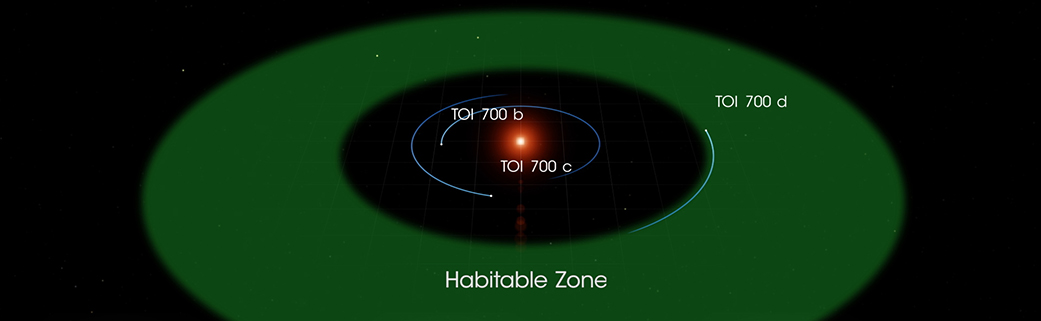
The first three presentations of this press conference focused on a major new discovery — the compact multi-planet system TOI 700. Emily Gilbert (University of Chicago) introduced the cool M dwarf located just over 100 light-years away and its newly found planets:

  • TOI 700b, an Earth-size, likely rocky planet on a 10-day orbit
  • TOI 700c, a larger, likely gaseous planet on an 16-day orbit
    … and (drumroll, please) … 
  • TOI 700d, TESS’s first discovery of a roughly Earth-size transiting planet that, with an orbit of 37 days, lies in its host’s habitable zone.

How did we confirm TOI 700d? It seems fitting that, with just a month of observations left before the Spitzer telescope is retired, this venerable spacecraft was the one to detect transits from TOI 700d and confirm TESS’s first Earth-size habitable-zone planet. Joseph Rodriguez (Center for Astrophysics | Harvard & Smithsonian) reported the observations, as well as some ground-based observations further characterizing TOI 700c.
TOI 700

The three planets of the TOI 700 system. [NASA Goddard SFC]
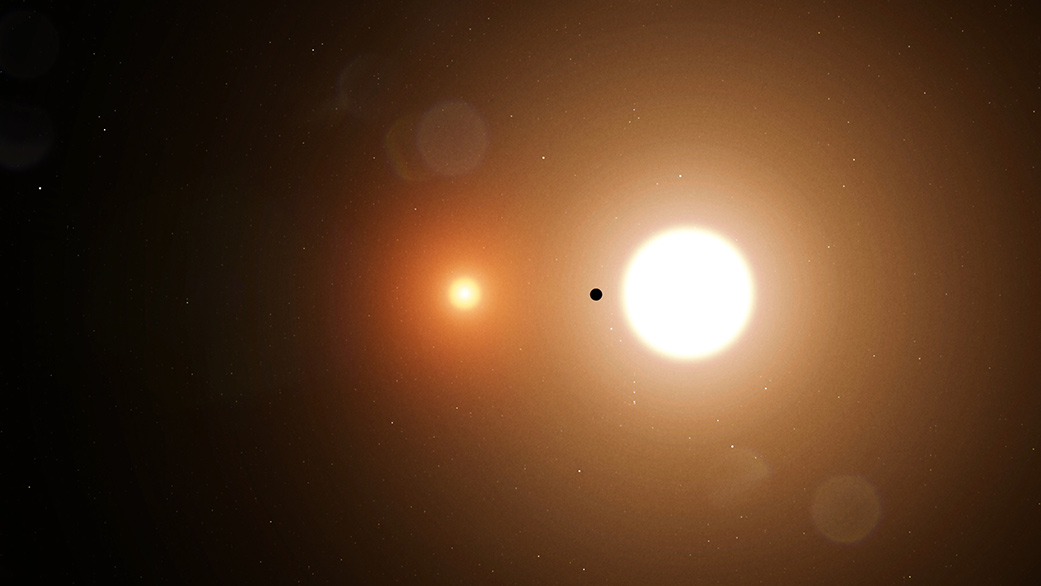
Lastly, Gabrielle Engelmann-Suissa (NASA Goddard Space Flight Center) presented new 3D climate modeling that explores the potential atmosphere of TOI 700d, a tidally locked planet (i.e., the same side of it always faces the star). A number of outcomes are possible — from an ocean-covered world with a dense atmosphere, to a cloudless, all-land version of modern Earth. Eventually, we hope to be able to measure spectra of TOI 700d that we can then compare to the simulated spectra produced by Engelmann-Suissa and collaborators to better understand this planet. Joint press release on TOI 700

TOI 1338

TOI 1338 b, silhouetted by its two host stars. [NASA Goddard SFC/Chris Smith]

Next, Veselin Kostov (NASA Goddard Space Flight Center) presented on TOI 1338, the first circumbinary planet detected by TESS. The planet was discovered in TESS data by Wolf Cukier, a high schooler and summer intern at Nasa Goddard SFC at the time. TOI 1338 lies about 1,300 light-years away, and the two stars of the binary orbit each other once every 15 days. The planet was difficult to spot due to its irregular orbit — between 93 and 95 days — and variable depth and duration; this unusual behavior is due to the orbital motion of its host stars. Press release

Rounding out the session, Angela Kochoska (Villanova University) presented on the binary star Alpha Draconis — the star that, 4,700 years of precession ago when the first pyramids were built in Egypt, had Polaris’s place as the star closest to the north rotational pole of the Earth. Despite being a very well-studied, naked-eye star, Alpha Draconis has only just been discovered to be eclipsing. TESS data revealed the brief eclipses that had been missed by ground-based observations in the past, providing us with a wealth of new information we can use to study this system and analyze its properties. These results demonstrate that TESS is useful not only for exoplanet science, but also for stellar science as well! Press release


Plenary Lecture: The Stewardship of Maunakea’s Legacy from the Perspective of the Hawaiian and Astronomical Communities (by Briley Lewis)

Amy Kalili (‘Ōiwi TV), indigenous language advocate, introduced a perspective on the stewardship of Mauna Kea rooted in the language and culture of Hawaiian communities. Her task today was not to definitively give an answer to the conflict surrounding astronomy on the mauna, but to prompt new thoughts and discussions between the stakeholders involved.
Mauna Kea

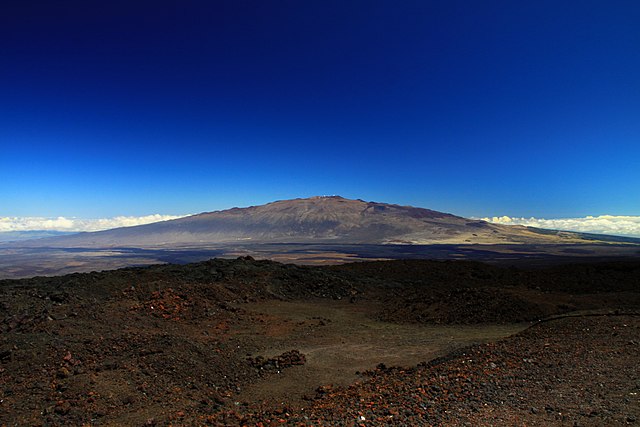
Mauna Kea, as viewed from Mauna Loa Observatory. [Nula666]

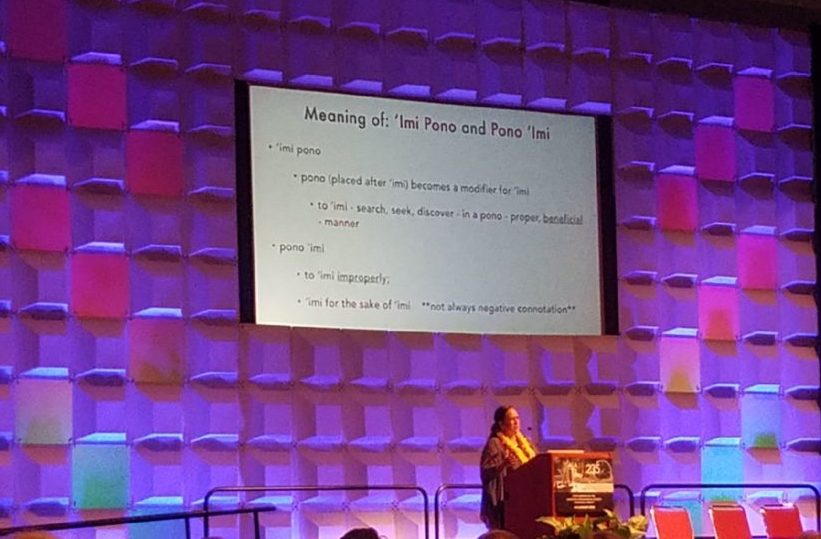
Kalili introduced the idea of “‘imi pono” (seeking in a beneficial manner) vs. “pono ‘imi” (doing something just to get it done), applying this concept to the interactions between astronomers and the Hawaiian communities. We need to consider if the 13 telescopes on Mauna Kea are ‘imi pono or pono ‘imi, and what direct benefits our science and discoveries have to the surrounding communities and those outside of astronomy. She also stresses that this is not a debate on science versus culture; though there have been misconceptions and misrepresentations of Hawaiian views on science, she explains that “we as Hawaiians embrace and embody ‘imi,” such as through the art of celestial navigation and kilo hōkū (observing the stars). Hawaiians and astronomers have “a common aloha for the art and science of astronomy”, but the threshold for what science is “worth it” differs based on context and kuana’ike (perspective).

Looking forward, her major takeaway is that there is a significant need for greater pilina (relationship building) and ho’oka’a’ike (communication). Pilina is a requisite to build trust, and it takes “time, energy, sincerity, and long-term commitment.” However, it doesn’t mean we have to agree on everything, just that we need to engage with respect. Ho’oka’a’ike engages multiple audiences and voices, especially those that previously may not have had a seat at the table, and prioritizes ho’olohe (listening) over wala’au (talking).

Kalili’s question for those attending this meeting is this: How can we, as astronomers/experts in the field, contribute to pilina, ho’oka’a’ike, and kālailai (analysis/assessment) with regards to the mauna and the Hawaiian community?

She emphasizes that this is not a one time conversation — this discussion needs to be ongoing and dynamic as situations and communities evolve. These principles also apply not only to the current situation surrounding the Thirty Meter Telescope and Mauna Kea, but also more generally to interactions with indigenous communities.
Kalili plenary

Amy Kalili and the meanings of ‘imi pono and pono ‘imi.


HEAD Bruno Rossi Prize, Kilonovae from Merging Neutron Stars (by Mike Zevin)

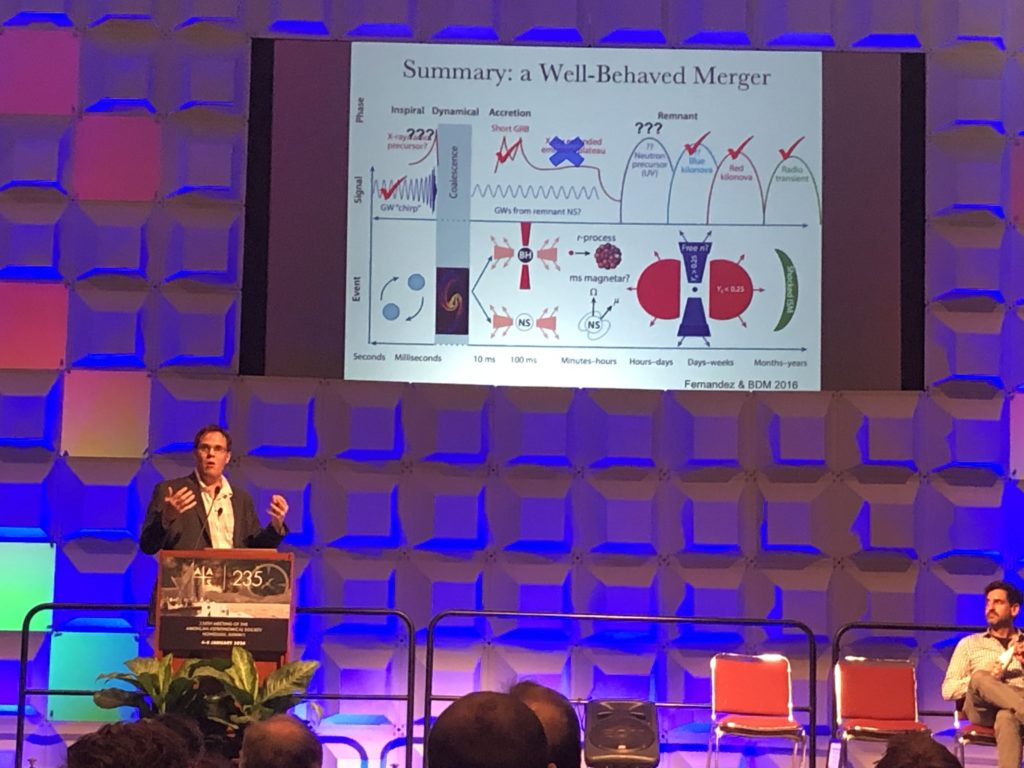
How do you turn iron into gold? In the final plenary lecture on Monday at #AAS235, Brian Metzger (Columbia University) and Dan Kasen (University of California, Berkeley) delved into kilonovae, the cosmic explosions responsible for synthesizing the heaviest elements in the universe. Metzger kicked things off by overviewing how heavy elements are created. When two neutron stars collide, they expel neutron-rich ejecta that bombard nuclei at a very high rate, forming large and unstable isotopes that then beta decay back to the valley of stability. This is known as r-process nucleosynthesis (see a visualization of this process here). This radioactive decay powers the kilonova explosion. GW170817, the binary neutron star merger detected by LIGO/Virgo and telescopes across the electromagnetic spectrum, beautifully exhibited this phenomena and produced thousands of Earth masses of r-process material in its cataclysmic collision. 
Metzger plenary

Brian Metzger, a co-awardee of the HEAD Bruno Rossi Prize, describing the steps of a “well-behaved” neutron-star merger and kilonova.

Metzger pointed out that the emission from the kilonova provided important insights into the remnant that formed following the neutron star merger. Did the merger product immediately collapse into a black hole, or did it remain stable as a neutron star for a period of time? Metzger argued that we can rule out a prompt collapse for GW170817 because this scenario would not provide the necessary amount of ejecta that was observed. He also showed how we can rule out a long-lived neutron star, since this would lead to bluer emission than was observed. This points to the merger product of GW170817 likely proceeding through a “hypermassive” neutron star phase, supporting itself for a few hundred milliseconds before collapsing into a black hole. Interestingly, this tells us a great deal about the “equation of state” of neutron stars, which describes the pressure and density of neutron star matter in nature.

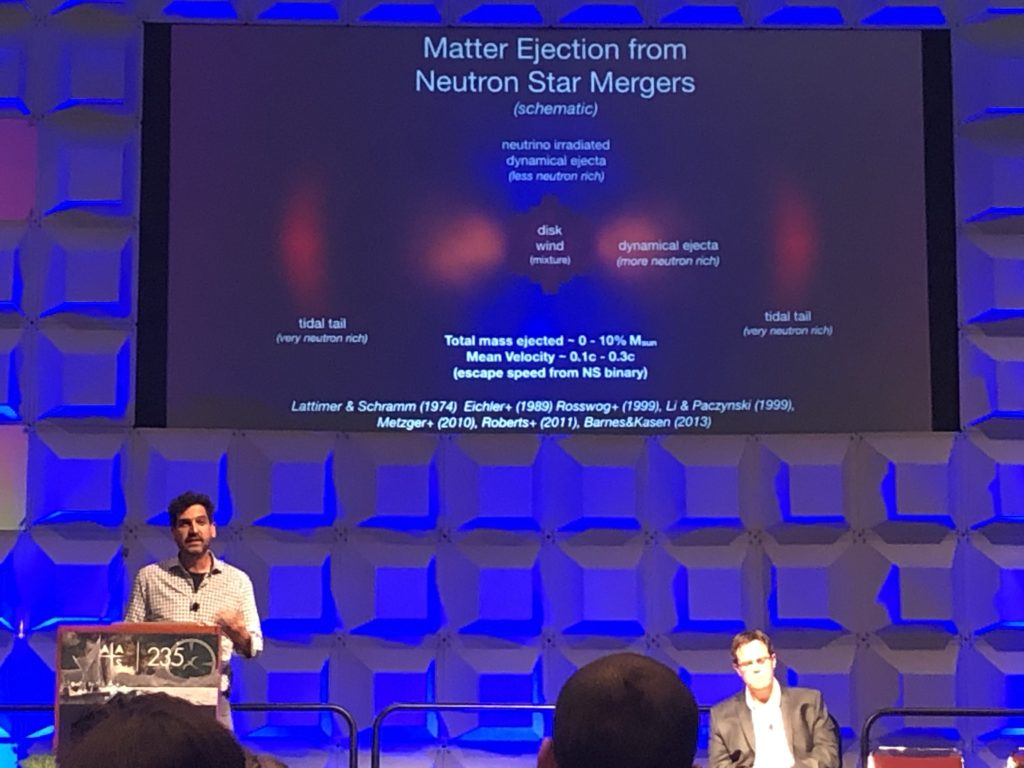
Kasen then took over, continuing the story of GW170817 and our understanding of kilonovae. Though Kasen “thought it would be 5 to 10 years before we were confronted with data”, the universe had other plans and provided a gold-plated kilonova on our doorstep only a short while after the Advanced LIGO/Virgo network began acquiring data. After recognizing the long list of authors that contributed to the GW170817 multi-messenger astronomy paper, Kasen noted that understanding kilonovae truly requires a multi-physics description, ranging from dynamics and mass ejection to neutrinos and nucleosynthesis to atomic physics to radioactive heating to radiative transport. Kilonovae provide a complex astrophysical environment and a heavy element factory; whereas about 1 billionth of our solar system is made of r-process material, kilonovae are the size of a solar system and are made up almost entirely of heavy r-process elements. Despite their complexity, theoretical predictions of kilonova light curves, color evolution, spectra, and temperature evolution all matched extremely well with the observations of GW170817. But despite the fact that GW170817 fit well with theoretical predictions, Kasen is confident that surprises await, and that we should have faith that nature is bound to provide something that will have astronomers scratching their heads.
Kasen plenary

Dan Kasen, a co-awardee of the HEAD Bruno Rossi Prize, schematically showing the blue and red components of a kilonova explosion.
UGC 2885

Editor’s Note: This week we’re at the 235th AAS Meeting in Honolulu, HI. Along with a team of authors from Astrobites, we will be writing updates on selected events at the meeting and posting each day. Follow along here or at astrobites.com. The usual posting schedule for AAS Nova will resume the week of January 20th.


Kavli Foundation Plenary Lecture: Black Holes Snacking on Stars: A Systematic Exploration of Transients in Galaxy Nuclei (by Mike Zevin)

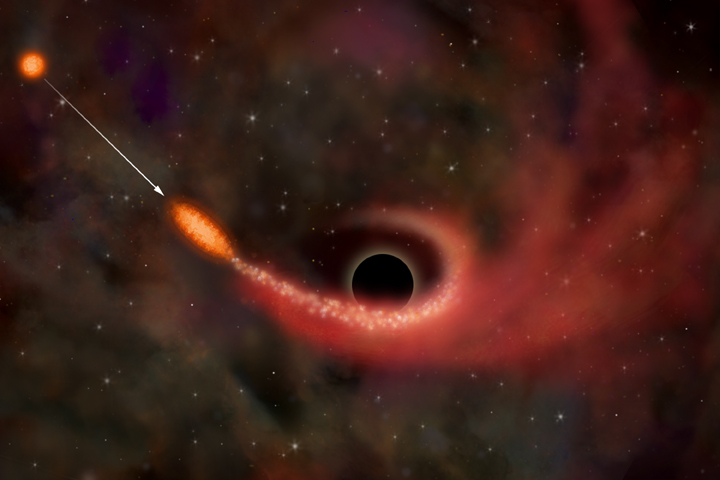
In the kickoff plenary of #AAS235, Suvi Gezari (University of Maryland) got us ready for breakfast by illuminating the stellar snacks of black holes. Just like how the tidal forces of the Moon stretch and squeeze the Earth (giving us, for example, high and low tides on Waikiki beach), black holes exert tidal forces on stellar bystanders. Particularly unlucky stars can be ripped apart entirely by the black hole, leading to a so-called tidal disruption event (TDE). This happens when a star enters the black hole’s tidal disruption radius, which is dependent on the star’s size and the relative mass between the star and black hole. Since the tidal disruption radius of a star is a direct probe of the black hole mass, observations of such events can tell astronomers about the black hole that was responsible, as well as properties of the star that was disrupted itself.

Tidal Disruption Event
Figure 1: An illustration of a tidal disruption event. As the star approaches the black hole, it gets torn apart by the gravitational forces and accretes around the black hole. [NASA/CXC/M.Weiss]

Behemoth black holes, larger than about 100 million solar masses, will swallow stellar interlopers entirely before they can be ripped apart. This is because the tidal disruption radius of the black hole is inside the black hole’s event horizon (i.e., where no light can escape). However, TDEs are an excellent probe for lighter supermassive black holes, as well as the infamous and elusive intermediate-mass black holes. Gezari described how observations of TDEs are excellent probes for lower-mass supermassive black holes, allowing astronomers to better probe the coevolution of black holes and lower-mass galaxies.

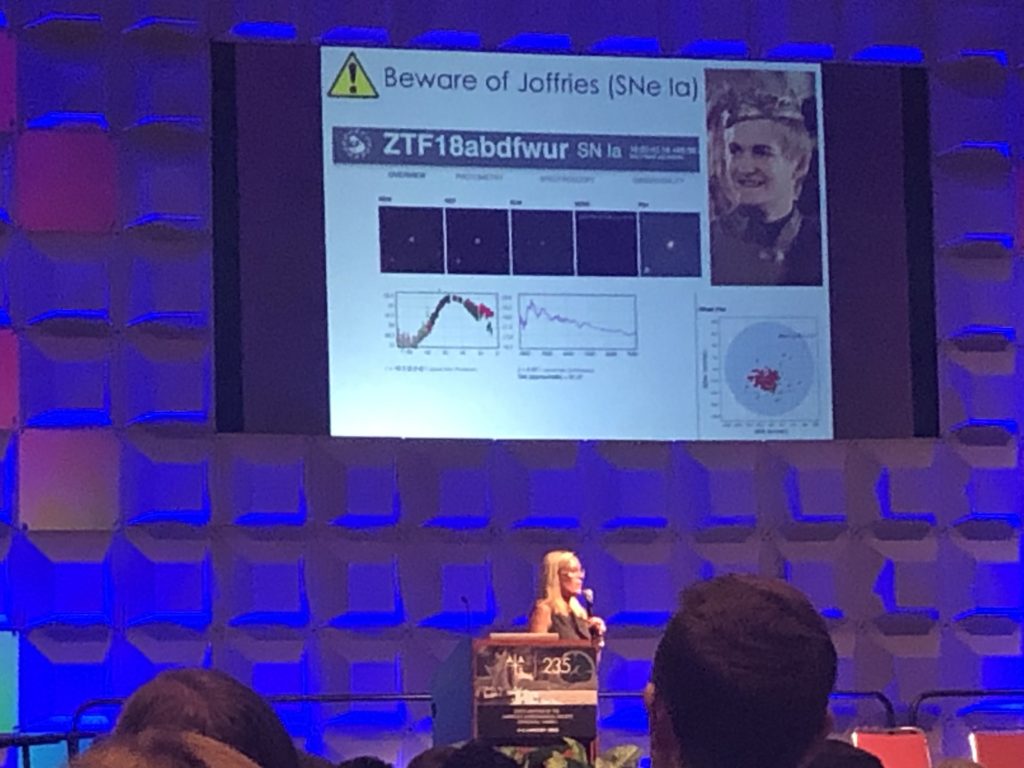
Gezari highlighted the wide range of efforts across the electromagnetic spectrum that contribute to the detection and characterization of TDEs, and how the discovery of these transients has been propelled forward by optical wide-field time domain surveys. High cadence surveys such as ASAS-SN and Pan-STARRS can characterize the optical evolution of these rapidly-evolving transients in great detail, and are excellently complemented by observations in higher-energy ultraviolet and X-ray observatories such as Swift. Gerazi discussed some of the recent surprises of TDE science, such as multiple populations of TDEs separated by their emission temperature and spectral characteristics, as well as the lack of TDE observations in young blue galaxies. Gerazi then stressed how current (e.g., ZTF) and future (e.g., LSST) wide-field time domain surveys will produce an avalanche of TDE candidates to help better our understanding of these interesting transient events and the black holes responsible for them, and identifying TDE candidates from the plethora of transients is of utmost importance. She closed her plenary by overviewing a handful of ZTF TDE discoveries, which her team conveniently nicknamed after Game of Thrones characters…make sure to beware of Joffries!

joffrey
ZTF18abdfwur, a.k.a. a “Joffrey”, an example of a Type Ia supernova masquerading as a TDE.

Press Conference: Galaxies & Their Black Holes (by Susanna Kohler)

The first press conference of the meeting opened on large scales, discussing some of the latest things we’ve learned about massive black holes and galaxies.

We know that nearly every large galaxy hosts a central supermassive black hole weighing millions to billions of solar masses. But do dwarf galaxies have equivalently massive tenants? Amy Reines (Montana State University) and collaborators used high-resolution Very Large Array observations to go on a hunt for radio-bright black holes in dwarf galaxies — with great success! The team found a total of 13 massive black holes — they estimate these probably weigh around 400,000 solar masses — in dwarf galaxies in their survey. Intriguingly, not all of them are located in their galaxies’ centers; many are instead wandering around the outskirts of their hosts. Reines and collaborators suggest this is likely due to recent interactions and mergers that kicked these black holes out of the galaxies’ centers. Unlike in large galaxies, where the supermassive black holes are heavy enough to quickly sink back to their galaxies’ centers, these dwarf-galaxy black holes take longer to settle back down. Press release

In keeping with the theme of galaxy interactions and mergers, Ezequiel Treister (Pontificia University Católica de Chile) next presented on new observations of NGC 6240, a merging galaxy system located 400 million light-years away from Earth. Since this system is still in the process of merging, it still has two nuclei, each containing a supermassive black hole. The new observations from the Atacama Large Millimeter/submillimeter Array (ALMA) have revealed a bridge of cold molecular gas that stretches between the two supermassive black holes, fueling them as the galaxies collide. We’re super lucky to have captured this moment, since the bridge of gas is a transient structure that will likely only last around 10 million years — the blink of an eye in galactic timescales! In about 2 billion years, the nuclei will have merged, and the final result will be a massive elliptical galaxy with a single black hole. Press release


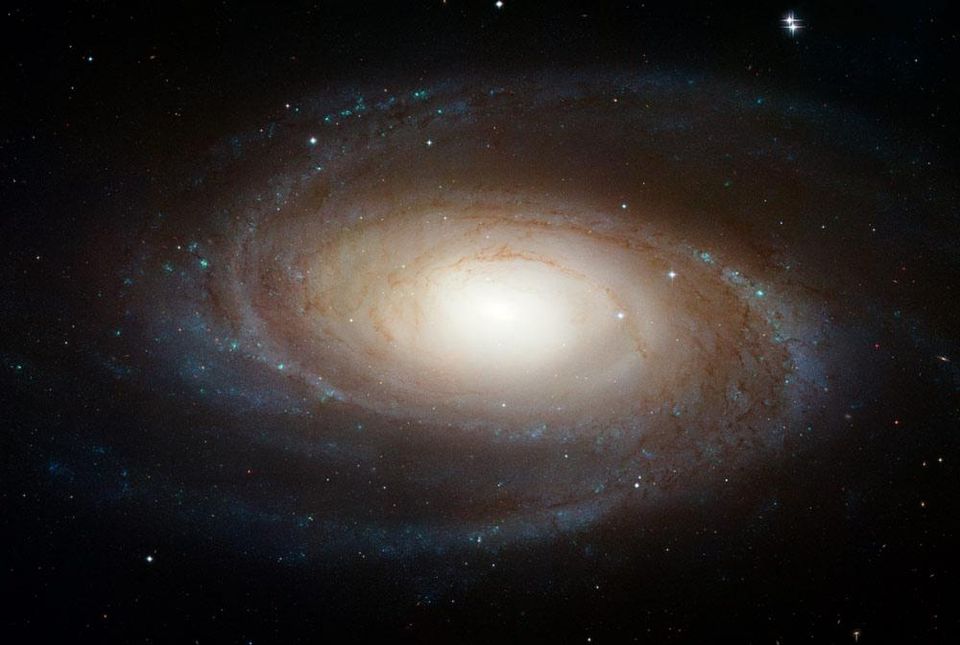
In 1980, astronomer Vera Rubin measured the rotation of the spiral galaxy UGC 2885, providing evidence for a large amount of dark matter in this galaxy. Now, Benne Holwerda (University of Louisville) and collaborators have used the Hubble space telescope to image this galaxy in high detail (see the cover image at the top of the page), further exploring the structures of this gentle giant. UGC 2885, nicknamed “Rubin’s Galaxy”, is one of the largest known galaxies in the nearby universe, clocking in at 2.5 times wider than the Milky Way and with 10 times the number of stars. Scientists are still working to understand how a galaxy is able to grow to this enormous size. Press release

When was the last time a hydrogen atom did anything interesting on a Saturday night, like going to a party and getting ionized? James Rhoads (NASA Goddard Space Flight Center) points out that, for a typical atom, the last time anything interesting happened was during reionization, a period of time between 150 million and one billion years after the Big Bang. Using the Cosmic DAWN Survey, Rhoads and collaborators discovered EGS77, a group of galaxies from just 680 million years after the Big Bang that contains some of the first stars that formed in the universe. The observations show overlapping bubbles of ionized gas around these early galaxies — signs of the start of reionization, which ultimately cleared the way for light to travel through our universe. Press release


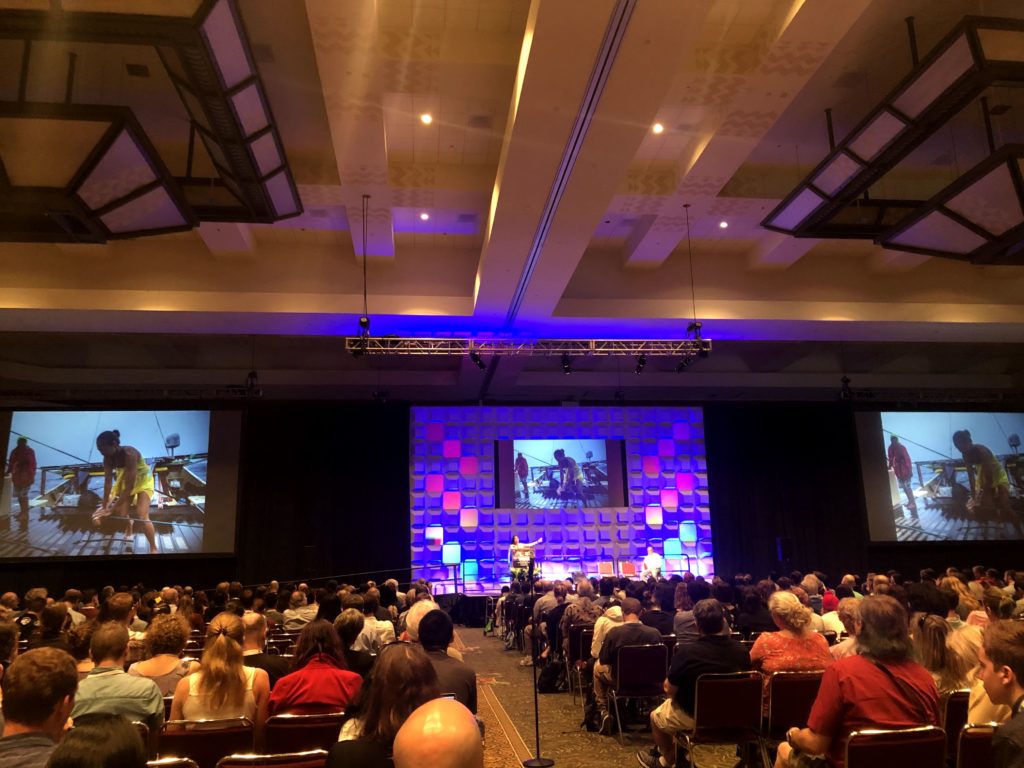
Plenary Lecture: He Lani Ko Luna, A Sky Above: In Losing the Sight of Land You Discover the Stars (by Kate Storey-Fisher)

Father-daughter speakers Kālepa Baybayan and Kala Baybayan Tanaka led us on a seafaring journey in their plenary talk. As navigators with the Polynesian Voyaging Society, Baybayan and Tanaka use the stars for navigation by sea, tapping into indigenous astronomical knowledge and traditions.

Baybayan began by telling the story of humanity spreading across the globe, first by land and later by sea. Around 4,000 years ago, the first seacraft was developed, and the art and science of navigation was born. One seafaring community, the Lapita, spread from Southeast Asia to archipelagos throughout the Pacific, leaving behind a trail of broken pottery that allowed researchers to trace their trajectory.

In the early 1970s, the Polynesian Voyaging Society was established, and they set out to demonstrate indigenous navigation practices. Baybayan was captain of the Hōkūleʻa, a historically accurate Polynesian canoe, which set out from Hawaiʻi in 1976. Using only Polynesian navigation techniques, the voyagers navigated to Tahiti in 33 days. The navigation system relies on astronomy, meteorology, and mathematics — the same foundations as those used today.

Hokule'a
The arrival of Hōkūleʻa, a reconstruction of a traditional Polynesian voyaging canoe, in Honolulu from Tahiti in 1976. [Phil Uhl]

Tanaka became hooked on sea navigation as a high schooler after a 24-hour voyage with her father. She learned to use the swells and the stars as guides, and even to recognize the sound of the breathing of dolphins swimming alongside them. In 2013, she participated in the Mālama Honua Worldwide Voyage, in which over 245 voyagers circumnavigated the globe (in many legs) to educate communities on living sustainably. Together they traveled 60,000 nautical miles and visited 150 ports. Tanaka now educates young people on the stellar compass and the history of voyaging.

Bayaban and Tanaka concluded with an emphasis on the science that grounds their work. They use the same star maps as astronomers — just labelled with the stars’ Hawaiʻian names.

 Kala Baybayan Tanaka presentation
Kala Baybayan Tanaka speaks about her experience as a voyager with the Polynesian Voyaging Society.

Press Conference: TEAM-UP for Physics & Astronomy (by Ellis Avallone)

The second press conference of the meeting took a different turn. Instead of discussing discoveries of astrophysical phenomena, a task force from the American Institute of Physics (AIP) reported on findings in a recent report on “Elevat[ing]African American representation in physics and astronomy.”


The CEO of AIP, Michael Moloney, opened by introducing the motivation for compiling this report. He stated that over the past decade the number of physics students graduating with physics bachelor’s degrees had doubled, but the number of African American students had stayed roughly the same. The AIP sought to find out why.

Next, Edmund Bertschinger (Massachusetts Institute of Technology), co-chair of the task force organized to address this disparity, discussed the framework of their study and how it was conducted. The “Task force to Elevate african AMerican representation in Undergraduate Physics & astronomy”, or TEAM-UP, conducted surveys of students and faculty, in-person interviews of African American students, and on-site visits to institutions that did an exceptionally good job of retaining and graduating African American students. TEAM-UP also recruited social scientists to the task force to assist with data interpretation. It’s also important to note that these data were interpreted under the assumption that “African American students have the same motivation and intellect as students in other racial groups.”

Bertschinger also outlined several ways in which this report stands out from previous reports on retaining minoritized students in STEM. To start, this report examines the practices in physics and astronomy in particular, and not just academia as a whole. The report also focuses heavily on the culture of the field, and the ways in which that culture is detrimental to African American students. Finally, this report discusses recommendations for addressing these issues and creating long-lasting change within departments. These recommendations were informed by practices at model institutions with high retention rates of African American students.

Finally, Jedidah C. Isler (Dartmouth College) introduced several of these recommendations. Isler began by thanking the students who were involved in the report, as they were the group who are being most affected. One recommendation seeks to address the fact that African American students tend to doubt themselves in the classroom far more than others. “That is ubiquitous in their experience,” says Isler. “If you can get students to feel confident in [the classroom]they feel like they belong.” The report emphasized the importance of “counterspaces”, places of refuge from academic spaces where students can feel welcomed. Departments need to become aware of these spaces, and actively seek out these spaces for students who need support. Additionally, faculty need to set norms for both the classroom and departments and have a responsibility to mitigate and prevent exclusionary behavior. Press release.


Press Conference: Seminar for Science Writers: Hubble @ 30 (by Briley Lewis)

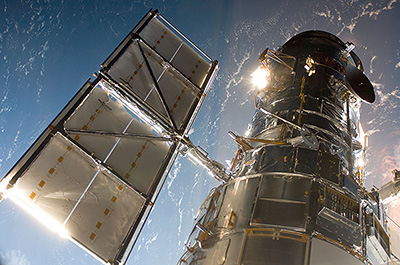
Hubble
Hubble during the 2009 servicing mission. [NASA/Hubble]

Launched in April 1990, Hubble is still in good shape despite its age. Jennifer Wiseman (NASA Goddard SFC) gave an overview of Hubble’s impressive history, noting major discoveries such as verifying the existence of dark energy and the first characterization of an exoplanet atmosphere. It has answered new questions and made new observations that weren’t anticipated at its inception, such as detecting radiation from a gravitational wave source. Thanks to multiple servicing missions (the most recent in 2009), the telescope and its instruments have been not only maintained but also upgraded. Wiseman claims that the telescope is at its “peak of scientific return”, with over 1,300,000 observations completed and 15,000 papers published using Hubble data.

Artist’s impression of the TRAPPIST-1 planetary system
This artist’s impression shows the view from the surface of one of the planets in the TRAPPIST-1 system. [ESO/N. Bartmann/spaceengine.org]

One of the unanticipated uses for Hubble is to study exoplanets; Nikole Lewis (Cornell University) aptly pointed out that “the field of exoplanet science is younger than the HST.” After the Nobel-winning discovery of 51 Pegasi b in 1995, HST observed sodium in the atmosphere of exoplanet HD209458 b, pioneering the technique of transmission spectroscopy. Using its valuable ultraviolet-sensing capabilities, it revealed atmospheric escape on exoplanets, and in recent years HST has been valuable in follow-up of habitable-zone worlds such as TRAPPIST-1 and K2-18b. Going forward, HST will still have a valuable role as our important window into the ultraviolet and visible, complementary to the infrared capabilities of the James Webb Space Telescope.

Looking closer to home, Hubble has also been valuable in our own solar system, serving as critical support for in situ missions. Heidi Hammel (Association of Universities for Research in Astronomy) explains how it gave us global context and dust storm warnings for observations from Mars missions; discovered four moons around Pluto and found New Horizons’ second target, the Kuiper Belt Object MU69; and studied aurorae on giant planets like Jupiter (where the Juno mission is currently orbiting). Recently, Hubble even captured images of the first interstellar comet, 2I/Borisov. According to Hammel, what makes Hubble unique in the solar-system domain is its ability to do multi-decade, multi-wavelength, multiple-object studies, making it complementary to shorter-lived, specific space missions.

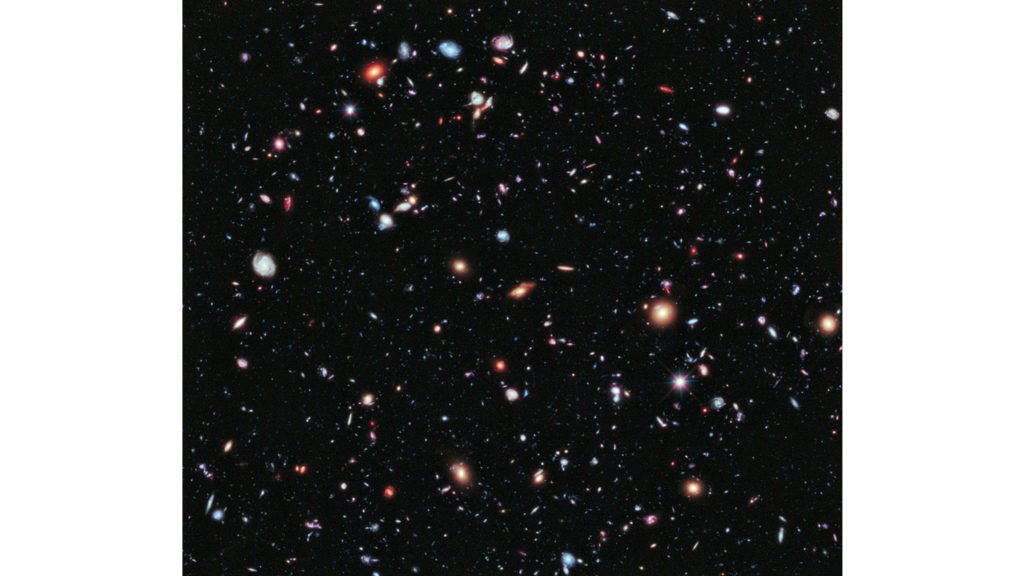
Lastly, Garth Ilingworth (UC Santa Cruz) brought us back to the big picture, discussing Hubble’s pioneering deep field images. Starting with the first Hubble Deep Field (HDF) in 1995, the telescope has produced successively more impressive images such as 2009’s Hubble Ultra Deep Field (HUDF09) and 2012’s Extreme Deep Field (XDF). The XDF is the culmination of 23 days of exposure from 800 orbits, 2,963 images taken over a span of 10 years. It detects distant galaxies up to 13 billion years ago, covering 97% of all time.
Images like these are part of what have secured Hubble’s lasting legacy, not only in science but also in popular culture. Ray Villard (STScI) remarked on Hubble’s legendary status, known as a household name and referenced in many forms of popular media, in part thanks to 1,000+ press releases based on the telescope’s data. According to this panel, HST should have a bright future ahead still, with NASA committed to funding it as long as it is “scientifically productive.” Scientists are already preparing for complementary observations to JWST and future missions, and although HST will de-orbit eventually, it seems that day should hopefully be far away.

Hubble Extreme Deep Field
The Hubble Extreme Deep Field (XDF), assembled from 10 years of Hubble data, covering a swatch of sky similar in size to the full Moon. [NASA]

HAD LeRoy E. Doggett Prize Lecture: From the Invention of Astrophysics to the Space Age: The Transformation of Astronomy 1860-1990 (by Mike Zevin)

For the next plenary lecture, Robert W. Smith (University of Alberta) took us on a trip back through time to examine the evolution of astronomy and astronomers over the past 150 years. According to many prominent mid-19th-century astronomers, astronomy was regarded as the study of the motion of the heavenly bodies. The natural laws that governed the motion of these bodies was already set out; progress in astronomy was reliant solely on making more precise measurements. Because of this, there was not thought to be much room for new discovery. Smith argued that one of the reasons that countries were still pouring money into constructing massive observatories was to display national prowess.

With the advent of the spectrogram, astronomers in the 1860s such as Sir William Huggins began to dissect the light coming from stars and nebulae, giving birth to the field known as astrophysics. However, Smith pointed out that early astrophysicists were not like the astrophysicists that would emerge later. In scientific texts, stars were described as objects designed to fit the special purposes of living beings on worlds going around them, a very theological view. This philosophy had a paradigm shift not because of any astronomical theory, but rather because of the theory of evolution. The story thus shifted from one of natural theology to scientific naturalism — rejecting religious input into scientific research.
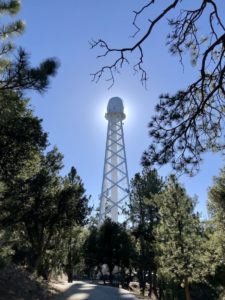
Mt. Wilson Solar Telescope
The Snow Solar Telescope, the first telescope installed at the fledgling Mount Wilson Solar Observatory. [AAS Nova/Susanna Kohler]

Smith then turned to the 20th century, where astronomy saw an increase of professionalism and less room for amateur astronomers to make a substantial scientific impact. Due to millionaires like Carnegie showing strong interest in astronomy (and funding massive observatories such as Palomar, Terkes, and Mt. Wilson), the US became a leading power in observational astronomy. With the rise of photography, new opportunities were also available for underrepresented communities in the field. Women astronomers, for example, were able to move out of the “domestic sphere” (i.e., could only work as an astronomer if they were married to an astronomer). The standard example of this is the group of Harvard Computers, though a number of other such groups appeared in the early 1900s. In the 1930s, astronomy encountered a great divide: the “one-galaxy universe” view and the “many galaxies all expanding away from another in a vast universe” view, which Smith said challenged what astronomers regarded as the realm of science versus the realm of metaphysical. Smith closed with how, thanks in part to the Cold War, the field astronomy became much more political, which was necessary for projects like the Hubble Space Telescope to come to fruition after its conception in the 1970s.


Henry Norris Russell Lecture: Intriguing Revelations from Lithium, Beryllium, and Boron (by Tarini Konchady)

This plenary was given by Ann M. Boesgaard (University of Hawaii), this year’s winner of the Henry Norris Russell Lectureship. Boesgaard received the award for “her pioneering, sustained work in using light-element abundances to test Big Bang nucleosynthesis and to probe stellar structure and stellar evolution”.

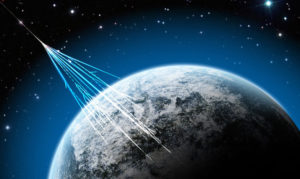
cosmic rays
Artist’s impression of the shower of particles caused when a cosmic ray, a charged particle often produced by a distant astrophysical source, hits Earth’s upper atmosphere. [J. Yang/NSF]

Boesgaard focused on the three elements in her talk, specifically lithium, beryllium, and boron. These three elements are oddly rare in the universe, and it took the second half of the 20th century to figure out why. Some amount of lithium was formed in the Big Bang, but it wasn’t enough to explain the abundances of lithium observed in stars. The famous 1957 B2FH paper (written by Margaret Burbidge, Geoffrey Burbidge, William A. Fowler, and Fred Hoyle) laid out how most of the elements were created in stars but the creation of lithium, beryllium, and boron was attributed to a mysterious unknown “x-process”. The x-process turned out to be “galactic cosmic ray spallation” — the phenomenon of cosmic rays breaking down heavier elements into lighter elements.
With the creation problem solved, Boesgaard pivoted to how the destruction of these light elements can help us probe stellar structure. This is where spectra do the heavy lifting and where Boesgaard provided some anecdotes on how astronomy was done in the age of photographic plates (as opposed to today’s charge-coupled devices, or CCDs). Two star clusters came up repeatedly — the Hyades, which is ~650 million years old, and the Pleiades, which is ~100 million years old.

In the Hyades, when plotting lithium abundance versus temperature, a dramatic dip, rise, and falloff are seen. This is absent in the Pleiades, suggesting that whatever process is destroying lithium in stars happens over long timescales. When similar plots were made for beryllium and boron in both systems, a shallower dip was seen but a falloff was not.
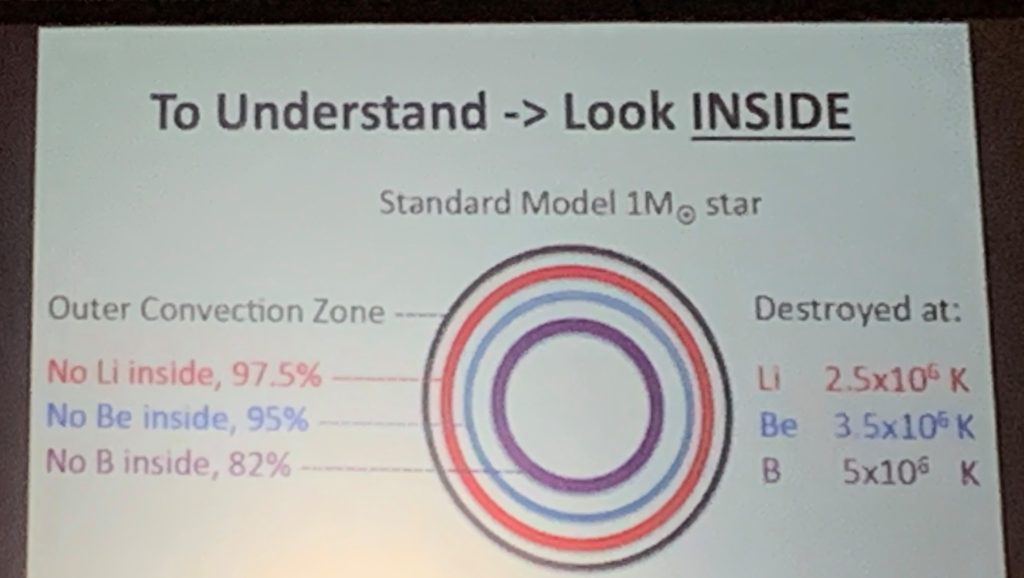
The depletion of lithium, beryllium, and boron is likely due to these elements being dragged into the interior of stars and destroyed. However, the varying hardiness of the elements means that they are destroyed at different temperatures and layers within the star. Lithium is the fastest to be destroyed, followed by beryllium and then boron. The takeaway is that by examining the surface abundances of lithium, beryllium, and boron, we can probe the interiors of stars!

Boesgaard talk
The temperatures and inner stellar layers at which lithium, beryllium, and boron are destroyed (2.5 million kelvin, 3.5 million kelvin, and 5 million kelvin respectively).
astrobites aas 235

This week, we’re attending the American Astronomical Society (AAS) meeting in Honolulu, Hawai’i!

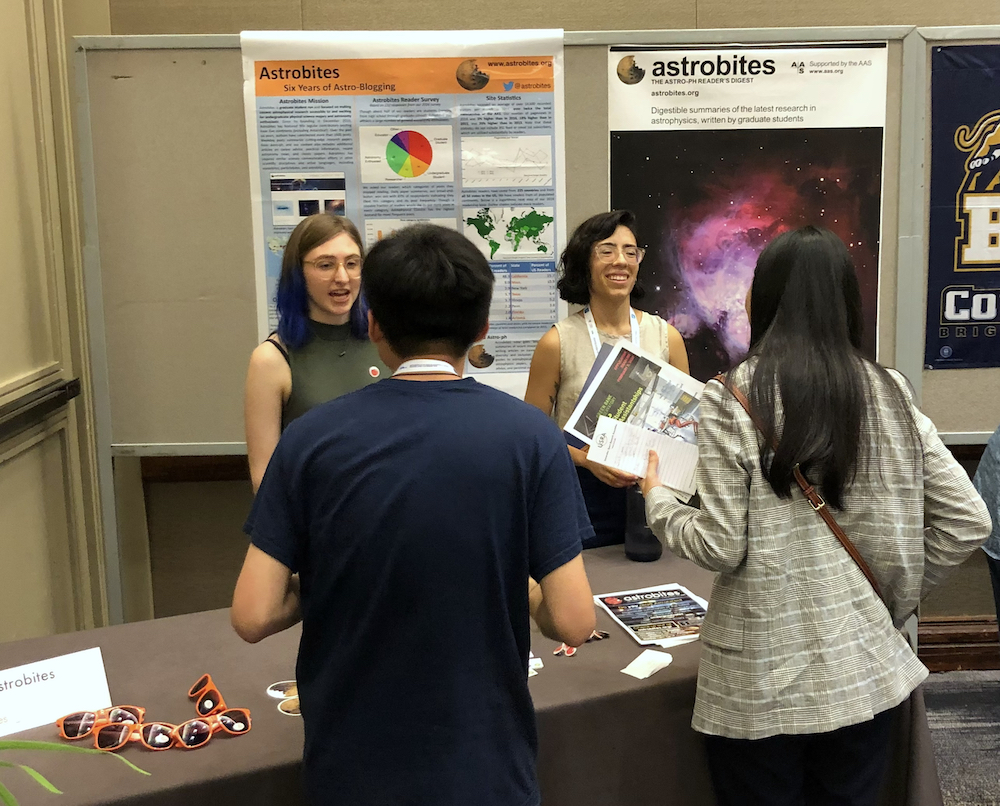
astrobites table

Astrobites authors talk to students at the undergraduate orientation at AAS 235 Saturday night.

Thanks to all of you who stopped by the Astrobites table at the undergraduate reception last night; we look forward to seeing you around at the rest of the meeting. If you’re at the meeting and missed us at the undergrad reception, please stop by and visit this week! You can find us at the AAS booth (#423) in the exhibit hall — we have sunglasses, stickers, pins, and more, so swing by to pick up some swag and say hi.

For anyone who’s missing the meeting, or for those attending who can’t make all the sessions you want to: Astrobites and AAS Nova are working together to report highlights from each day. You can follow along on astrobites.org or at aasnova.org; look for an update after each day of the meeting. If you’d like to see more timely updates during the day, we encourage you to search the #aas235 hashtag on twitter.

If you’re interested in reading up on some of the keynote speakers before their talks at the meeting, keep following along at astrobites.com … we’ll be posting interviews with speakers in advance of their keynote talks. Several of these interviews for AAS 235 have already been published; you can check them all out under the aas235 tag on astrobites.com. This is a great opportunity to learn more about prominent astrophysicists and the paths they took to get where they are today!

Lastly, if you’d like to come chat with the AAS publishing team, we’d love to see you at the AAS booth or at any of several events during the meeting:

  • Celebration of a new AAS/IOP ebook on astronomy education
    Sun Jan 5 during the 5:30 pm poster session (with free beer!)
    AAS Booth (#423)
  • AAS Publishing: What’s New
    Tues Jan 7 12:30-2:00 pm (with free lunch!)
    Convention Center 301B
  • AAS Publications Committee Meeting Open Session
    Wed Jan 8 2:00-4:00 pm
    Convention Center 305B
astronomy education ebook

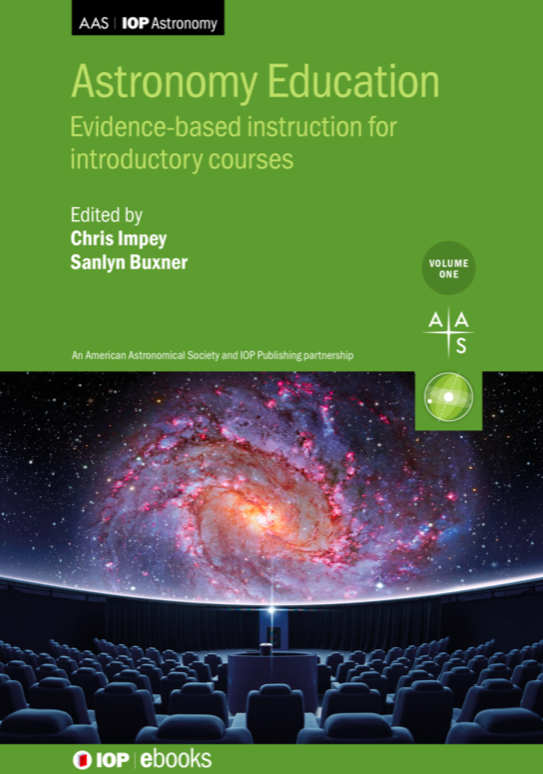
The American Astronomical Society recently launched a new partnership with IOP to produce a series of ebooks about astronomy and astrophysics. One of the newest books in this line, Astronomy Education, Volume 1: Evidence-based instruction for introductory courses, is edited by University of Arizona professors Chris Impey and Sanlyn Buxner, and it’s now available for download with an institutional IOP ebook subscription.

Why Should We Care About Astronomy Education?

Any astronomer can (and should!) argue the importance of sharing our understanding of the universe with students. But astronomy education has a particularly unique role in undergraduate education: it’s one of the most popular subjects for non-science majors, and it often represents the last formal exposure to science for these students.

It stands to reason, then, that a well-taught introductory astronomy course can be enormously impactful. But what does it mean to teach an intro astronomy class well?

Where Astronomy Education Research Comes In

AER ebook cover

Cover of the new AAS/IOP ebook edited by Drs. Chris Impey and Sanlyn Buxner, Astronomy Education, Volume 1.

To address questions about student learning, we turn to the field of education research. In this field, scientists methodically explore different teaching techniques and conduct studies to determine what strategies are most effective when trying to achieve specific outcomes — like improving test scores, increasing retention, or maximizing student engagement.

This education research has established many evidence-based instruction methods and practices that can be used to improve undergraduate education — and these strategies, specifically as applied to undergraduate introductory astronomy courses, are clearly outlined in the sections of Astronomy Education, Volume 1.

What Can You Learn from Astronomy Education, Volume 1?

Central to the strategies discussed in this ebook is the idea of learner-centered teaching — an alternative to a lecture-based instruction format that instead encourages students to be active participants in their education. The authors of Astronomy Education, Volume 1 provide insight into many different aspects of learner-centered teaching, like how to create student buy-in, how to develop appropriate course materials, and how to measure the impact your teaching strategies are having.

Dr. Impey and Dr. Buxner’s informative book provides information and resources for those who are teaching intro astronomy for the first time, as well as for those who want to add to their toolkits and improve their students’ learning. Chapters in the book include:

  • Learner-Centered Teaching in Astronomy
  • Effective Course Design
  • Lecture-Tutorials in Introductory Astronomy
  • Technology and Engagement in the University Classroom
  • Using Simulations Interactively in the Introductory Astronomy Classroom
  • Practical Considerations for Using a Planetarium for Astronomy Instruction
  • Authentic Research Experiences in Astronomy to Teach the Process of Science
  • Citizen Science in Astronomy Education
  • WorldWide Telescope in Education
  • Measuring Students’ Understanding in Astronomy with Research-based Assessment Tools
  • Everyone’s Universe: Teaching Astronomy in Community Colleges
  • Making Your Astronomy Class More Inclusive

More Information

Astronomy Education, Volume 1 ebook download: https://iopscience.iop.org/book/978-0-7503-1723-8

If you plan to be at AAS 235 in Honolulu, HI, come by to celebrate the publication of Astronomy Education, Volume 1 and to meet Dr. Impey, Dr. Buxner, and many of the book’s contributors in person! We’ll be at the AAS booth (#423) in the exhibit hall on Sunday, 5 January at 5:30 p.m. during the poster session.

Keep an eye out in 2020 for Astronomy Education, Volume 2: Best Practices for Online Learning Environments, edited by Chris Impey and Matthew Wenger.

To learn more about the AAS/IOP ebook partnership and current and upcoming titles, visit http://iopscience.iop.org/book/aas.

Citation

Chris Impey and Sanlyn Buxner 2019. Astronomy Education, Volume 1: Evidence based instruction for introductory courses. doi:10.1088/2514-3433/ab2b42

UAT cover

If you’ve submitted an article to AAS journals recently, you may have noticed that our historical subject keywords have been replaced with something new: Unified Astronomy Thesaurus (UAT) terms.

What is the UAT, and why does it matter? We sat down with Katie Frey (Wolbach Library, Center for Astrophysics | Harvard & Smithsonian), UAT curator, to find out.

Out With the Old

Broadly speaking, the UAT is an effort to unite all astronomers under a single evolving vocabulary that governs keywords and classification for astronomy research. The UAT replaces the old AAS subject keywords, which hadn’t been updated in many years.

But the UAT is more than just a new list of keywords, according to Frey. “A lot of people think a thesaurus means just alternate ways of saying the same word, but the real technical definition of a thesaurus is a hierarchical structure.”

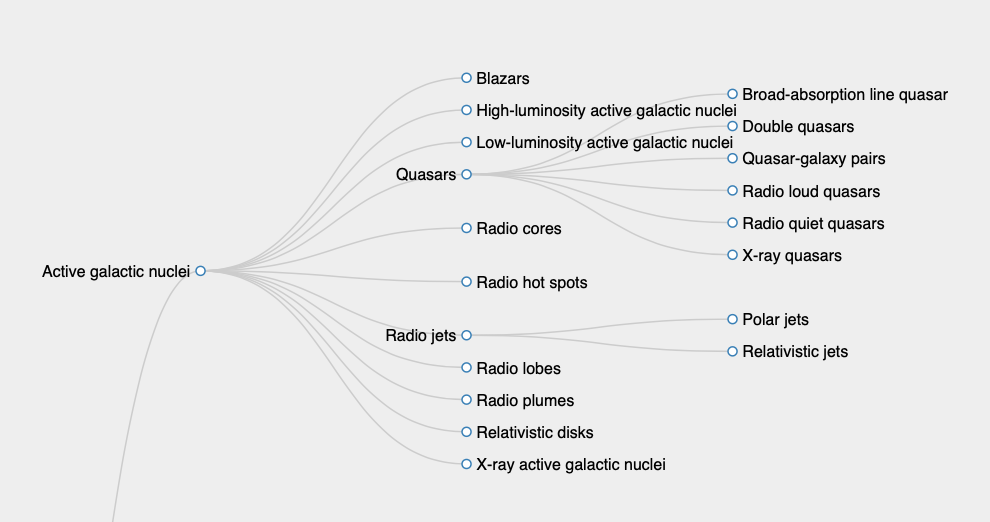
UAT sorting

You can explore the UAT visually using this neat sorting tool. [UAT]

The UAT builds structure into its unique identifiers by identifying relationships between concepts — for instance, solar flares are a type of solar activity, and they’re related to stellar flares. By tracking these connections, the UAT not only allows AAS authors to categorize their work with the most accurate identifiers, but also makes it easier for readers to find desired articles or other resources.

Unifying Resources

One benefit to the UAT is that it’s not only being used by the AAS journals. The goal of the Thesaurus is cross-program adoption, Frey says.

Early adopters of the UAT include the AAS, the Astrophysics Data System (ADS), and the International Virtual Observatory Alliance (IVOA), as well as the Space Telescope Science Institute (STScI) supported proposal system for the Hubble Space Telescope.

Frey hopes that, once established, the UAT will be further adopted by other astronomical publishers, observatories, astronomical databases like SIMBAD and NED, astronomical conferences, and more. When all astronomy resources are linked by a common identification system like the UAT, users will be able to access a wealth of information about an astronomical concept in a clear and central way.

A Living Framework

The UAT uses unique identifiers — rather than words — for concepts. One reason for this is that it allows translation of a concept into another language: “dark matter (353)” is the same identifier as “暗物质 (353)”, for instance. But another reason is because it allows the UAT to evolve over time.

galaxy or nebula

Galaxy or nebula? There was a time when astronomers didn’t know the answer. [NASA/ESA/Hubble Heritage Team (STScI/AURA)]

“Our understanding of things is always changing,” Frey points out. “We want to reflect the science of astronomy as we understand it today, with the ability to change it for how we understand it 10 years from now.”

Frey cites the example of a historical term, “gaseous cloud”, which astronomers once used to refer to objects we now identify as either “nebulae” or “galaxies”. Within the framework of the UAT, a historical article tagged with the identifier “gaseous cloud” can be correctly linked to more recent articles that use modern terms, whereas a simple static keyword structure would lose that connection.

The Thesaurus is managed from a GitHub repository where users can submit issues as they see concepts or relationships missing or mis-categorized. Frey encourages back-and-forth discussion about concepts in GitHub comments, with the goal of keeping the UAT’s structure transparent and public. She plans to issue a new release of the UAT roughly once a year.

How You Can Help

If you’re an author with AAS journals, Frey encourages you to think about your keywords before it’s time to submit your article! The UAT’s living structure relies on experts like you to make suggestions for changes, and it takes time for those to push through. You can check now to see if your field is well-described by using one of the following tools to explore the UAT:

UAT alphabetical browse
UAT hierarchical browse
UAT visual sorting tool

If you find anything that needs updating, you can submit an issue on GitHub or contact Katie Frey directly.

Happy categorizing, and here’s to hopes of a unified organization for astronomy in the future!


Background image in the UAT cover photo credited to ESO/S. Guisard.

The Planetary Science Journal

One of the best aspects of being owned and run by a professional society is that AAS Publishing offerings are shaped directly by the community we serve.

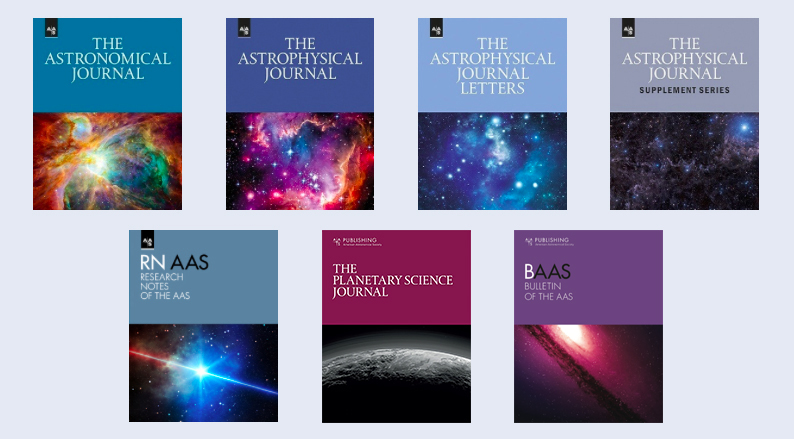
While the scopes of our established journals — The Astronomical Journal, The Astrophysical Journal (ApJ), ApJ Letters, ApJ Supplement Series, and Research Notes of the AAS — are broad, members and authors have asked us for a new journal dedicated exclusively to planetary science content.

We’re therefore proud to respond this year with the announcement of a new peer-reviewed publication in the AAS journal family: The Planetary Science Journal (PSJ), produced in a partnership between the AAS and its Division for Planetary Sciences (DPS). The PSJ has now officially opened for submissions.

AAS Publication Family

The PSJ joins the family of AAS publications.

Exploring Close to (and Far from) Home

What can you expect to find in the PSJ? The journal welcomes all studies addressing recent developments in planetary science — a field that includes both our own solar system and other planetary systems.

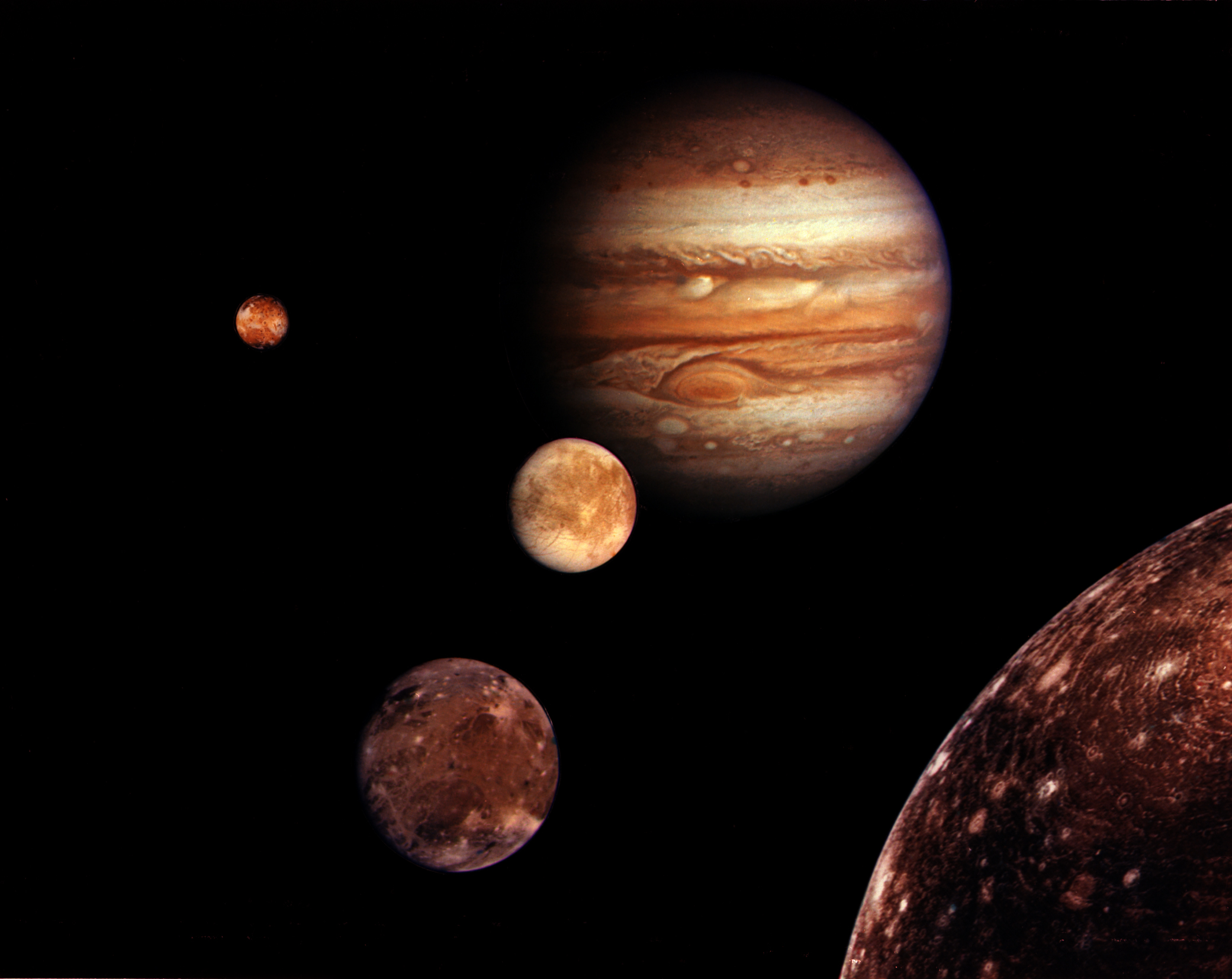
Jupiter moons

A montage of Jupiter and its four largest moons. [NASA/JPL]

This means the PSJ will be open to explorations of Europa’s ocean depths and icy plumes, the motions of dust on Mars, the structures of mountains and valleys on Pluto, the turbulence in Venus’s thick cloud layer, the dynamics of nearby rocky asteroids, the atmospheric compositions of distant exoplanets — and so much more.

As with the other AAS journals, the PSJ welcomes studies that include not only observational discoveries, but also theoretical insights, new models, outcomes from laboratory studies, details about instrumentation, and even field studies.

New Practices

While the PSJ will largely follow the model of the other AAS journals, we’ll be showcasing a few new practices as well.

First, The Planetary Science Journal will be a fully gold open access journal, which means that its articles will be free for all to read immediately upon publication. The articles will be published under a Creative Commons CC BY 4.0 license.

Next, in accordance with common practice in the planetary science community, articles submitted to the PSJ will generally be sent to two reviewers to provide more feedback to authors.

Finally, the PSJ seeks to minimize implicit bias by instituting a Dual Anonymous Review policy: by default, both authors and reviewers will be anonymous throughout the refereeing process unless they choose to identify themselves. This standard practice is intended to protect authors potentially impacted by negative biases and increase the inclusivity of the field.

Leading the Charge

Faith Vilas

PSJ Editor Faith Vilas

The PSJ is fortunate to have Dr. Faith Vilas (Planetary Science Institute) at the helm as Editor for the journal. If you’ve submitted to AAS journals in the past, you may have had Faith as your scientific editor — her new position as Editor of the PSJ is not her first time working with the AAS journals!

Faith studies airless bodies like asteroids, the Moon, planetary satellites, and Mercury, and she’s built a long record of achievement throughout her career. Next week at the American Geophysical Union (AGU) meeting, Faith will be presented with the Fred Whipple Award, the highest honor given by the Planetary Sciences section of the AGU.

Find Out More and Submit

Will you, too, be at the AGU meeting in San Francisco next week? Stop by the IOP Publishing booth (1116) on Wednesday, December 11 at 3:45 to celebrate The Planetary Science Journal’s launch with us and meet Editor Faith Vilas!

Want to learn more about the PSJ? Read the press release about the launch or visit the PSJ’s home page at AAS Journals.

Ready to submit? We look forward to receiving your manuscript!

Judy Pipher

Dr. Judy Pipher first joined AAS Journals in 2002 as an ApJ editor. In the 17 years she’s served as editor since then, Judy has seen the journals undergo significant transitions. When journal topical corridors were first introduced in 2016, her expertise made her the natural choice for Lead Editor for the Interstellar Matter (ISM) and the Local Universe corridor.

The ISM and the Local Universe corridor includes articles related to stars and the medium between them, both in our own Milky Way and in nearby galaxies. Topics that fall under Judy’s purview encompass a rich diversity: everything from molecular clouds to protoplanetary disks, from star clusters to spiral arms, studied both theoretically and observationally across all wavelengths of light.

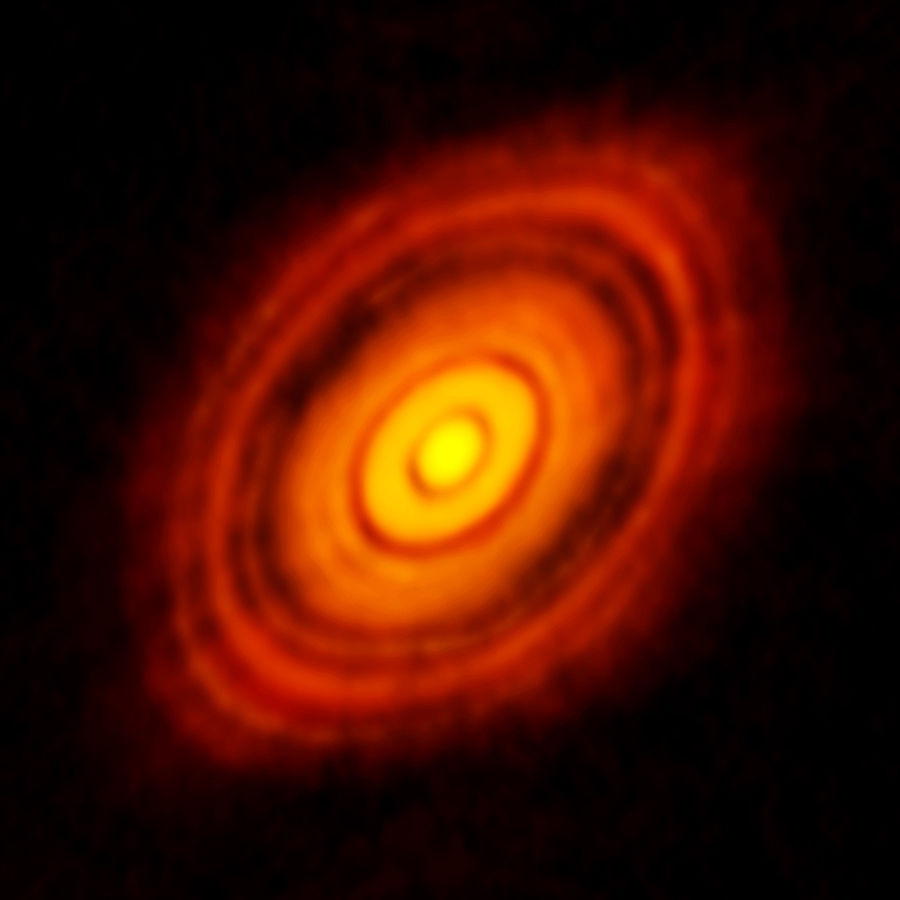
HL Tau

ALMA image of the protoplanetary disk surrounding the star HL Tauri. [ALMA (ESO/NAOJ/NRAO)]

Looking Ahead

What are the big things that Judy sees on the horizon for the field of ISM and the local universe?

Observations from the Atacama Large Millimeter/submillimeter Array continue to revolutionize our understanding of how planets form in the disks of dust and gas that surround young stars.

Another area of active research involves the relative roles of magnetic fields and turbulence in the molecular clouds that eventually collapse to form stars. Observatories around the world — from the submillimeter capabilities of JCMT or SMA to the polarization measurements enabled by the flying observatory SOFIA — are studying how these two components dictate the process of star formation, and we seem right on the brink of finally figuring it out. “I think we’re almost at the point where the effects of turbulence and the magnetic fields at a variety of stages can be put together in a very interesting way,” says Judy.

Developing a New Field

Judy’s own career is centered around the development of infrared detectors — essential tools for studying the hidden, dusty regions in our local universe.

When she started grad school, infrared astronomy was a relatively new field, and infrared detector arrays didn’t yet exist. Her thesis work involved building single-pixel infrared detectors, which she then launched on sounding rockets that briefly arced into space. “My thesis consisted of a number of five-minute observations,” she says. “In those days, nothing could be purchased; you had to make everything — which we did.”

Spitzer

Judy Pipher helped develop detector technology used on the Spitzer Space Telescope. [NASA/JPL-Caltech]

That experience provided a solid foundation for her career shaping the field of infrared detector technology. When the Spitzer Space Telescope was launched in 2003, it was carrying the state-of-the-art Infrared Array Camera (IRAC), featuring arrays that Judy and colleagues developed — and this is the only still-functioning instrument on the spacecraft! More recently, she has been working on developing a different type of detector array that can be used to observe at longer wavelengths on upcoming passively cooled space missions.

It’s an Education

With such a remarkable career at the forefront of infrared astronomy, it’s all the more impressive that Judy has had the time for her many years of service as AAS journals editor. But she values the opportunity to learn: “It’s so tempting not to be up to date on papers that are outside your narrow interests at the moment. But as an editor, you read such a wide variety of things — and it’s an education. And that’s wonderful.”

We hope you enjoyed this opportunity to learn more about Judy Pipher! You can expect to hear from her if you submit to the Interstellar Matter (ISM) and the Local Universe corridor in the future.

AAS

Tarini Konchady

Tarini Konchady (Texas A&M University) has been selected as our AAS Media Fellow for 2019–2020.

In 2017 we announced a new AAS-sponsored program for graduate students: the AAS Media Fellowship. This quarter-time opportunity is intended for current graduate students in the astronomical sciences who wish to cultivate their science-communication skills.

We are pleased to announce that Tarini Konchady, a graduate student at Texas A&M University, has been selected as our AAS Media Fellow for 2019–2020.

Tarini majored in physics at Johns Hopkins University, with a minor in space science and engineering. She is now in her third year of the astronomy PhD program at Texas A&M, working with Lucas Macri studying Mira variables to help calibrate the extragalactic distance scale.

AAS CVD 2019

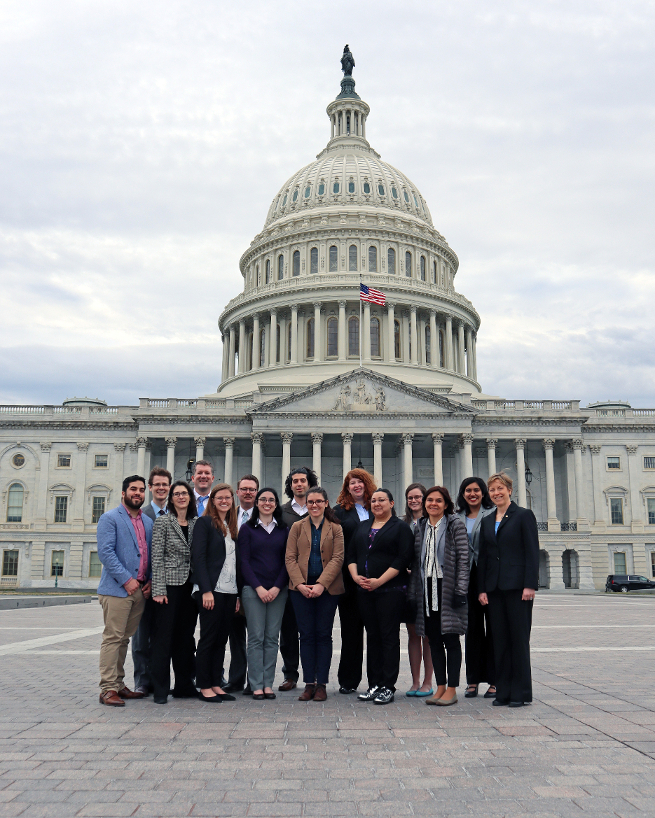
AAS Congressional Visit Days 2019 delegation, including AAS Media Fellow Tarini Konchady (second from the right). [Joel Parriott (AAS)]

Tarini is an active member of the broader astronomy community: she’s an author and editor for the graduate-student-run astronomy blog Astrobites, she co-organizes a chapter of Astronomy on Tap, and she’s been spotted at the Capitol as a member of the AAS’s Congressional Visits Day delegation.

You can expect to see Tarini around at upcoming AAS meetings, beginning with the January meeting in Honolulu, Hawai‘i, helping to run press conferences with AAS Press Officer Rick Fienberg. Also, keep an eye out for her posts on AAS Nova!

As we welcome Tarini, we’re also saying farewell to our inaugural AAS Media Fellow, Kerry Hensley. She’s continuing her PhD work in planetary science at Boston University, and she’s already ascended to new heights in science communication, working at Voice of America this past summer as an American Association for the Advancement of Science (AAAS) Mass Media Fellow.

Please join us in welcoming Tarini and in wishing Kerry well in her next adventures!

Venus

Editor’s note: We’re wrapping up a busy summer with one last conference: the EPSC-DPS joint meeting in Geneva, Switzerland. To celebrate the announcement of AAS Publishing’s new Planetary Science Journal, we’ll be bringing you some highlights from this planetary science conference all week!

Press Conference: Akatsuki Mission Results, 2020 Coordinated Venus Observations, and Science at Venus

Today’s press conference was a celebration of Venus, covering both current and future missions and theory.

Akatsuki
Akatsuki

Artist’s impression of the Akatsuki spacecraft at Venus. [JAXA/Akihiro Ikeshita]

Masato Nakamura (ISAS/JAXA) opened the session by providing us with an update on Akatsuki, the only operational spacecraft currently in orbit around Venus. Akatsuki was launched in 2010 and arrived in orbit at Venus in 2015. Since then, it’s been using its five different cameras to image Venus in wavelengths from infrared to ultraviolet.

Akatsuki’s primary objective is to help us understand the differences between Venus’s atmosphere and Earth’s. Besides a difference in composition and thickness, Venus’s atmosphere also has the peculiar property of rotating an astonishing 60 times faster than the planet itself (something we call “superrotation”). What causes this? How is it sustained? Akatsuki’s pictures are slowly helping us to better understand the dynamics and 3D structure of the atmosphere to answer these questions.

Akatsuki UV Venus

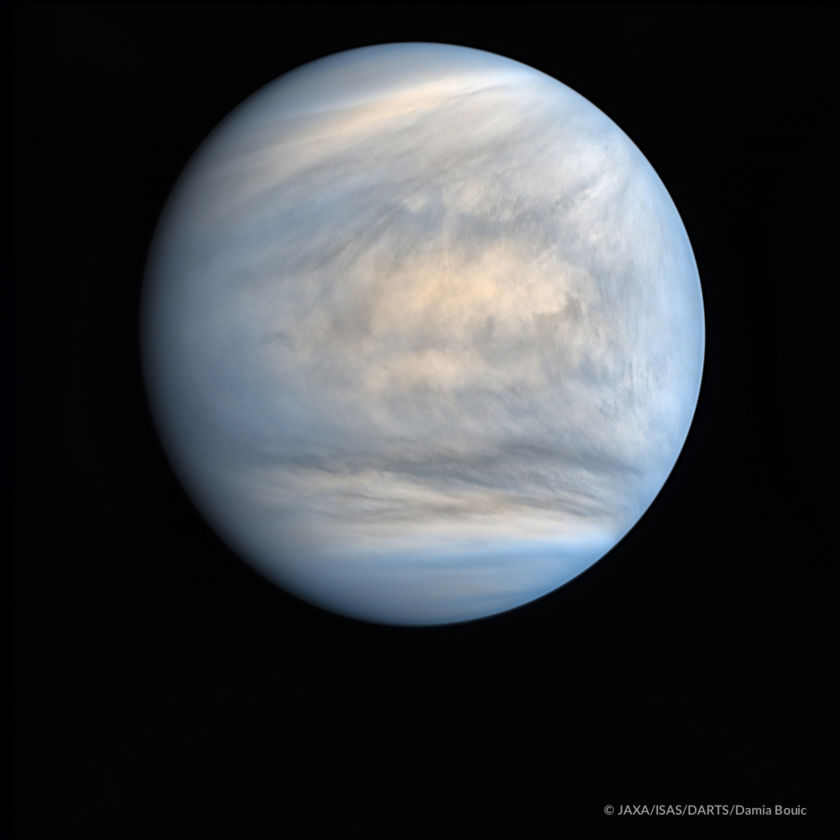
A false-color, global view of Venus in ultraviolet by Akatsuki. [AXA / ISAS / DARTS / Damia Bouic]

One way Akatsuki is studying Venus’s atmosphere is by making infrared observations of the planet’s cloud tops. It’s a challenging process, says Takeshi Imamura (University of Tokyo), because the thermal images taken at 10 µm appear to be fairly featureless. By averaging images together within the coordinate system that moves with the superrotating wind frame, however, the team is able to extract detail from the images, identifying small-scale, turbulent features, spirals, and streaks. These complicated structures reflect dynamics in the clouds.

In addition to the thermal imaging, ultraviolet imaging is used to track Venus’s clouds and identify wind motions. Takeshi Horinouchi (Hokkaido University) presented on the surprising variety of motions these observations have revealed, from turbulent motions to planetary-scale waves. The ultraviolet observations also revealed an apparent asymmetry in wind speeds between Venus’s northern and southern hemispheres; Horinouchi suggests that this may be due to an asymmetric distribution of as-yet unidentified particles that absorb ultraviolet light. We clearly still have a lot to learn!

Joint Observations of Venus in 2020

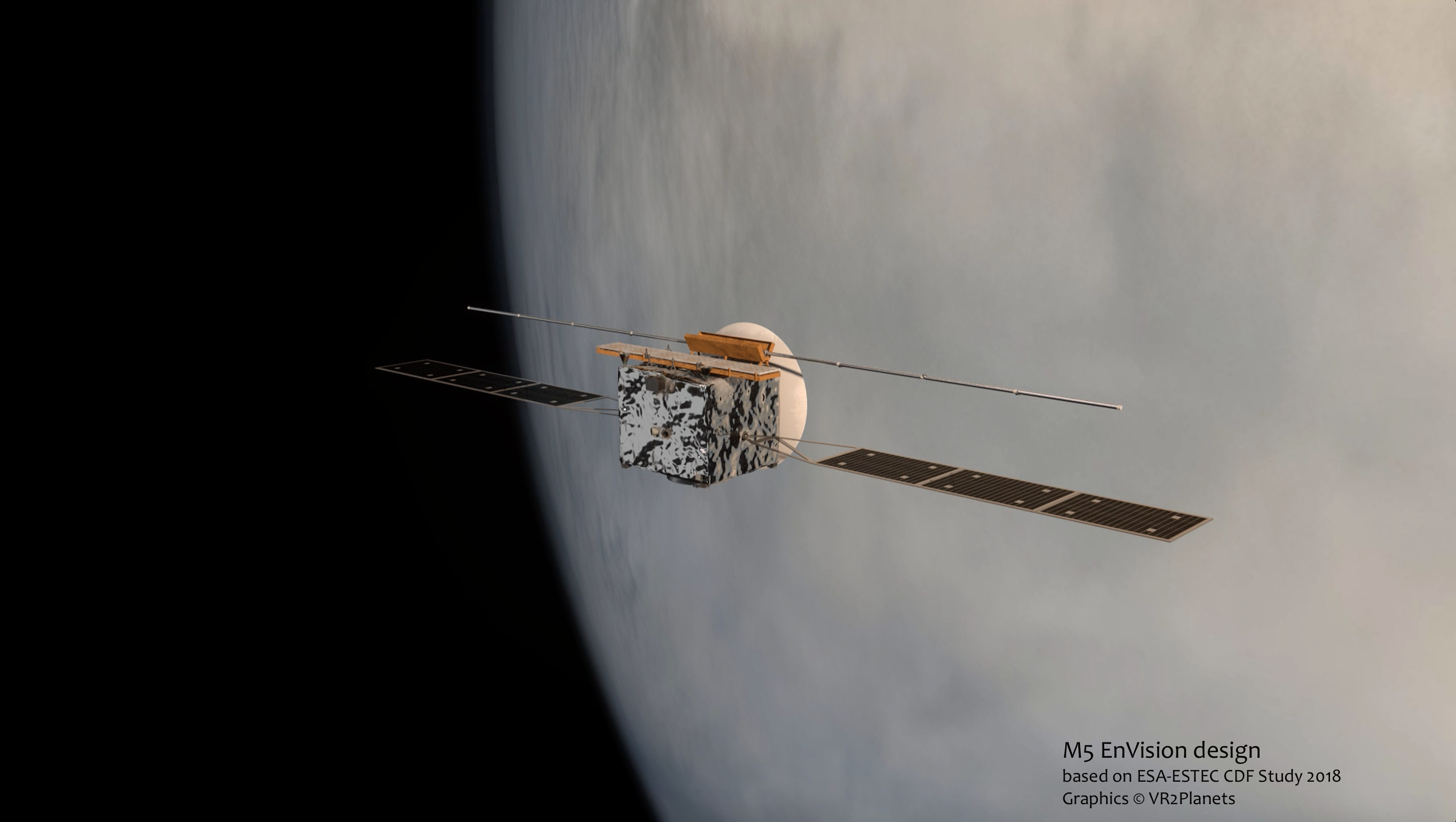
Akatsuki won’t be alone next year! BepiColombo, a joint ESA/JAXA mission, will pass close to Venus in 2020 during a flyby. During this time, BepiColombo, Akatsuki, and ground-based telescopes will join their powers for a combined observational campaign of Venus.

BepiColombo

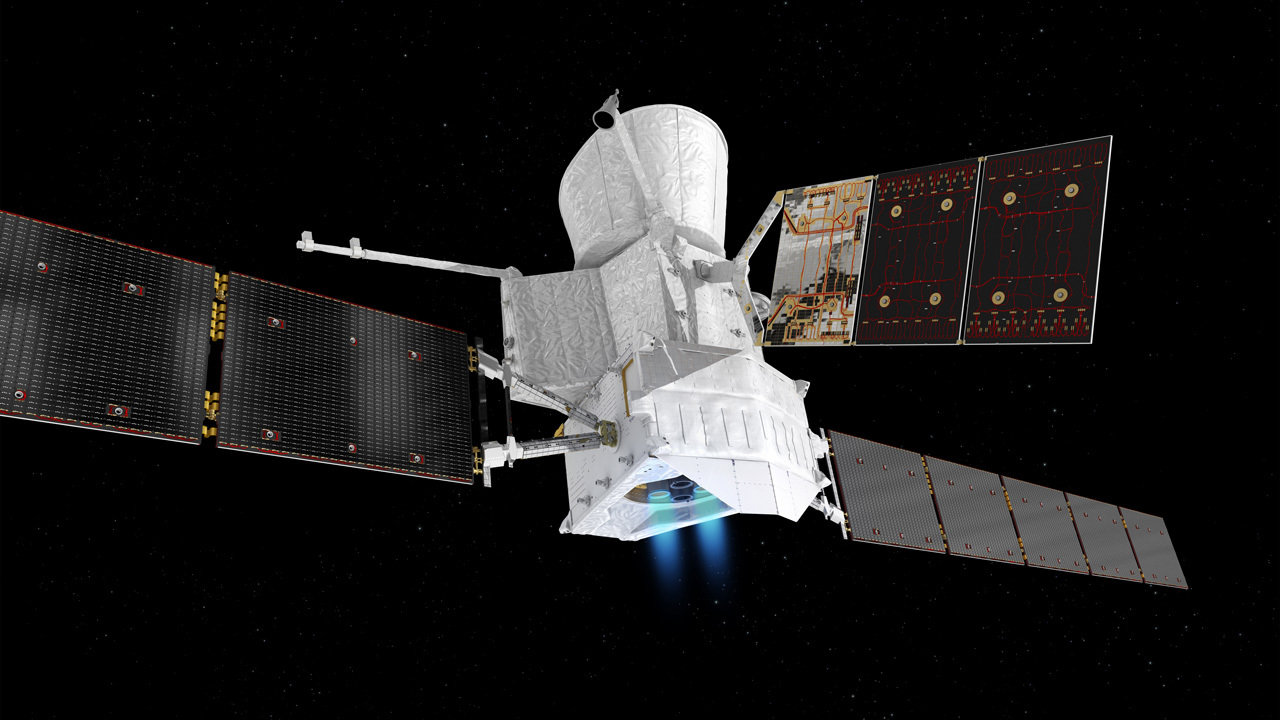
An artist’s impression of the ESA-JAXA BepiColombo spacecraft. [ESA/ATG medialab]

Valeria Mangano (INAF-IAPS) was at today’s press conference to tell us more about BepiColombo’s role in this. BepiColombo is a Mercury magnetospheric orbiter — but on its way to Mercury, it will conduct two Venus flybys: one in October 2020 and one in August 2021. During the flybys, it will coordinate with Akatsuki to produce joint observations of Venus from multiple different viewing angles.

BepiColombo has two different components: ESA’s Mercury Planetary Orbiter (MPO) and JAXA’s Mercury Magnetospheric Orbiter (MMO). During the Venus flyby, 8 of 11 instruments will operate on MPO and 3 of 5 instruments will operate on MMO, measuring Venus’s atmosphere, tenuous exosphere, and its magnetosphere and plasma environment. The first flyby will be at 10,000 km altitude, and the second one will be just 1,000 km above Venus’s surface!

In addition to Akatsuki and BepiColombo, Earth-based telescopes like the Canada France Hawaii Telescope (CHFT) and the NASA Infrared Telescope Facility (IRTF) will be able to provide an additional angle during the coordinated campaign, explains Yeon Joo Lee (Technical University of Berlin). The multiple perspectives will enable global mapping of Venus’s atmospheric features.

Exoplanet atmosphere

How did the atmosphere of Venus evolve, and what can we take away from this to better understand the atmospheres of Venus-like exoplanets, like that illustrated here? [Dana Berry / Skyworks Digital / CfA]

Science at Venus

Last up, we heard from the theory side: Michael Way (NASA Goddard Institute for Space Studies) presented on modeling work exploring the possible habitability of ancient Venus. We think that early Venus conditions likely mirrored early conditions on Earth. By conducting a series of simulations with different topographies, land seed masses, etc., Way and collaborators explored the Venus’s atmospheric evolution over time to determine whether Venus very rapidly became the hostile environment it is today, or whether it may have been more welcoming for a long period of its history.

They find that conditions on Venus were likely very similar to those on Earth up until about 1 billion years ago. At that point, Way says, it appears that a catastrophic “intrusive volcanism” event of some kind occurred, in which magma traveled through the crust and led to resurfacing. This process released into the atmosphere carbon dioxide that was locked up in Venus’s surface, leading to the runaway greenhouse effect that turned the planet into the hellish world it is today. In this scenario, Venus could indeed have had a habitable surface for most of its history.


EPEC Science Flash

Present your work in a fun and original way! You have exactly 180 seconds of time supported by one slide and/or small additional equipment.

I was intrigued by the above description of this Europlanet Early Career Network event, because it sounded very similar to 60-second Pop Talks — one of my favorite components of ComSciCon, a science communication workshop for grad students. How would the early-career planetary scientists who signed up for this do, trying to explain their research in a succinct (and hopefully accessible) way?

I dropped in for a while to find out; here are some very rapid takeaways! These researchers are working on:

  • studying occultations. I learned something new: did you know that if you’re in the exact center of an occultation path, you might see what’s known as a “central flash”, caused by focusing of the background starlight by the foreground object’s atmosphere?
  • exploring the properties of Mercury-analog matter in a laboratory
  • the WISDOM GPR instrument on the Rosalind Franklin (previously called ExoMars) rover, which will be used to explore the underground structure of Mars using radar observations
  • the conundrum of life on Mars … will we find evidence for (simple) life when we finally arrive at Mars?
  • exploring Pluto’s atmosphere and aerosols via laboratory experiments.
science without scientists

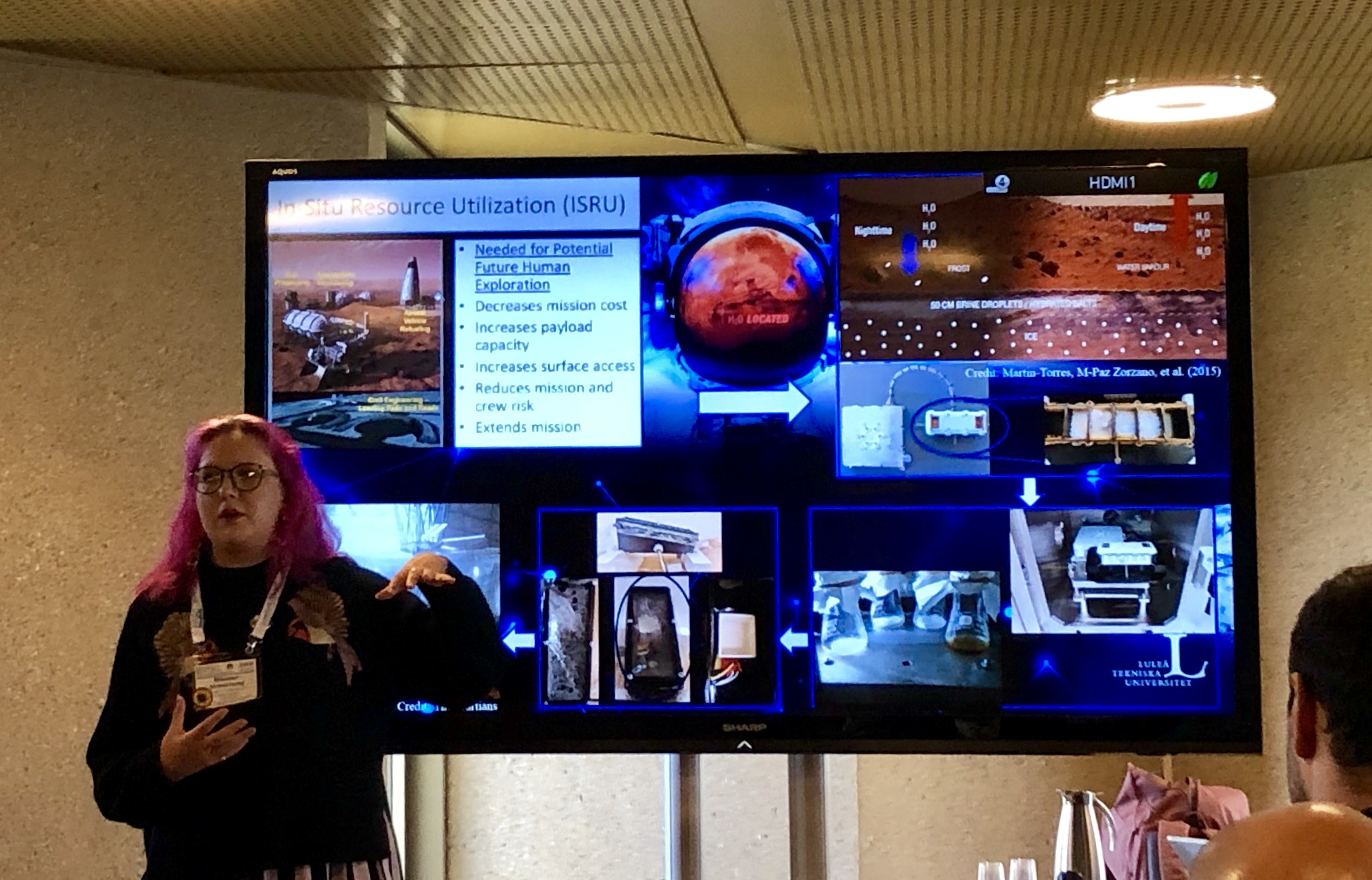
Images of science rarely include the actual people doing the science, says Eleanor Armstrong. Click to enlarge. [AAS Nova]

One presentation was especially unique: Eleanor Armstrong (University College London, UK) gave a blind presentation, taking only 15 seconds to look at someone else’s slide and then give a presentation related to it. She absolutely killed the talk, pointing out that in most of the images on the slide, “science” is represented as a sterile process with no human involvement (“Here we have experiments apparently running themselves, and a completely uninhabited planetary base…”). Her doctoral research focuses on how scientists are represented in museums — something that can certainly stand improvement!

I really enjoyed attending this session and seeing scientists challenge themselves to explain their research succinctly and clearly — and I hope to see more programs encouraging this sort of development in the future! Shameless plug: if you’re a STEM grad student and want to push yourself to do the same, do consider checking out the AAS-sponsored ComSciCon workshop series; there are ComSciCon workshop events all across the U.S. (and one now in Canada), they’re all free or very low-cost to attend, and they’re a great way of learning more about effective science communication.


Session: Ocean Worlds and Icy Moons

We’ve heard a lot about rocky bodies this week, but what’s going on with ocean and icy worlds? We stopped by the end of this session to catch a few updates.

Enceladus

Saturn’s icy moon Enceladus is thought to have a subsurface ocean at its southern pole. [NASA/JPL/Space Science Institute]

Marc Rovira-Navarro (Utrecht University and TU Delft, the Netherlands) presented a new tool that can be used to model tides in subsurface oceans on icy moons. In particular, this tool allows researchers to explore the dissipation of tides in oceans that don’t have a uniform depth — because it’s likely, of course, that real oceans in our solar system and beyond are going to have varying seafloor topography. As an example, he demonstrated the use of this tool for modeling the suspected subsurface ocean below the southern pole of Saturn’s icy moon Enceladus.

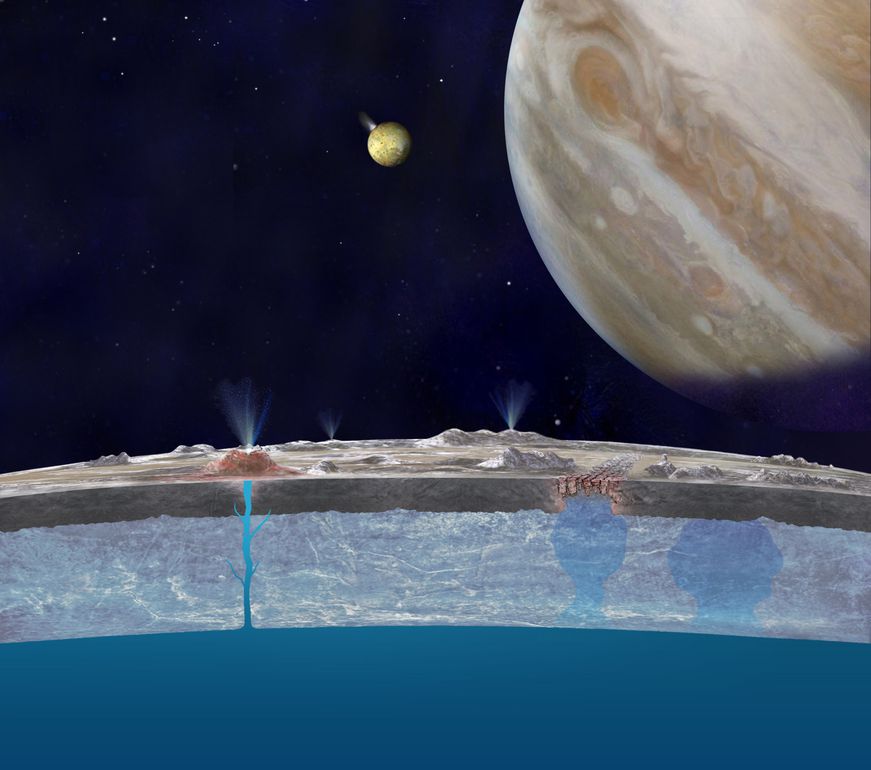
Observations of Enceladus have captured plumes of ice grains and vapor coming from fractures near its southern pole — and analysis of these plumes have revealed evidence of volatile organic material. Nozair Khawaja (Free University Berlin and Heidelberg University, Germany) presented new work suggesting that Enceladus’s core may be an enormous factory for organic compounds, and this material can be efficiently transported from deep within the proposed subsurface ocean to the planet’s surface and expelled into space via the plume.

subsurface ocean

Artist’s illustration of a subsurface ocean on Europa. [NASA/JPL-Caltech]

What are we seeing in observations of Jupiter’s icy Galilean moons from the Voyager flyby? Our best guess is that these moons are covered in a combination of water ice and salty ices. In order to better interpret these observations and future observations from missions like JUICE and Europa Clipper, Romain Cerubini (University of Bern, Switzerland) and collaborators are conducting laboratory experiments on salty ices — ices prepared from brines of NaCl and MgSOthat were flash-frozen — to characterize the particles that form.

Subsurface oceans on ice satellites may not be well-mixed. Teresa Wong (Westfälische Wilhelms-Universität Münster, Germany) asks whether layers can exist in these oceans — and if so, how long can they persist, and what implications might this have? Her work indicates that such layers aren’t stable, but when they exist, they can inhibit heat and material transport through the ocean. This would alter the dynamics of the ocean and how the properties at the seafloor relate to those at the icy shell at the top of the ocean.


Unfortunately, we’re unable to attend the last day of the meeting — so with that, we’re officially signing off! Thanks, EPSC/DPS attendees, for sharing with us what’s going on in planetary science at the moment and what upcoming missions we can expect soon. We’re looking forward to seeing all the exciting results that come out of this field in the near future — and of course, we’re hoping we’ll get to publish it in AAS journals!

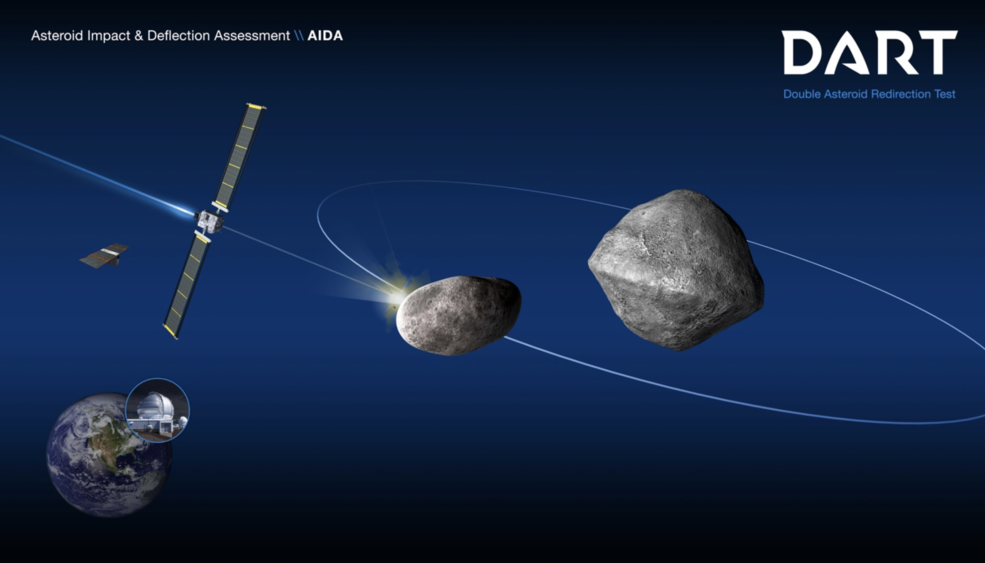
DART mission

Editor’s note: We’re wrapping up a busy summer with one last conference: the EPSC-DPS joint meeting in Geneva, Switzerland. To celebrate the announcement of AAS Publishing’s new Planetary Science Journal, we’ll be bringing you some highlights from this planetary science conference all week!

Session: Leveraging Outreach in Planetary Defense

Communication about planetary defense efforts is a tricky game. Of course it’s important to share the information that scientists obtain about near-Earth asteroids and close approaches of small bodies from our solar system — but it’s also very easy for that information to take on a life of its own, leading to sensationalism and fear-mongering. We dropped in on this morning’s session on planetary defense outreach to learn more about its inherent challenges.

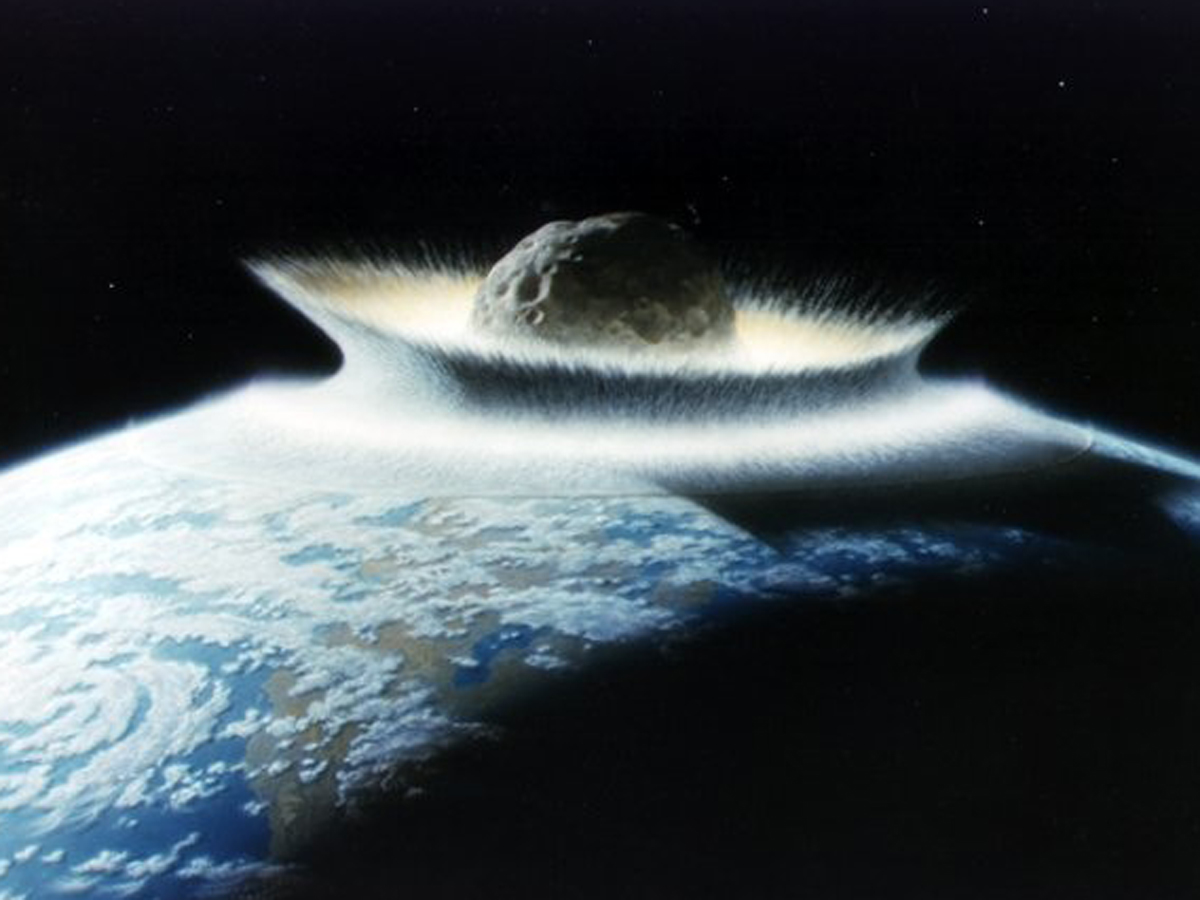
massive impact

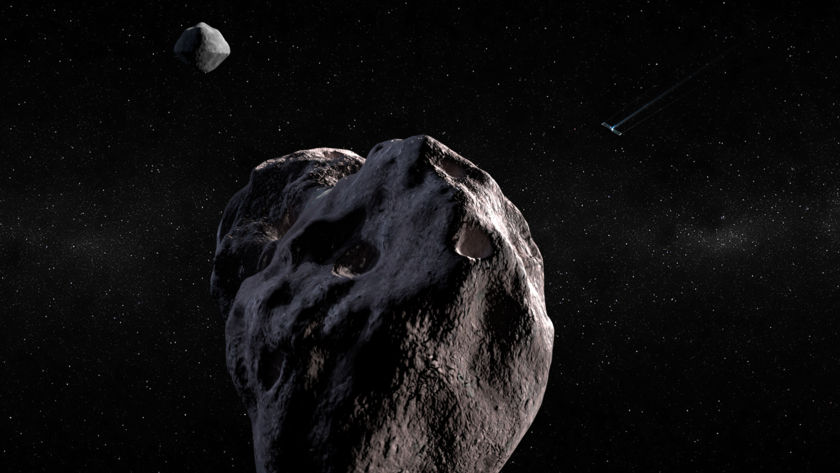
Artist’s impression of a massive impactor (perhaps 1,500–2,000 miles across) that may have hit the Earth in its distant past. Note that the asteroids that we worry about for planetary defense today are much smaller than this. [NASA/Don Davis]

Patrick Michel (Observatoire de la Côte d’Azur, CNRS) pointed out an interesting problem: due to improvements in observational techniques, the number of newly detected near-Earth asteroids keeps increasing. As a result, reports of these objects enter into the news cycle more and more often — and to the public, this gives the appearance that the risk is inexplicably increasing.

To combat this effect, it’s important that scientists engage more effectively both with the media and with the public directly about planetary defense. According to Michel, the primary message should be that impact hazard is the least likely hazard, as compared to other natural disasters like tsunamis or earthquakes — and yet it’s also the only one that we have reasonable and feasible means to predict (by taking inventory of near-Earth objects) and mitigate (by developing and testing asteroid deflection tactics).

Conveniently, though interest in near-Earth asteroids is broad — for reasons of planetary defense, scientific study, resource mining, and more — all facets rely on gathering the same scientific information now. Understanding asteroid properties like composition, dynamics, response to impacts and stressors, etc., is a crucial first step, and communicating what we learn from this process will help to decrease misinformation about asteroid threats.

Speakers Regina Rudawska and Bernard Foing (ESA) and Phil Davis (NASA/JPL) described some of the ways that the U.S.’s and Europe’s major space agencies are working on planetary defense, and how this information is communicated.

ESA space safety posters

ESA’s space safety program spans a number of areas, as indicated by this beautiful set of posters (which you can download!). [ESA]

According to a recent study, Davis told us, roughly 6 out of 10 Americans view planetary defense as a top priority. The interest is there — but people have a lot of questions, and it would be better if answers came from us, rather than from “killer asteroid” misinformed news stories. Davis manages several major websites for NASA, so his web experience informs his perspective. “We know what questions people are asking; Google tells us! We just need to answer them, and to make sure our answers get out there [on the internet].”

Both NASA and ESA are working on this through website development and production and dissemination of engaging visuals (think NASA/JPL’s stunning space tourism posters or ESA’s lovely space safety program posters, also seen at right). Other institutes, like the Lunar and Planetary Science Institute, are working on engaging the public via interactive means, said Christine Shupla. She described games and activities that provided a broader and more positive view of asteroids, to counteract the bad rap these objects usually get.


Press Conference: Future Mission Updates

AIDA: DART and Hera

So, all that said, what are our major space agencies doing on the planetary defense front? Today’s press conference gave us an inside look at one major collaborative program: the Asteroid Impact and Deflection Assessment (AIDA) project. Patrick Michel (Observatoire de la Côte d’Azur, CNRS) opened by giving us an overview of the international program, which marks our first attempt to deliberately change the orbit of an asteroid (and learn as much as possible in the process!).

AIDA will target nearby asteroid Didymos, a binary asteroid (binaries account for ~15% of the asteroid population) made up of a primary body, Didymos A, that’s about 800 meters across and its moon, Didymos B, that is just 160 meters in diameter. Note that though Didymos is a near-Earth asteroid, it is not on a collision course with Earth; the goal of altering this asteroid’s orbit is purely for educational reasons, and not out of necessity!

The AIDA project consists of two major components:

  1. NASA’s Double Asteroid Redirection Test (DART) mission, which will aim a kinetic impactor at Didymos’s smaller, secondary asteroid, attempting to alter its orbit; and
  2. ESA’s follow-up Hera mission, which will arrive at the system a few years later and make detailed observations of Didymos, determining the consequences of DART’s impact.
DART and Didymos

The Didymos system and DART, with target Didymos B in the foreground. [NASA / JHUAPL]

While the most unique goal of the program is testing asteroid deflection tactics, there will be a number of other firsts! Didymos B will be the smallest asteroid we’ve ever studied, and this will also mark the first time we’ve used a radar to probe the subsurface structure of an asteroid.

Why was Didymos selected? Didymos B is roughly in the size range we worry about for planetary defense, so it’s a useful target to understand the response when a body of this size is struck. What’s more, the fact that this system is an eclipsing binary means that we can measure its orbital period very well using ground-based telescopes — and we’ll be able to use the same approach after DART’s impact to see exactly how the period changed.

So where does this mission stand? Nancy Chabot (Johns Hopkins Applied Physics Lab) reports that everything is on schedule for DART’s launch in July 2021, with impact occurring in September 2022.

DART schematic

Schematic shows the planned impact of DART on Didymos B, while observatories on Earth watch. [NASA/Johns Hopkins Applied Physics Lab]

The impact itself is a fascinating challenge. DART will be coming in at 6.6 km/s (that’s 14,800 mph!), and the Didymos system is a small target. In fact, DART won’t be able to distinguish between Didymos A and B until it’s within an hour of impact — yet it somehow needs to aim for the exact center of the tiny, 160-m moon! The DART team has addressed this challenge by equipping DART with a SMARTNav system — it will use its camera to autonomously distinguish between the two bodies, lock onto Didymos B, and aim itself at its center without any human intervention.

On its way in, DART will release a cubesat (a small satellite) with a camera that will observe the moment of impact. Important observations of the collision and the aftermath, however, will also come from ground-based telescopes on Earth — 11 million kilometers away.

So will this cause a spectacular deflection of the asteroid? Definitely not … watch the animation below for a rough idea of what we can expect. The goal is not to disrupt this asteroid or drastically alter its course, but rather to change its orbital period by a mere 10 minutes or so (that’s a ~1% change). Sounds minuscule, but that change of course is all that may be needed to deflect an asteroid past the Earth if we discover it while it’s still far enough away!

DART might seem like the main event of the AIDA project, but this mission will be greatly enhanced by follow-up observations after the dust has literally settled. Michael Küppers (European Space Astronomy Centre (ESA/ESAC) described plans for the Hera mission, the intended means of undertaking this follow-up.

Hera will be launched in 2024 and arrive at the Didymos system in early 2027. It will orbit around the system, taking images and doing detailed crater investigation as it spirals progressively closer. At the end of the mission, it will attempt to land either on the primary or the secondary asteroid (depending upon what we’ve learned about the bodies by that time).

Hera will carry two cubesats (small satellites) — the most advanced interplanetary cubesats yet. One of them will be responsible for conducting the first-ever radar subsurface exploration of an asteroid, which is sure to provide us with a wealth of information about this asteroid’s structure. All of the data Hera gathers will help us to better understand the system and how Didymos B responded to DART’s impact, further preparing us for the future possibility of undertaking a similar program in a case of planetary-defense necessity.

Venus vs. Earth

A size comparison of Venus and Earth. Though they are nearly the same size and density, the two planets evolved very differently. [NASA]

EnVision

Why are the Earth and Venus so different? Venus, Earth, and Mars are basically a Goldilocks story: though they may have started out similarly, Mars ended up too cold for life, Venus too hot, and the Earth just right. Colin Wilson (University of Oxford) introduced the EnVision mission, a proposed orbiter mission to Venus that will study its structure and atmosphere, helping us to understand what shaped Venus into the hostile environment it is today.

Venus is a relatively unexplored planet — though dozens of Venus missions were launched in the 1970s and early 1980s (including 10 successful or semi-successful landers, none of which lasted more than 2 hours on Venus’s extreme surface), there have not been many missions to Venus since. EnVision would therefore provide important insight that we’ve been lacking.

EnVision

Artist’s concept of the EnVision mission to Venus. [EnVision/VR2Planets/François Civet]

This orbiter would come equipped with instruments allowing it to image Venus at resolutions down to < 5m, measure magnetic fields, detect volcanic activity via thermal emission, measure subsurface structures down to 1 km in depth via radar, and map out Venus’s lithospheric/crust structure. It could also make detailed measurements of various species in Venus’s atmosphere.

EnVision’s goal is to address three main science themes:

  • Activity: How geologically active is Venus today?
  • History: How have Venus’s surface and interior evolved?
  • Climate: How did Venus’s atmosphere become so hostile?

The EnVision mission hasn’t yet been approved, but it’s a finalist in ESA’s M5 Space Science mission competition. If selected, it would launch in 2032 and conduct its science mission 2035–2038. Keep an eye out for more developments from this project in the future!

Mars Sample Return
Mars Sample Return mission

Diagram of the stages of the Mars Sample Return mission (click to enlarge). It’s quite simple, really. [ESA]

Like looking at long goals? Kelly Geelen (European Space Agency) rounded out the press conference with an overview of the proposed joint NASA/ESA Mars Sample Return mission, which would return the first sample from Mars to Earth in 2032.

This campaign has four distinct components:

  1. The Mars 2020 rover collects samples and caches them, leaving them on Mars’s surface for later retrieval. (NASA)
  2. A lander arrives on Mars’s surface in 2028 and collects the samples left behind, delivering them to an ascent rocket. The ascent rocket launches to a low Mars orbit in spring of 2029. (NASA)
  3. An Earth return orbiter then captures the canisters with the sample, returning to Earth in 2031. (ESA)
  4. The sample return canister, enclosed in an Earth re-entry module, arrives at Earth in spring 2032 and the sample is then received, curated, and investigated. (international)

This mission is still in the planning stages, and it’s clearly a huge cooperative effort. But Geelen hopes that in 10 years’ time we’ll have a sample getting ready to head back to us!

1 11 12 13 14 15 23