Editor’s Note: Today and Friday of this week, we’ll be posting summaries of selected sessions from the 58th Division for Planetary Sciences (DPS) meeting in Spokane, WA. The usual posting schedule for AAS Nova will resume on 2 November.
Table of Contents:
Press Conference: Twenty Years of the Mars Reconnaissance Orbiter, Studies of Ocean Worlds, and Interstellar Objects (Briefing video)
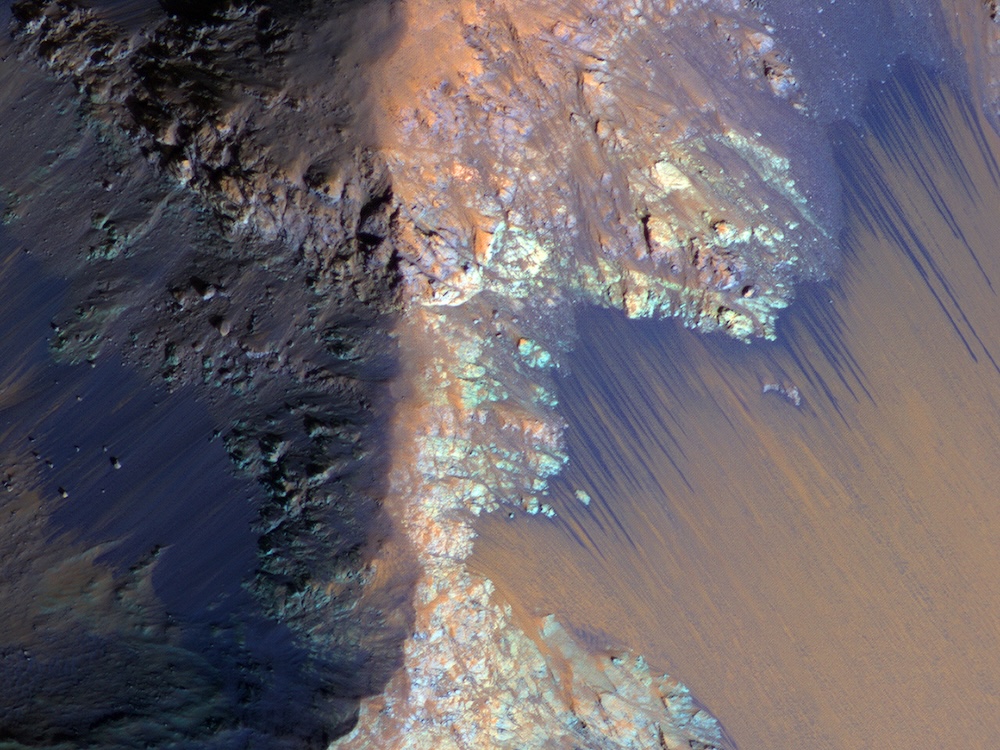
Leslie Tamppari (NASA’s Jet Propulsion Laboratory) kicked off the first press conference of DPS 58 with an overview of some of the many accomplishments of the Mars Reconnaissance Orbiter (MRO), which is celebrating 20 years at Mars this year. MRO is currently in its seventh extended mission, and the orbiter continues to make progress on its main areas of exploration: surface and climate change throughout history, ice and volcanics, modern geological processes, and atmospheric climate and weather. The orbiter has advanced our understanding of these areas through its scientific instruments: the High Resolution Imaging Science Experiment (HiRISE) has revealed dynamic surface features such as active sand dunes, recurring slope lineae (narrow dark streaks that change seasonally), avalanches, and gullies; the Compact Reconnaissance Imaging Spectrometer for Mars mapped the mineralogy of Mars and has revealed the history of its water; the Context Camera has observed thousands of fresh craters, some of which are filled with ice; the Shallow Radar sounder experiment has probed beneath Mars’s surface, especially in icy polar regions; the Mars Color Imager has made daily global maps of the planet and has helped to track water-ice clouds and dust storms; and the Mars Climate Sounder has revealed climatological features in Mars’s atmosphere and helped to establish active periods for the planet’s dust storms.
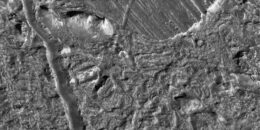
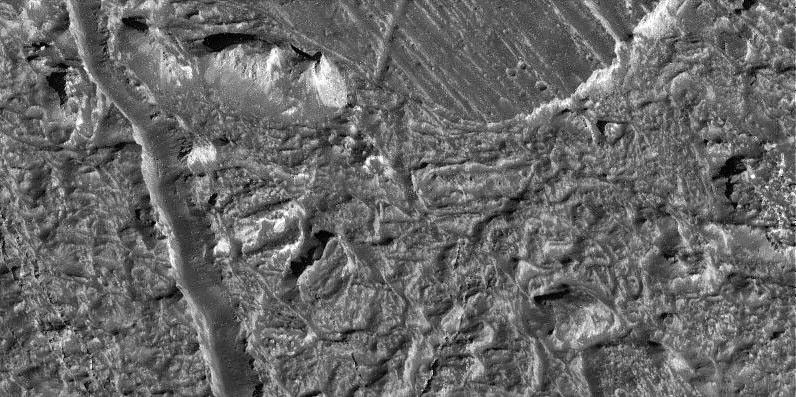
An example of Europa’s chaos terrain from the Galileo spacecraft. [NASA/JPL]
(Southwest Research Institute) reported on findings related to Europa’s ice shell. Europa, a moon of Jupiter, has a rocky core surrounded by a global liquid ocean, which is topped with an ice shell that is estimated to be anywhere from 3 to 30 km thick. The thickness of the ice shell is important because it controls the transport of material from the ocean to the surface and determines the cycling of energy necessary for life. M
icrowave radiometer thermal emission measurements from the Juno spacecraft suggest that the ice shell is 29 km thick in a particular region, but the thickness of the shell likely isn’t uniform across the entire moon. Rhoden combined models with the local ice-thickness estimate from Juno to create a global map of Europa’s ice shell thickness, which showed that the thickness varies from 21 to 31 km (or 18 to 36 km, if using a variable heat flux), with the thinnest regions found at middle latitudes. The team discovered that the thinnest areas overlap with Europa’s jumbled “chaos” terrain, which goes against predictions that the chaos regions would be found where the ice shell is thickest.
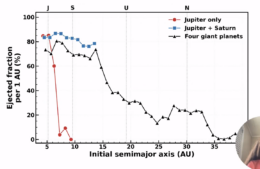
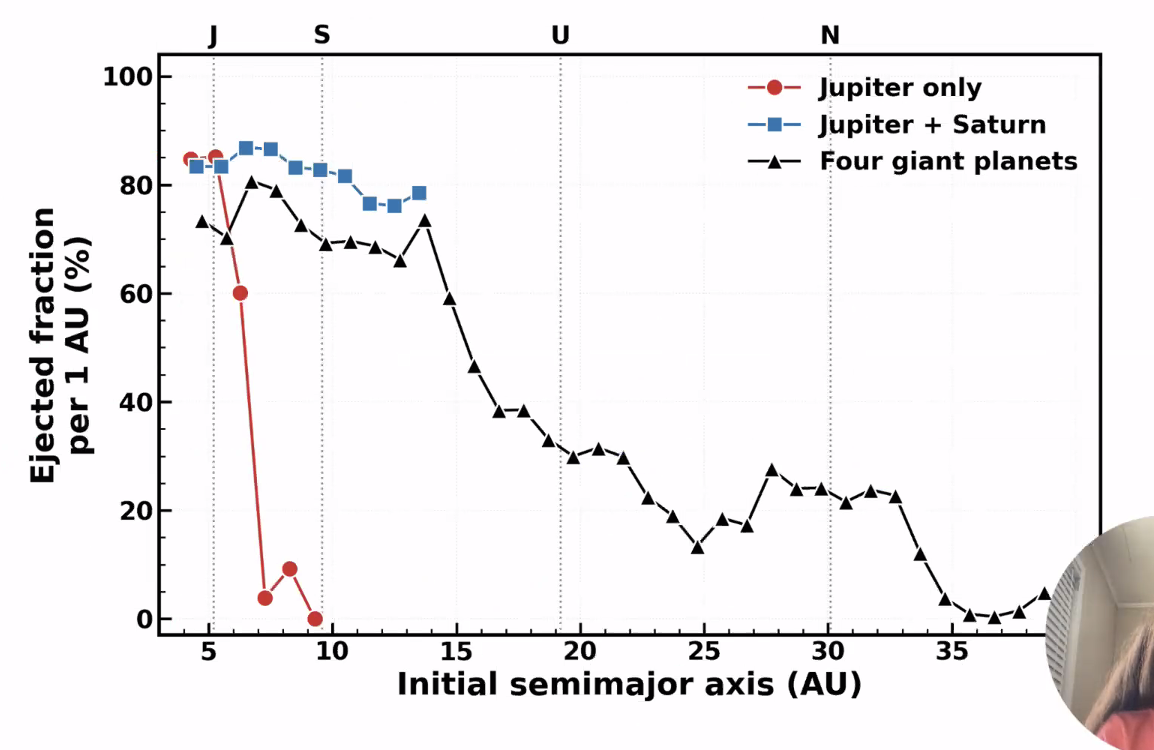
Fraction of ejected planetesimals for different giant planet architectures. Click to enlarge. [Slide by Leila Honarbakhsh]
(Tulane University) explored how the formation of giant planets can impact the ejection of planetesimals into interstellar space. Honarbakhsh used models to understand how the growth of giant planets would affect a population of 70,000 synthetic planetesimals — the building blocks of planets — distributed throughout the solar system. The simulations followed the giant planets of our solar system as they proceeded through different phases of accretion, progressing from initial slow accretion to runaway accretion. The models showed that the architecture of the giant planets in a planetary system impacts how many planetestimals are ejected from the system. With only Jupiter present, 86% of planetesimals with initial orbital distances between 4 and 6 au are ejected. When Saturn was added to the simulations, the percentage of ejected planetesimals around the orbits of Jupiter and Saturn remained high, while adding Uranus and Neptune into the mix decreased the ejection efficiency around the orbits of Jupiter and Saturn, and relatively few planetesimals were ejected from around the orbits of Uranus and Neptune.
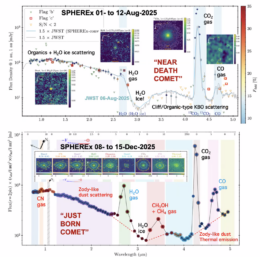
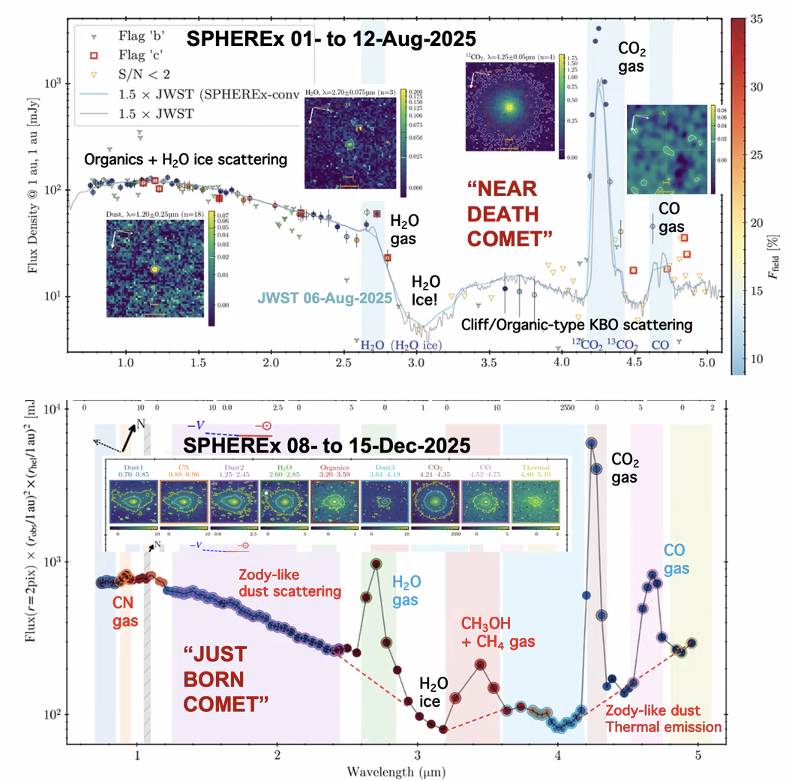
SPHEREx observations of 3I/ATLAS in August and December 2025. Click to enlarge. [Slide by Carey Lisse]
The final two presenters described research relating to 3I/ATLAS, the third interstellar object known to have entered our solar system. First,
Carey Lisse (Johns Hopkins University) presented observations of 3I/ATLAS from SPHEREx — an all-sky mapping satellite that launched in March 2025 — and the XMM-Newton X-ray observatory. SPHEREx showed that 3I/ATLAS changed dramatically between August 2025 and December 2025; in August, it would have been reasonable to assume that 3I/ATLAS was a “nearly dead” comet that had already offgassed the majority of its volatile material, but by December, the comet more closely resembled a “newborn” comet making its first close approach to a star. These dramatically different behaviors can be reconciled if 3I/ATLAS was encased in a thick shell of material that was heavily processed by cosmic rays during the comet’s interstellar journey. As 3I/ATLAS approached the Sun, outgassing removed enough of this surface material to reach the pristine ice below. XMM-Newton collected the first X-ray spectrophotometric data of an interstellar comet, showing remarkable similarities between this ancient denizen of a distant planetary system and comets from our own backyard.
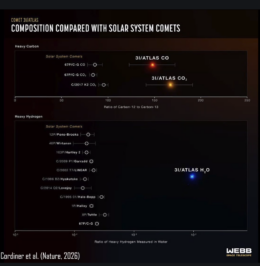
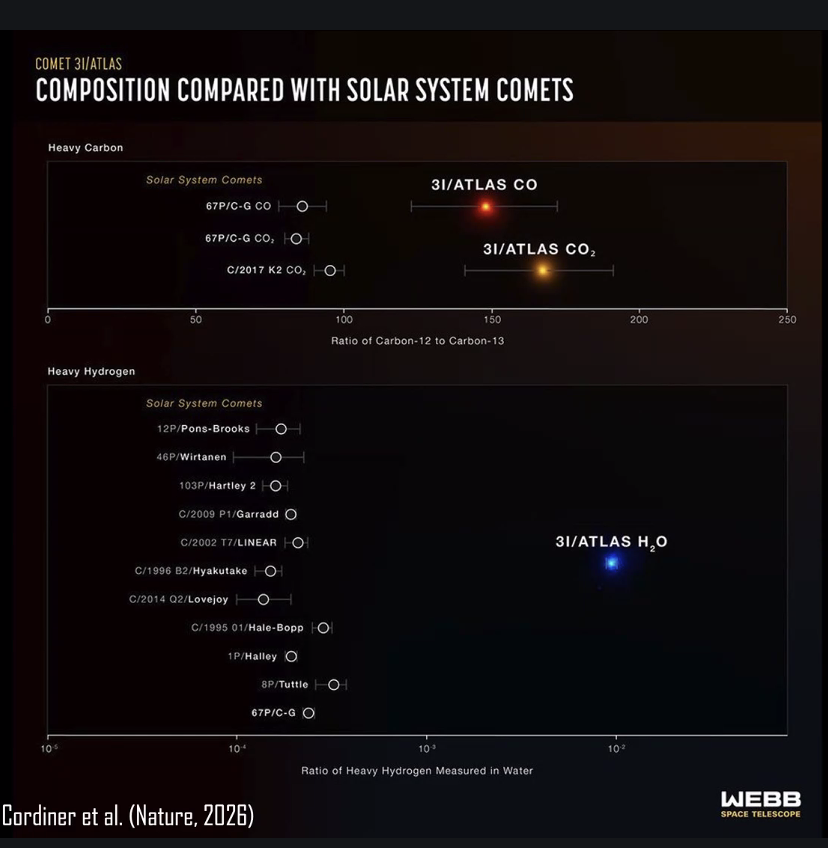
Isotopic abundances of 3I/ATLAS compared to selected solar system comets. Click to enlarge. [Slide by Martin Cordiner]
Finally,
Martin Cordiner (NASA Goddard Space Flight Center; Catholic University of America) described JWST’s observations of 3I/ATLAS, which were made in August 2025, December 2025, and April 2026. These observations showed that 3I/ATLAS has extremely high isotopic abundance ratios (e.g.,
12C/
13C) and an extremely high deuterium-to-hydrogen ratio compared to solar system comets. These ratios imply that 3I/ATLAS formed in an exceedingly cold and low-metallicity region. Cordiner noted that it’s not possible to find such low metallicity in our galaxy today, though similar conditions must have been present around the time of the comet’s birth, 10–12 billion years ago. Thus, interstellar objects like 3I/ATLAS can give us insight into the chemical history of our galaxy. Right about now, JWST will be taking one last look at 3I/ATLAS as it continues its journey out of the solar system, and the telescope will search for final signs of outgassing from the comet, which is currently 12–13 au from the Sun.
Return to Table of Contents.
2025 Masursky Award Presentation: Io’s Lava Lakes: From Galileo to Juno, Rosaly Lopes (NASA’s Jet Propulsion Laboratory)
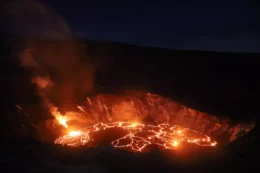
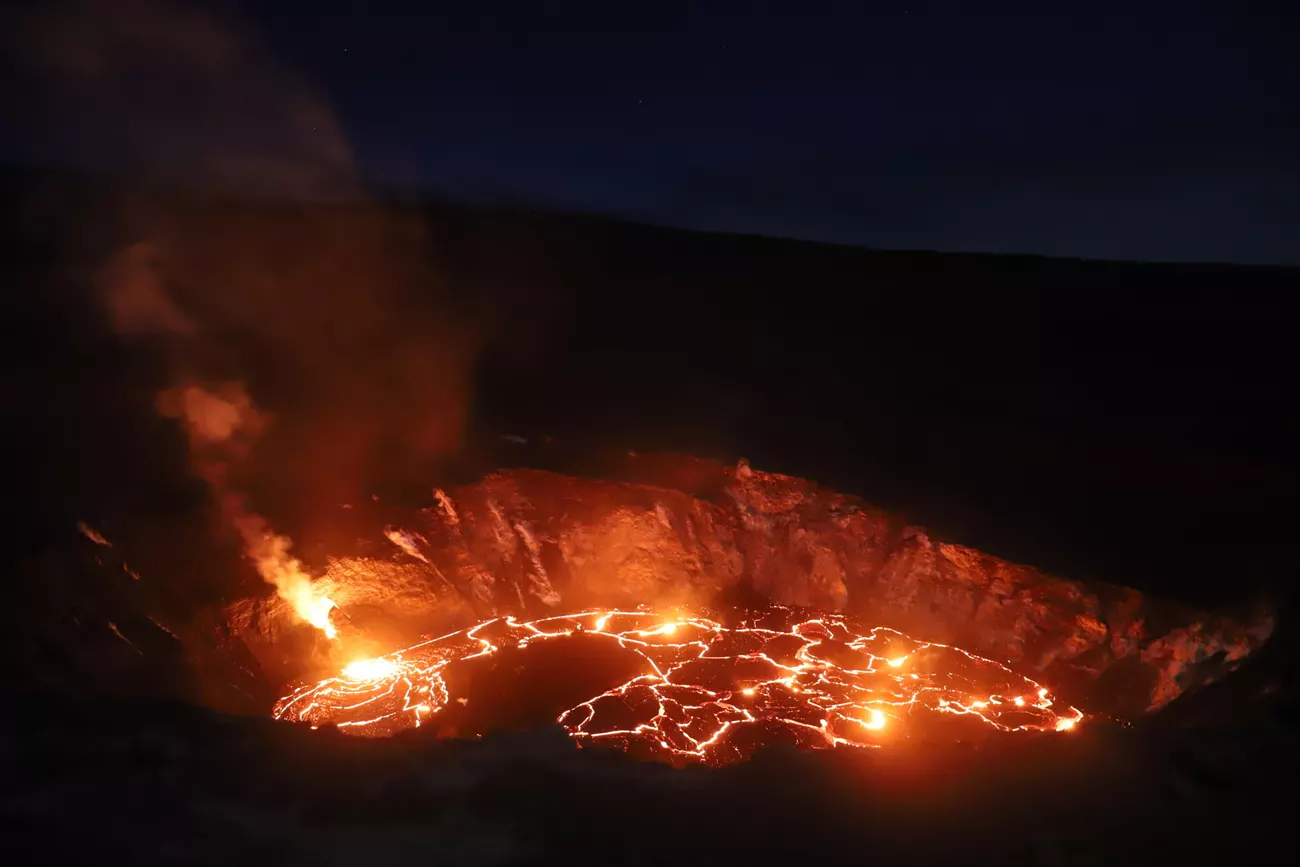
An example of a lava lake on Earth, in Halema‘uma‘u, a pit crater in the Kīlauea caldera in Hawai‘i Volcanoes National Park. [USGS]
Rosaly Lopes was awarded the 2025
Harold Masursky Award for Meritorious Service to Planetary Science for “deep and broad dedication to the advancement and health of planetary science in countless ways that extend beyond her duties as a JPL scientist.” In this plenary lecture, Lopes presented on the lava lakes that dot the surface of Io, Jupiter’s innermost moon. Lava lakes are large molten lava pools that are connected to a subsurface magma chamber. These features tend to remain active for a long time, and those on Earth show a variety of behaviors, including boiling and crusting over.
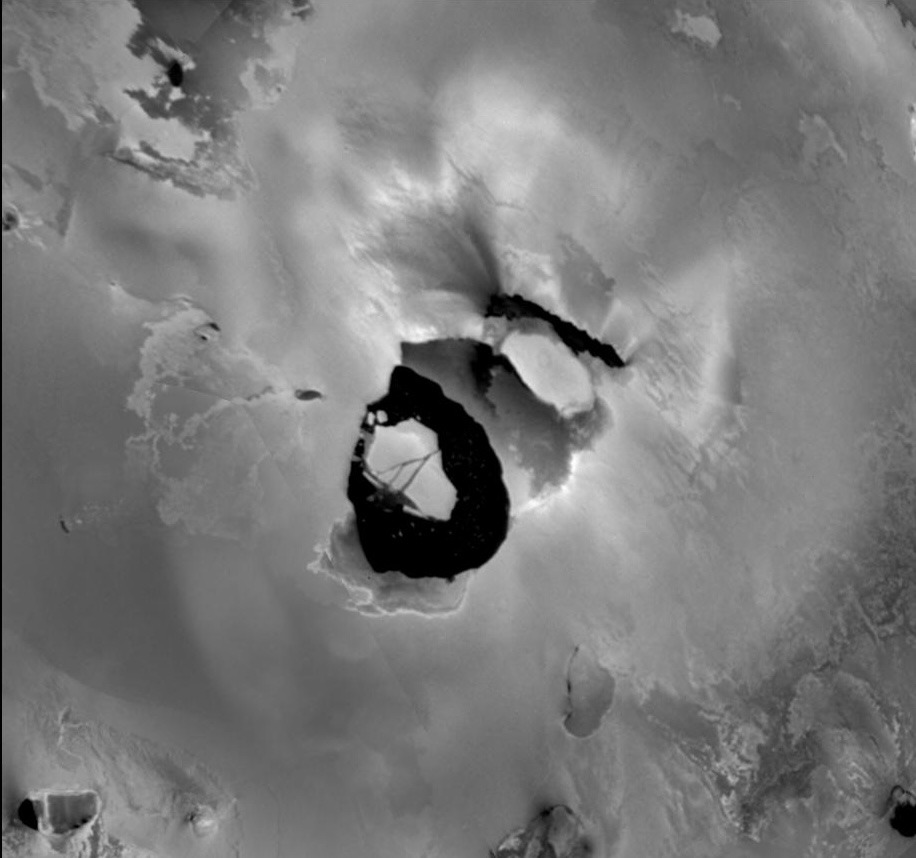
When Voyager 1 snapped the first photos of the lava lake Loki Patera on Io, scientists didn’t immediately recognize it for what it was, as lava lakes are rare on Earth. Loki Patera is the largest patera (a broad, shallow, irregularly shaped crater, often created through volcanism) in the solar system at 200 kilometers across, and it produces 10% of the total thermal emission from Io. Later, the Galileo mission provided more clues to the nature of Io’s paterae. During close flybys, Galileo revealed that paterae on Io tend to be crusted over and have hot edges, which is similar to lava lakes on Earth. Curiously, some paterae feature cold islands, the source of which is still unknown.
Most recently, the Juno mission has provided the best view yet of these volcanic features. Though Juno wasn’t initially even supposed to look at Io, changes in orbit led the spacecraft to undertake close flybys of the moon. The Juno observations featured fine spatial resolution and revealed hot rings in 40 features across Io. The annular width of these rings is 3–30 meters, and the thickness of the crust is about 5–10 meters, with the crust likely being a few years old. Unlike lava lakes on Earth, the crust in Io’s paterae tends to be intact, without any fissures. Loki Patera remains mysterious, with no hot ring and two resurfacing waves.
Return to Table of Contents.
2025 DPS Urey Prize Presentation: Physical Properties of Planetary Organics: From Titan Hazes to Protoplanetary Disks, Xinting Yu (The University of Texas at San Antonio)
Xinting Yu was awarded a 2025 Harold C. Urey Prize in Planetary Science for “broad and impactful work in both planetary and exoplanet science, on both planetary surfaces and atmospheres.” Yu’s presentation introduced laboratory work dedicated to understanding the surface and atmosphere of Titan, Saturn’s largest moon.
Titan is seemingly Earth-like, with its thick, nitrogen-dominated atmosphere, its lakes and river channels, and its shifting dunes. However, what appears to be Earth-like is still quite alien: Titan’s atmosphere is yellow and hazy; its lakes and rivers are filled with liquid methane, not water; and its dunes are piled high with organic material rather than silicate sand.
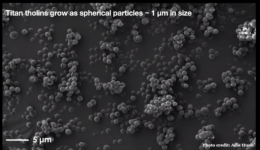
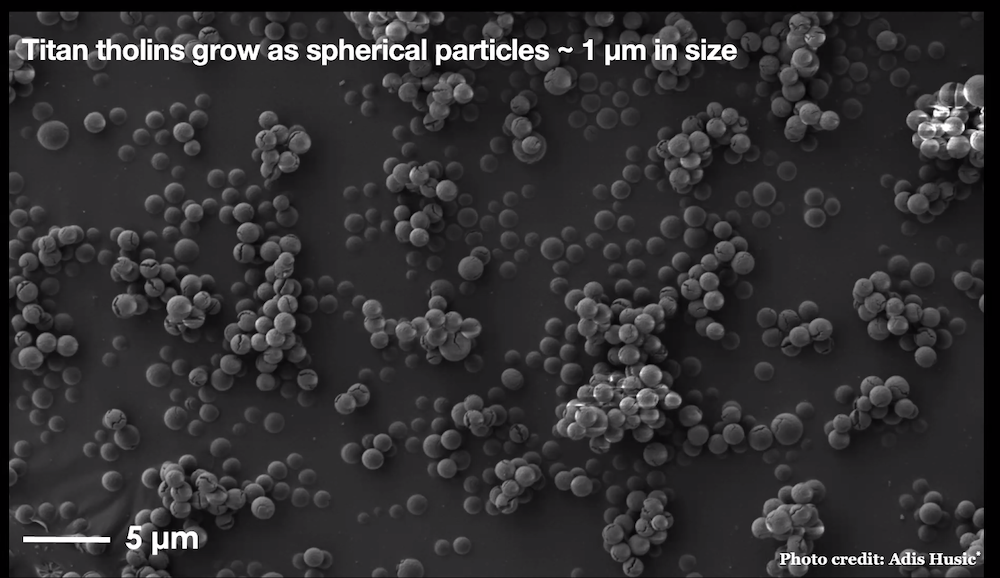
Photograph of laboratory-created Titan haze particles. [Slide by Xinting Yu]
Yu described experiments using a wind tunnel to understand how sediment transport impacts Titan’s dunes. These experiments used crushed walnut shells and instant coffee grounds as a stand-in for the particles that make up Titan’s dunes. However, though these materials are appropriately organic and grainy, they aren’t a good analog for Titan’s dunes, which are likely made up of haze particles that have drifted down from the atmosphere. To make the wind tunnel experiments more relevant to Titan, Yu measured the material properties of laboratory-created haze particles called tholins. This revealed that the material that makes up Titan’s dunes is stickier and weaker than Earth sand and experiences little tribocharging (developing an electrical charge after rubbing together). This means that it’s likely difficult to transport Titan dune particles large distances, and transporting them any distance requires higher wind speeds than expected.
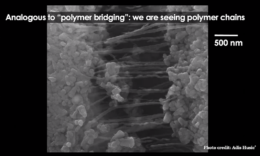
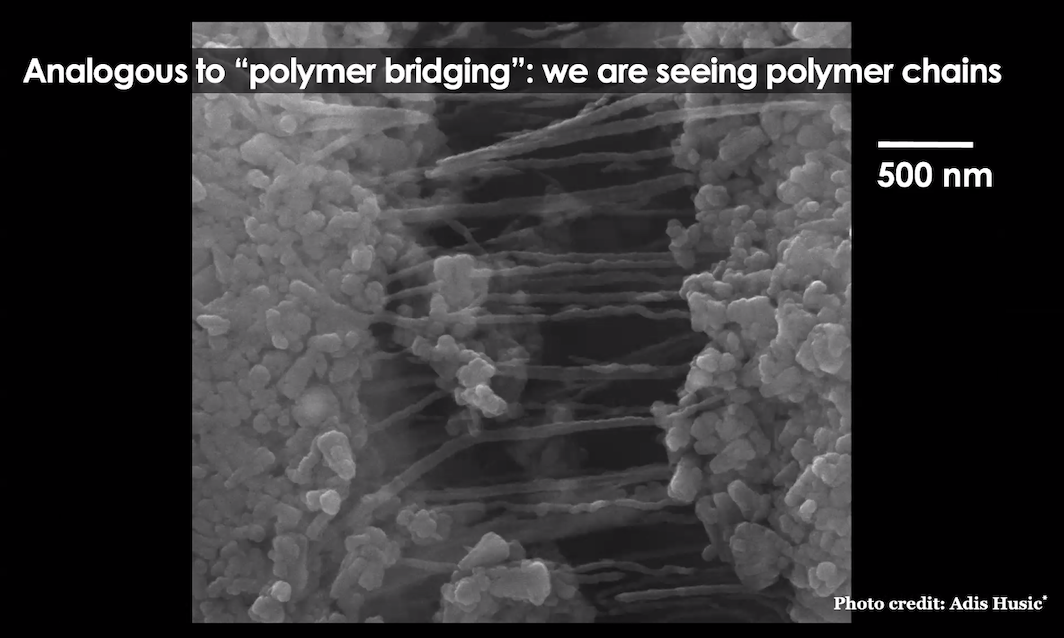
Polymer chains forming between particles. [Slide by Xinting Yu]
It’s not yet clear how haze particles turn into dune particles. Haze particles are only a few microns across, but the “sand” that makes up the dunes is made up of particles hundreds to thousands of microns across. Yu hypothesized that haze particles fall into Titan’s lakes and rivers, where they clump together to form larger particles. Yu’s team tested this hypothesis by soaking tholins in liquid hexane, which generated 50–100-micron aggregates. When the team added a stir bar to simulate turbulence, the particles formed huge clumps, reaching millimeter sizes, and showed signs of creating polymer chains.
Yu has constructed a laboratory apparatus called the Planetary Material CHaractErization Facility (PMCHEF), allowing the team to study the properties of Titan surface materials in a water-free and oxygen-free environment; the team’s work has shown that exposure to the water and oxygen in Earth’s atmosphere can affect the properties of these materials. Going forward, Yu will continue to study not just Titan, but other bodies inside and outside our solar system as well.
Return to Table of Contents.
2025 Urey Prize Presentation: Geophysical Adventures Across the Solar System (An Illustrated Story), James Keane (NASA’s Jet Propulsion Laboratory)
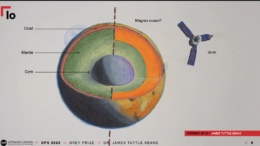
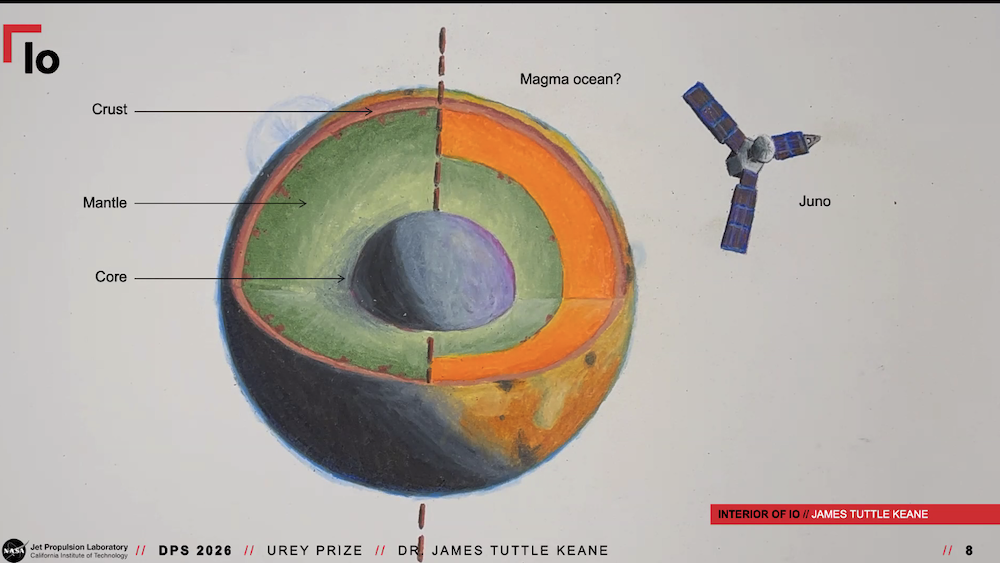
Illustration of two possible models for Io’s interior. Click to enlarge. [James Keane]
James Keane was awarded a 2025
Urey Prize for “his broad and impactful research portfolio studying the geophysics of worlds across the solar system, including the Moon, Io, Arrokoth, Pluto, and Enceladus.” In this plenary, Keane described his work on the Moon and Io while presenting some of his geological illustrations. Keane’s drawing started as a way to stay alert during lectures, but it soon evolved into an opportunity to connect with the broader community.
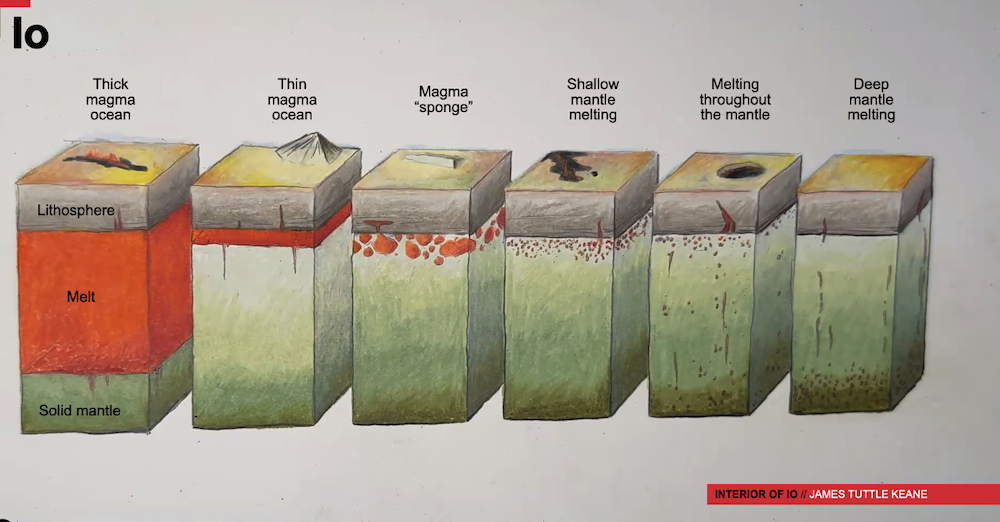
The Moon and Io are roughly the same size and are both rocky, and though they have vastly different geography, they have both been shaped by volcanism and tidal heating, either currently or in the past. Many of the questions surrounding Io concern how tidal heating is dissipated within its interior. Central to this question is whether Io has a global magma ocean beneath its surface, which Juno has helped to answer. Io is flexed by Jupiter’s gravitational field as it orbits, and it physically changes shape. The amount of flexing depends on the structure of the moon — a global subsurface magma ocean would mean more flexing than a solid interior. Juno didn’t see the strong signal expected if Io has a global magma ocean, but other possibilities, such as a thin layer or scattered pockets of magma are still feasible.
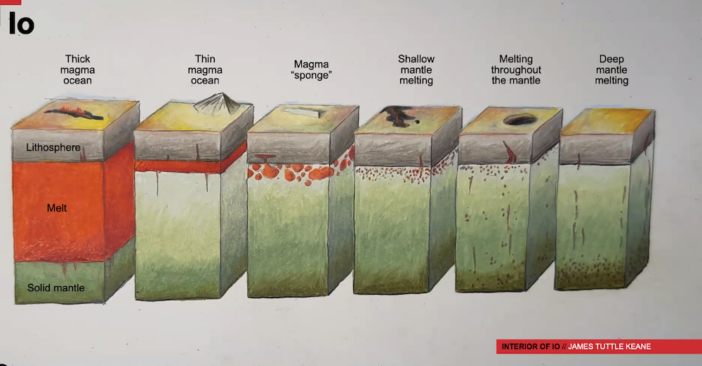
Possible models for Io’s interior. [James Keane]
Keane then turned the discussion toward the largest and oldest impact basin on the Moon, the South Pole–Aitken (SPA) basin. The basin was likely created early in Earth’s history, placing the event older than the oldest Earth rock samples, the Apollo lunar rock samples, or the Perseverance Mars rover samples. The Artemis Moon mission is planned to touch down at the Moon’s south pole, on the edge of SPA but not within the basin itself. Because SPA is so geologically diverse, no one site allows us to address all possible science questions about this region. A proposed long-range sample-collecting rover called Endurance would undertake a trek of 2,000 kilometers — 50 times farther than a rover has driven on any other solar system body — to help answer this diverse set of questions.
Return to Table of Contents.
2025 Alexander Prize Presentation: Everything Is Connected, So Small Things Matter, Matthew Hedman (University of Idaho)
Matthew Hedman was awarded the 2025 Claudia J. Alexander Prize in Planetary Sciences for “his scientific, leadership, and collaborative contributions to planetary science.” Hedman began by describing how scientists study small pieces of a broad, complex, interconnected system, and if you go deep enough, you eventually encounter connections between seemingly disparate areas.
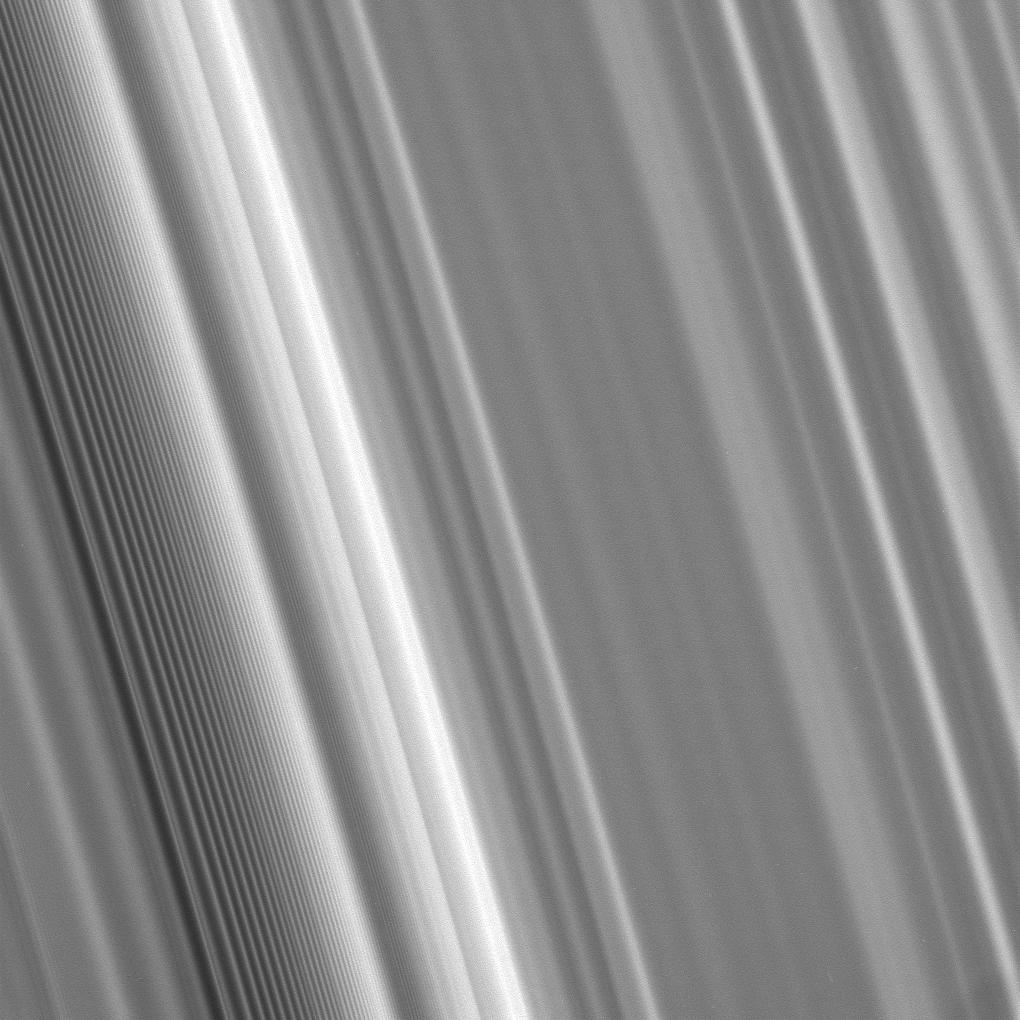
To illustrate this point, Hedman gave two examples of unexpected connections. First came the study of spiral density waves in Saturn’s rings. Many of these waves are known to be due to mean motion resonances with Saturn’s moons, but some of them can’t possibly be produced by moons. In the 1990s, researchers proposed that some of the density waves could be due to asymmetries and oscillations within Saturn, but it wasn’t until the Cassini mission that these predictions were confirmed. However, there were still some waves that weren’t predicted, which may provide evidence that Saturn has a “fuzzy” core in which hydrogen and helium are blended together with heavy elements.
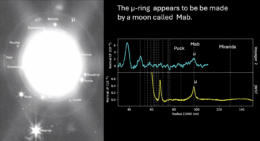
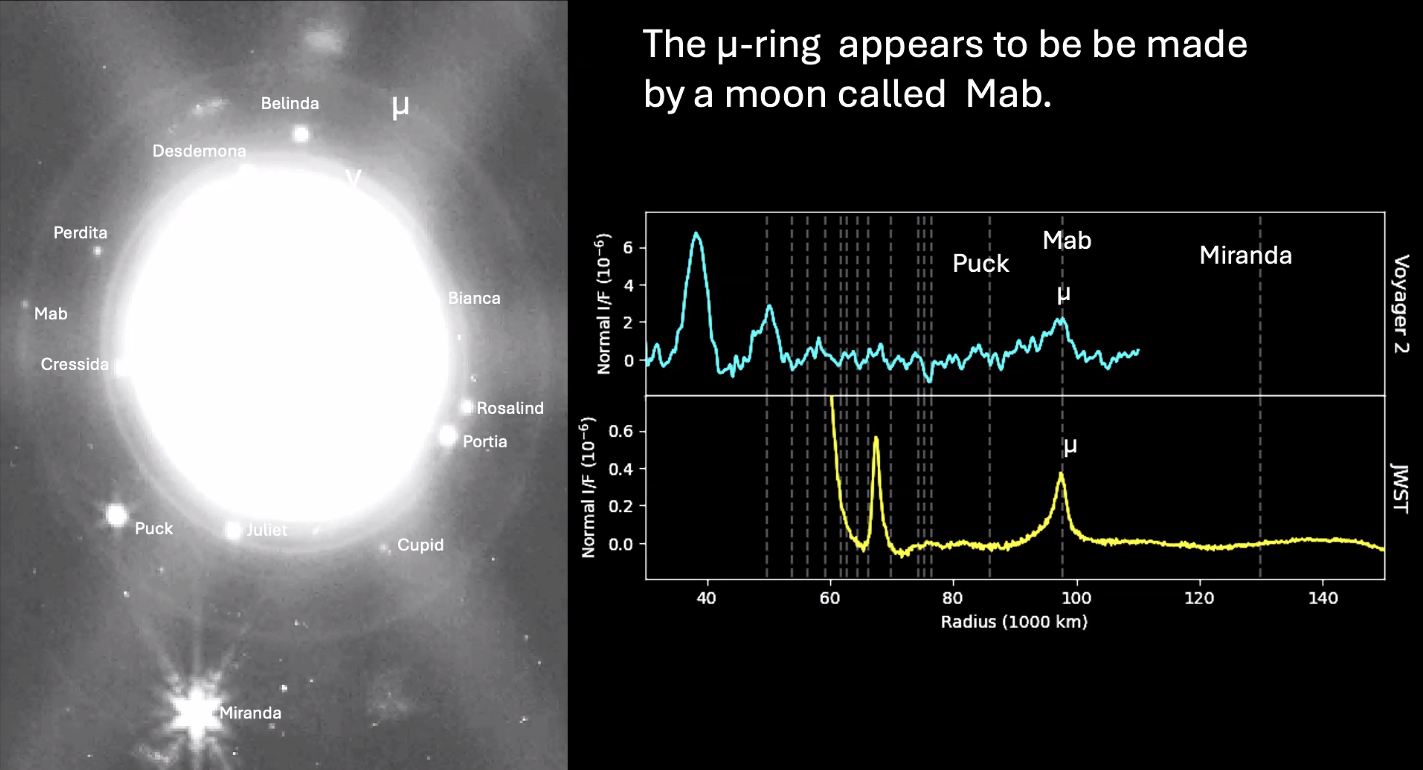
The location of the μ ring of Uranus (left) and a comparison of the ring’s location and the orbits of certain moons (right). Click to enlarge. [Slide by Matthew Hedman]
The second, more speculative example involved Uranus’s mysterious μ ring. The μ ring is a faint outer ring made of tiny water ice particles, and unlike nearly all other tenuous rings in the solar system, it’s blue. The only other exception to this rule is Saturn’s E ring, which is produced by cryovolcanism on Saturn’s moon Enceladus. Uranus’s μ ring appears to be produced by the tiny moon Mab — could Mab also be a source of cryovolcanism? Not likely, Hedman says, as the moon spans just 12 km, precluding the possibility of a vast subsurface ocean to act as a cryovolcanic reservoir.
Instead, Hedman posited a potential connection with other blue inhabitants of our solar system: centaurs. Centaurs are small bodies that temporarily (for a few million years) inhabit orbits between Jupiter and Neptune. Some centaurs display comet-like activity, shedding dust that can be blue in color. Could Mab, then, be a centaur showing a very low level of activity? And if so, why is this the only moon of Uranus that is active, even though other moons of similar size and composition are not? And what is the connection between Mab and its neighboring moon Miranda? These questions remain unanswered for now, waiting for future connections to be made.
Return to Table of Contents.
The DPS Planetary Science Workforce Surveys: Past Results and Future Plans, Julie Rathbun (Cornell University)
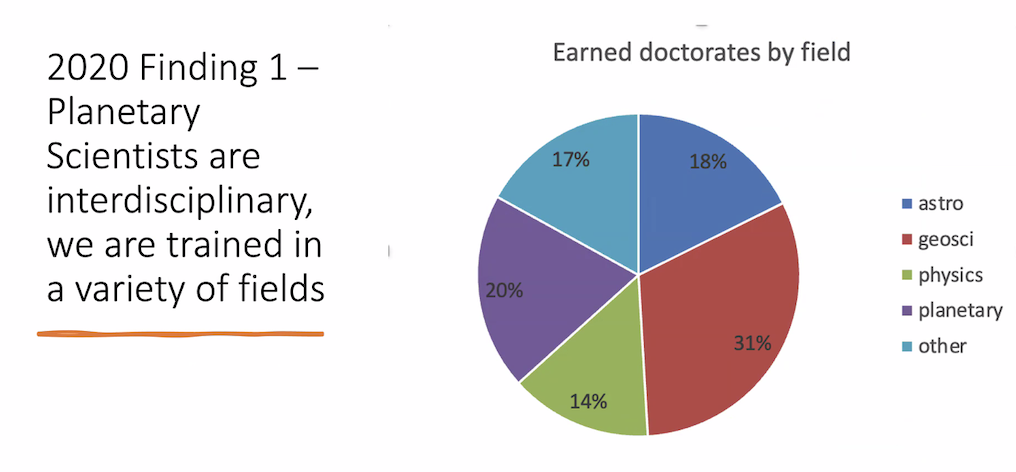
Julie Rathbun spoke about the ongoing planetary science workforce survey. This is the third survey of planetary science workers, with the first two taking place in 2011 and 2020. The survey, which is being carried out by the statistics team at the American Institute of Physics, is suitable for everyone from students to retirees, and it aims to understand the size and demographics of the planetary science workforce.

A slide showing some of the results from the 2020 workforce survey. Click to enlarge. [Slide by Julie Rathbun]
Rathbun briefly shared some results from the 2011 and 2020 surveys:
- members of the LGBTQ+ community are less likely to be involved with planetary science missions
- universities are the largest employer of planetary scientists
- NASA provides the majority of funding for planetary scientists
- the planetary science workforce is getting more diverse, but it lags behind the overall US labor force, the STEM workforce, and the physical sciences workforce
- DPS membership is also growing more diverse but still lags behind the field
If you’re a DPS member, you should have received an email inviting you to complete the survey — please fill it out and contribute to this important data-collection effort!
Return to Table of Contents.
Press Conference: Studies of Interstellar Objects, the Vera C. Rubin Observatory, and the DPS Workforce Survey (Briefing video)
First up was Darryl Seligman (Michigan State University) speaking on what we can learn from studying interstellar objects. Interstellar objects can help to illuminate parts of the planet formation process that we don’t yet understand, but that we know must be ubiquitous throughout the galaxy. During planet formation, objects are ejected from the system, and we’ve spotted three of these cast-out objects when they’ve entered our solar system. The composition of these interstellar interlopers can tell us something about where in their planetary systems they formed; objects forming near the water snow line — the location within a protoplanetary disk at which the temperature becomes low enough for water to freeze — are enriched in water, while objects forming near other molecules’ snow lines are enriched in those species. Seligman led the initial investigation into comet 3I/ATLAS, the latest interstellar visitor to our solar system, and his research team found that its composition suggests formation in the coldest regions of its planetary system, where cold giant planets would be necessary to eject it. After the discovery of 3I/ATLAS, Seligman was part of a team that spotted the comet in pre-discovery observations from the Transiting Exoplanet Survey Satellite. This discovery suggests that many more interstellar objects could be hiding in survey data, potentially escaping notice because they are moving quickly across the sky.
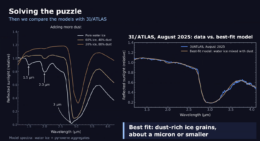
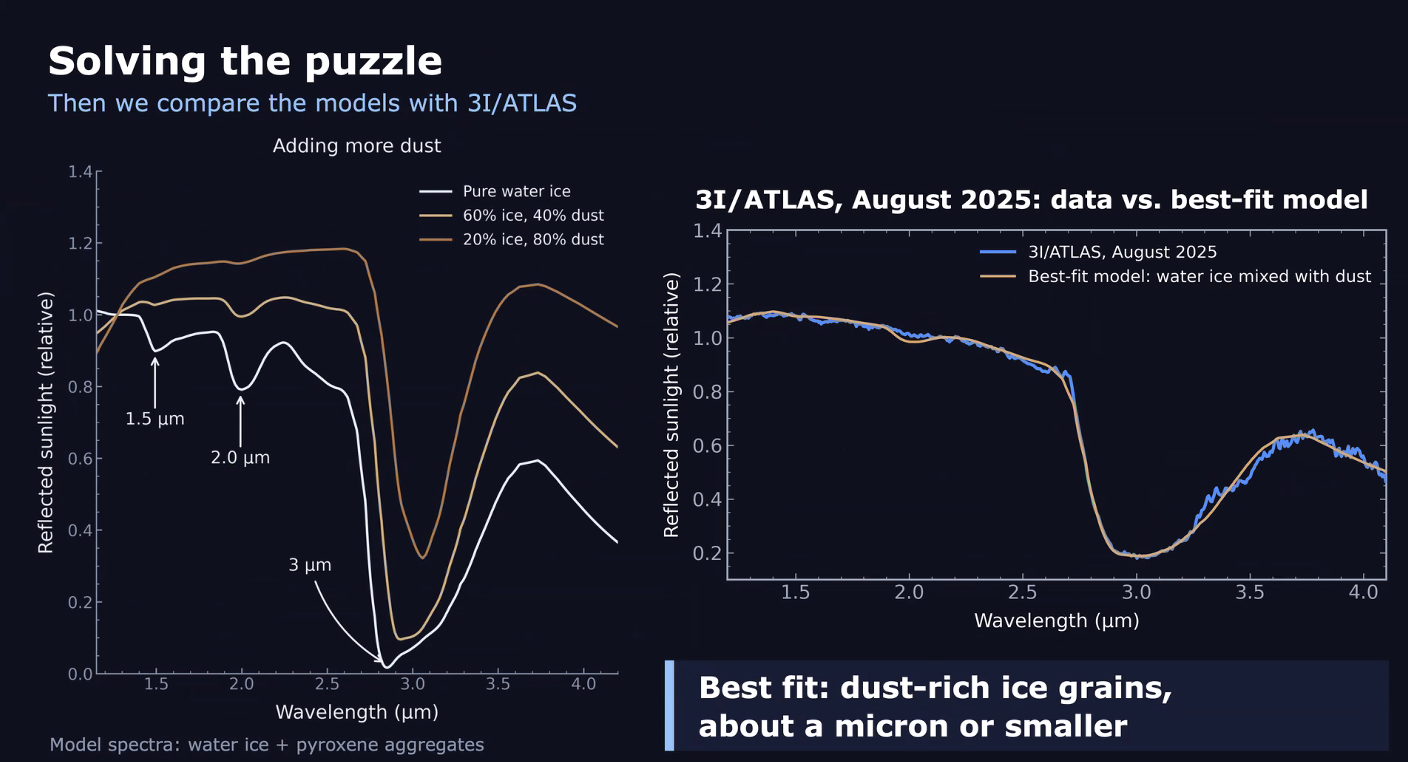
Modeling of 3I/ATLAS’s spectrum. Click to enlarge. [Slide by Silvia Protopapa]
(Southwest Research Institute) described JWST observations of 3I/ATLAS’s coma. The spectrum of 3I/ATLAS’s coma is different from those of comae of solar system comets; while 3I/ATLAS and solar system comets both have a strong absorption feature around 3 microns, solar system comets have two additional absorption features at 1.5 and 2.0 microns that 3I/ATLAS’s spectrum lacks. Protopapa modeled spectra of ice grains, starting with grains of pure water ice, which shows all three spectral features seen in solar system comets. As the modeled ice grains were made increasingly dusty, the two shorter-wavelength features faded away, leaving a spectrum very similar to that of 3I/ATLAS. While 3I/ATLAS’s spectrum is different from the typical solar system comet, it’s similar to the average Kuiper Belt object spectrum. This tells us that ice grains in a planetary system can be composed of pure water ice or be laden with dust, and that the purity or dustiness of ice in a planetary system may be determined early, during the protoplanetary disk phase.
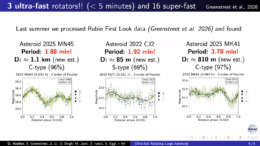
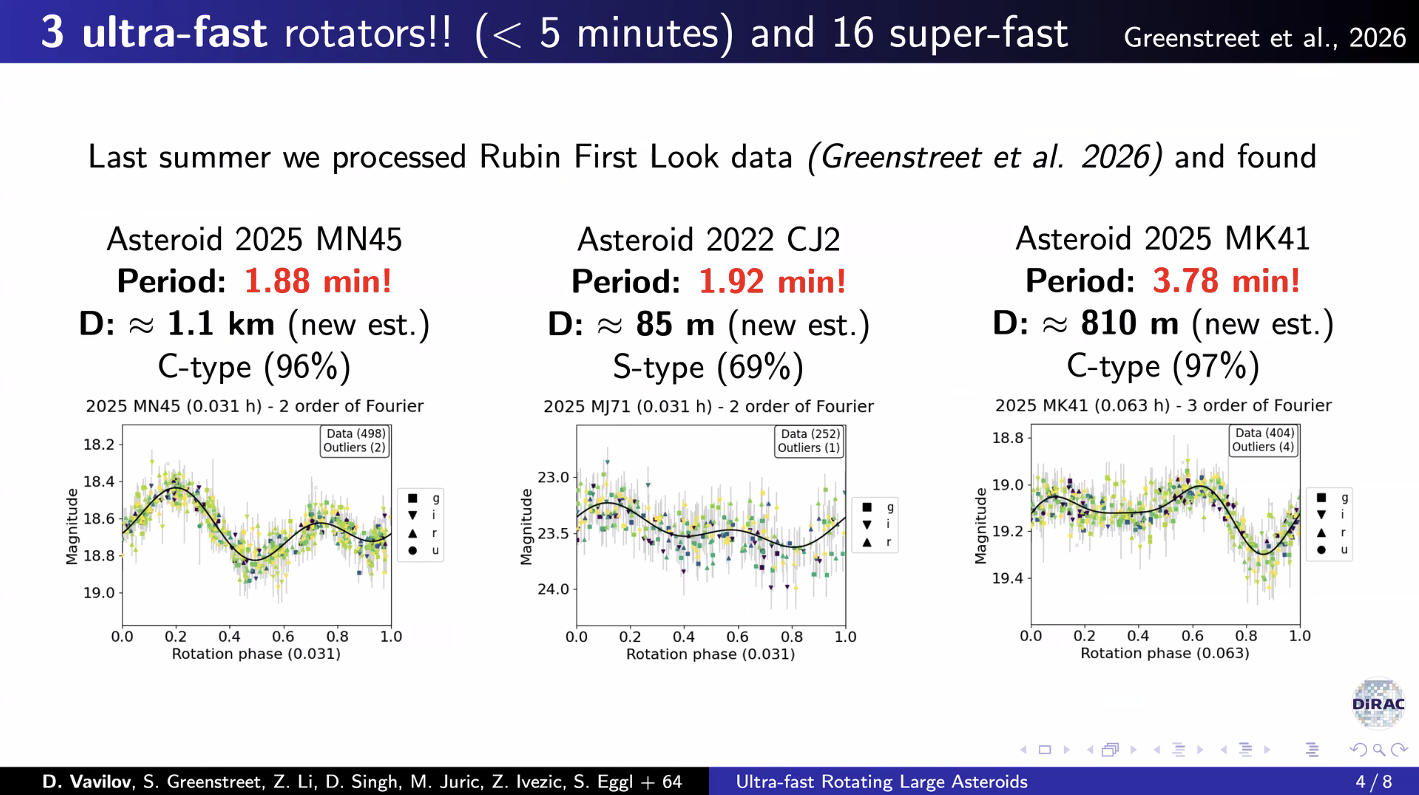
Observations and estimated properties of three ultra-fast rotators. Click to enlarge. [Slide by Dmitrii Vavilov]
(University of Washington) reported on the discovery of super-fast and ultra-fast rotators in early data from the NSF–DOE Vera C. Rubin Observatory. Asteroids larger than roughly 200 meters across are believed to be gravitationally bound piles of rubble rather than single large rocks. This means that large asteroids can only rotate so fast before flying apart, but despite the hypothetical 2.2-hour limit to their rotation, large asteroids have now been found rotating as quickly as once every 2
minutes. Vavilov and collaborators discovered dozens of rapidly rotating asteroids (a few of which are classified as “ultra-fast rotators” with rotation periods of less than 5 minutes) in Rubin’s first-look and Data Preview 2 observations. Intriguingly, all of the fastest rotators are C-type asteroids, which are thought to be weaker than other types of asteroids. Based on the rotation speeds seen here, these asteroids must have material strengths close to that of solid rock.
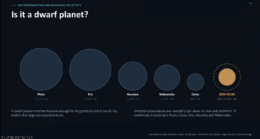
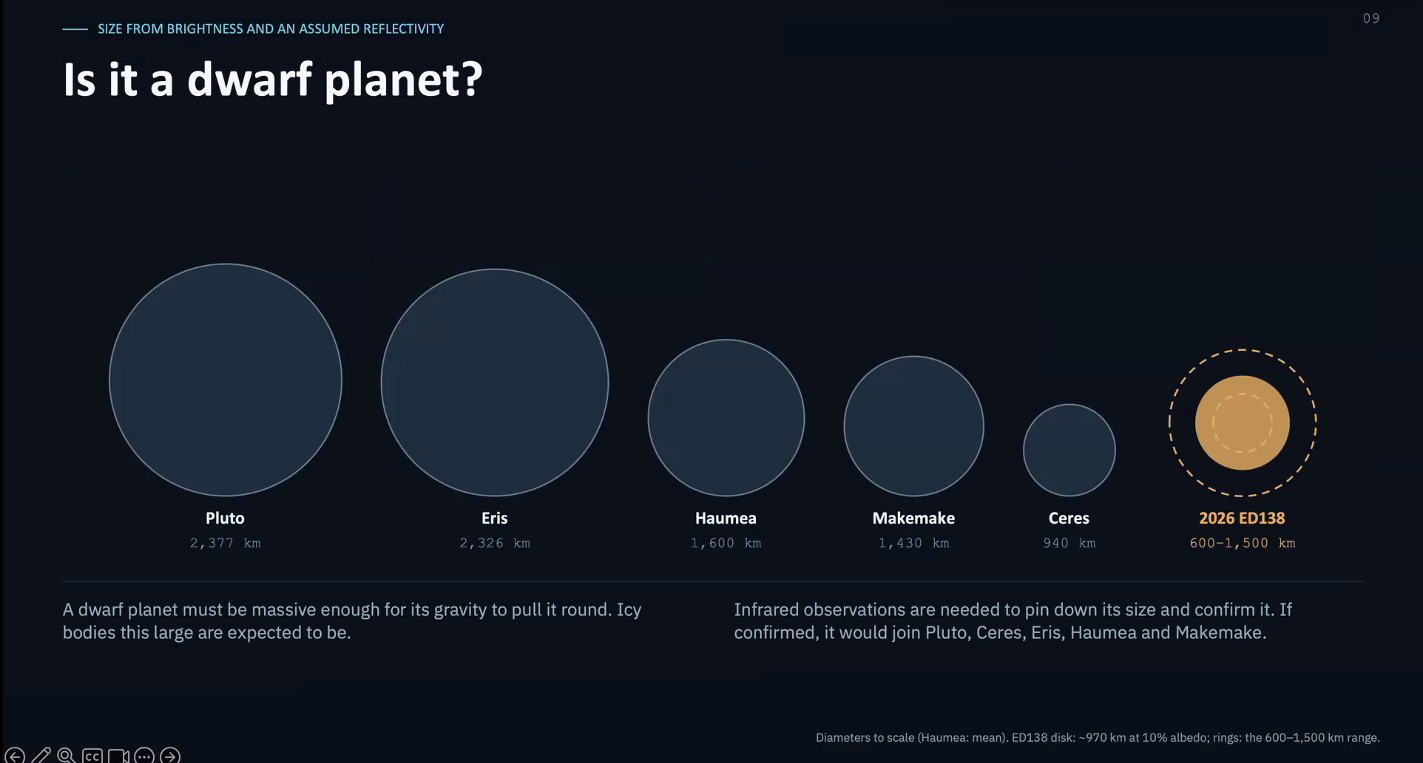
Comparison of 2026 ED138 to confirmed dwarf planets in our solar system. Click to enlarge. [Slide by Matthew Holman]
(University of Washington) and
Matthew Holman (Harvard University) presented on another discovery from Rubin Observatory: a new dwarf planet candidate in our solar system. Holman discovered the object, named 2026 ED138, just two weeks ago. 2026 ED138 has a diameter between 600 and 1,500 km and lies 47 au from Earth, journeying around the Sun once every 280 years. It’s among the brightest trans-Neptunian objects known, but it’s not yet clear if it’s a relatively small, reflective object or a relatively large, darker object. To verify the discovery, the researchers searched for the object in earlier data and found it in observations from the Dark Energy Camera from 10 years ago, among other places. Because the object is so bright — bright enough for capable amateur astronomers to spot it, let alone professional telescopes — it’s surprising that it evaded detection so long, but it managed to hide among crowded fields of stars in the plane of the Milky Way. Though 2026 ED138 is still a dwarf planet candidate at the moment, future infrared observations will help to pin down its size and may promote it to confirmed dwarf planet status. Hopefully, this is just one of many such discoveries that we can expect from Rubin!
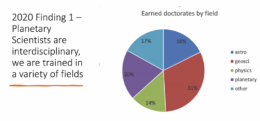
Data from the 2020 planetary science workforce survey showing the varied backgrounds of planetary scientists. Click to enlarge. [Slide by Julie Rathbun]
Finally,
Julie Rathbun (Cornell University) discussed some of the findings of the DPS workforce survey, which was also the topic of a
plenary talk earlier in the day. The DPS is currently embarking on a new survey of the planetary science workforce, which aims to understand the humans behind the science and quantify the diversity in
training, subfield, techniques, employment, and demographics among planetary scientists. Rathbun summarized two findings from previous surveys, which were conducted in 2011 and 2020: 1) planetary scientists are interdisciplinary, with training in numerous fields, and 2) planetary science is getting more diverse, but the diversity of planetary scientists lags behind that of the overall US labor force, the STEM workforce, and the physical science workforce.
Return to Table of Contents.