
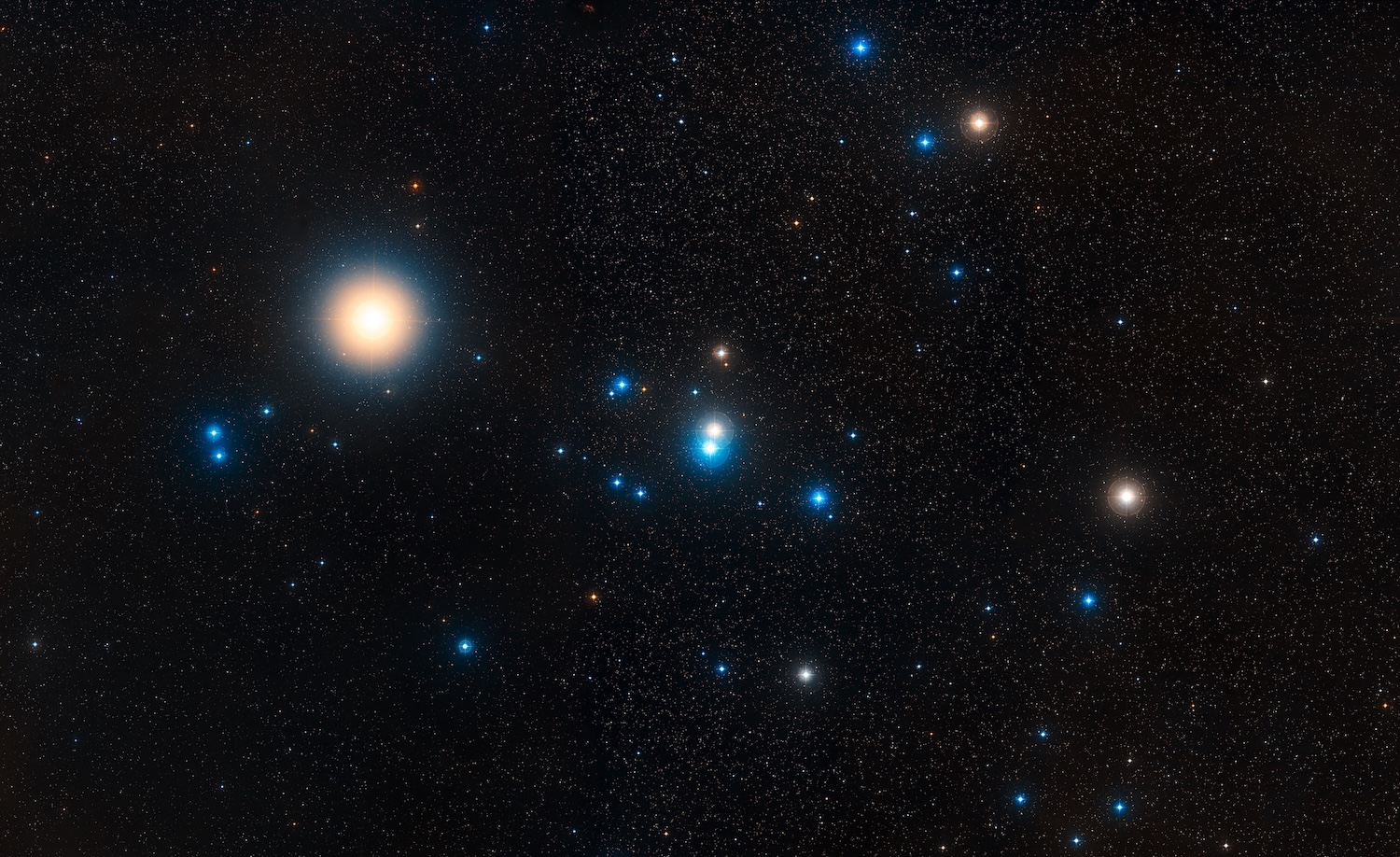
It’s never been easier to get to know your neighbors: a new database introduces open star clusters, stellar associations, and substellar objects within 500 parsecs (1,630 light-years) of the Sun.
Too Much of a Good Thing
Astronomers today must contend with a difficult but delightful problem — there’s just so much data available. As a researcher attempting to study a particular slice of the universe, it can be challenging to pinpoint the correct data and to know whether you’ve collected all the data relevant to your science. This prospect is already daunting, and the deluge of data from surveys like the Vera C. Rubin Observatory’s Legacy Survey of Space and Time will make the situation even harder to manage.
This is where specialized databases can help. Often crafted with specific science goals in mind, database creators do the work for you by compiling objects within a well-defined parameter space. Today’s article describes a new database that takes a census of the solar neighborhood, with applications for studies of stellar evolution, exoplanets, and more.
Compiling Clusters
Jonathan Gagné (Montreal Planetarium; University of Montreal) and collaborators have compiled the Montreal Open Clusters and Associations (MOCA) database, which contains detailed information on nearby star clusters, stellar associations, and substellar objects.
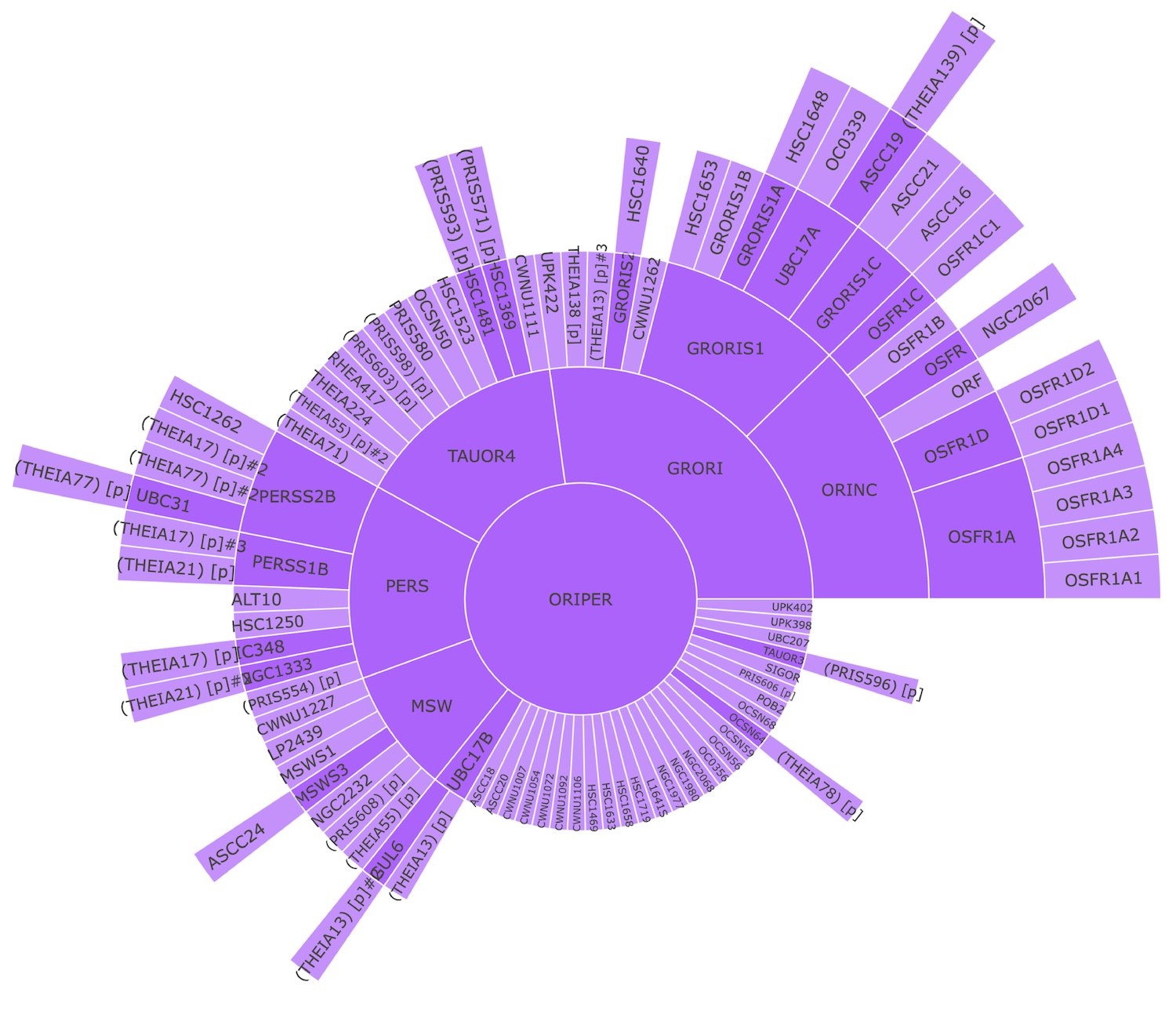
Visualization of the hierarchy of young stellar associations within the Orion–Perseus branch of the database. Click to enlarge. [Gagné et al. 2026]
In total, the complete database contains information about 10,259 star clusters and stellar associations and their individual members. The authors identified more than 11,000 new candidate cluster and association members, most of which are M dwarfs. The database also contains 1,620 substellar objects, 196 of which are newly identified through this work, and 101 candidate isolated planetary-mass objects.
Science with MOCA
For each star, the team compiled the available measurements from the literature and, from these core measurements, derived quantities like distance and spectral type. They then used empirical methods to estimate further properties like age, mass, and effective temperature.
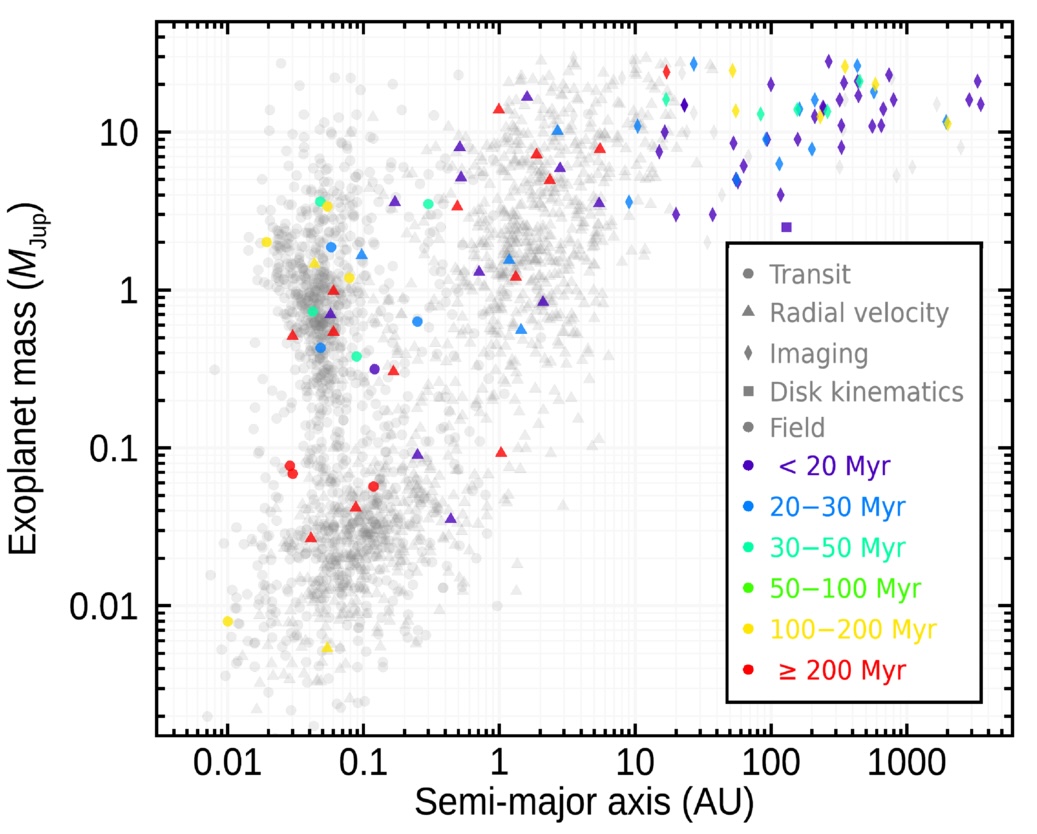
Masses and semi-major axes for confirmed exoplanets from the NASA Exoplanet Archive (gray symbols). Colored symbols indicate planets belonging to a young stellar association, with the color denoting the age of the association. Click to enlarge. [Adapted from Gagné et al. 2026]
MOCA already offers an impressive census of our patch of the Milky Way, but this isn’t its final iteration. As new data become available — including future Gaia data releases that will improve our understanding of cluster membership and reveal a population of astrometrically detected exoplanets — they will be incorporated into the existing database.
Interested in seeing what MOCA can do for your research? You can access the database online.
Citation
“The Montreal Open Clusters and Associations (MOCA) Database: A Census of Nearby Associations, Open Clusters, and Young Substellar Objects Within 500 pc of the Sun,” Jonathan Gagné et al 2026 ApJS 287 8. doi:10.3847/1538-4365/ae9b09