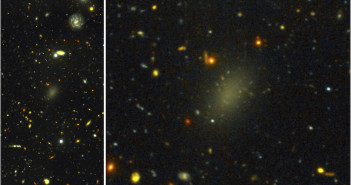
Selections from 2016: A Very Dark Galaxy
This year, scientists discovered Dragonfly 44, a faint galaxy whose center is made up of a whopping 98% dark matter.

This year, scientists discovered Dragonfly 44, a faint galaxy whose center is made up of a whopping 98% dark matter.
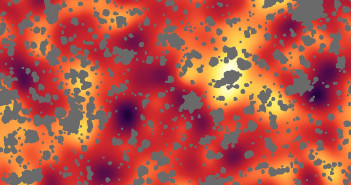
Could dark matter be made up of many black holes formed in the early universe? A study from this year examined this possibility.
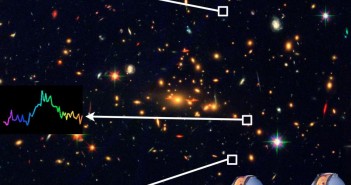
A faint, 13-billion-year-old galaxy may help us to learn how we transitioned out of the universe’s dark ages.
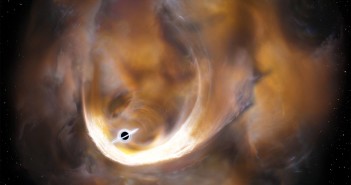
Potential signs of the second-largest black hole in our galaxy have been found near the center of the Milky Way.
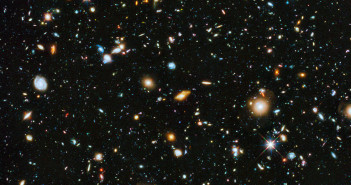
How many galaxies are there in the observable universe? The latest estimate is approximately 2 trillion, ten times more than previously thought.
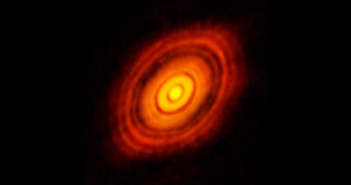
Beautiful ALMA images of the protoplanetary disk around HL Tau revealed evidence for planets orbiting within the disk.
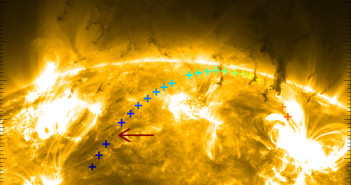
Sometimes plasma emitted from the Sun comes crashing back down to the solar surface. A new study examines how the plasma falls in its return.
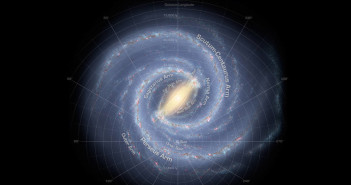
Though we don’t notice it from our point of view, we’re hurtling through space at breakneck speed. A new study measures how fast we’re orbiting the galactic center.
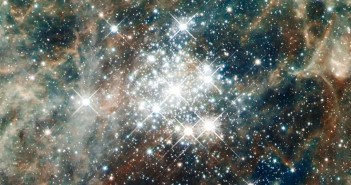
Astrobites reports on ALMA observations used to explore the effects of massive stars on gas and dust in galaxies.
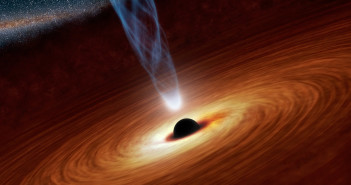
Where does the angular momentum come from that causes supermassive black holes to spin on their axes and launch powerful jets?
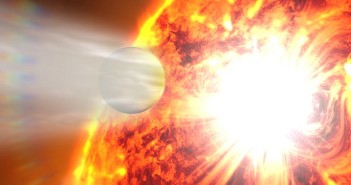
Our measurements of exoplanet atmospheres may be influenced by the activity of the planets’ host stars.
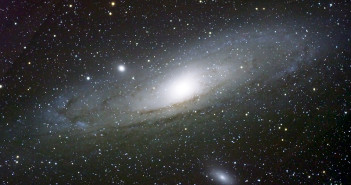
Are small satellite galaxies usually distributed evenly around their larger galactic hosts? Evidence suggests otherwise.