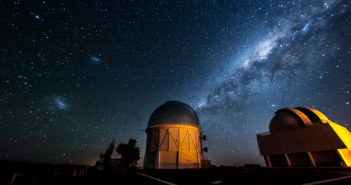
Supernovae, Dark Energy, and the Fate of Our Universe
What’s the eventual fate of our universe? New results from Dark Energy Survey supernovae address this and other questions.

What’s the eventual fate of our universe? New results from Dark Energy Survey supernovae address this and other questions.
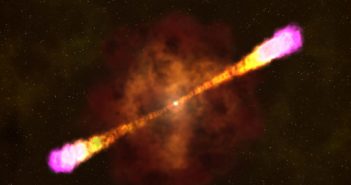
What drives the rapid flickering in the jets that are produced in some powerful, high-energy explosions?
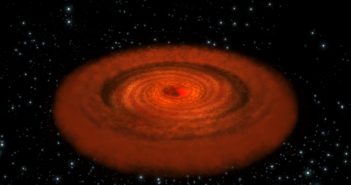
Astrobites reports on how the discovery of medium-sized black holes allows us to trace the history of the giant black holes in the center of galaxies.
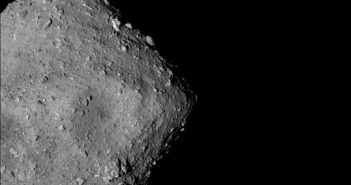
Up-close photos show that Ryugu is shaped like a spinning top. Can this asteroid’s history explain its structure?
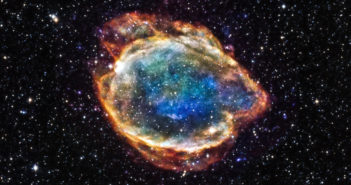
Astronomers have observed an unusual stellar explosion. What makes this event different from other supernovae?
What happens during chaotic interactions between black-hole binaries in star clusters? New research suggests eccentric mergers can result.
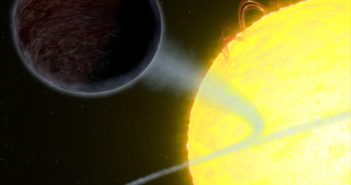
Why is WASP-12b’s orbit decaying so rapidly? Astrobites reports on whether an unseen companion planet might be influencing this hot Jupiter’s orbit.
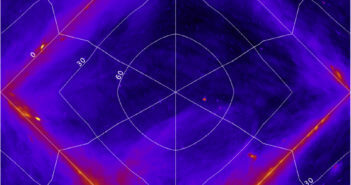
What’s the best way to represent the spherical sky on a flat surface? This unique octahedron-based view has its advantages.
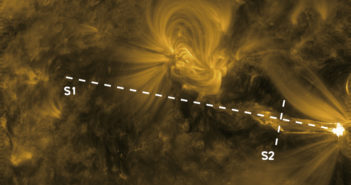
Our Sun often exhibits a roiling surface full of activity. But how do the different types of eruptions and disturbances we see relate to one another?
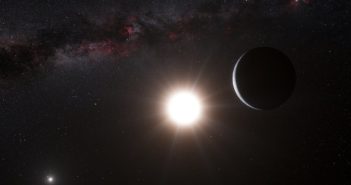
A new study suggests that planets around K-dwarf stars may be the best targets in the search for signs of life.
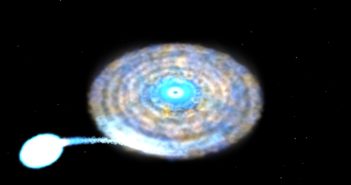
Astrobites reports on the NICER discovery of an accreting millisecond pulsar in a record-setting, rapid orbit with a white dwarf.
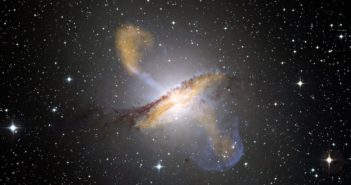
A recent study explores a high-energy mystery from the supermassive black holes that dot our universal landscape.