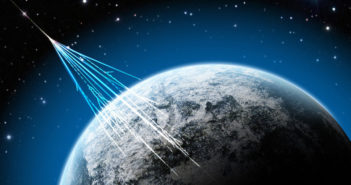
An Iced Cosmic-Ray Macchiato
We know the universe is filled with highly energetic particles. Astrobites reports on how a shot of caffeine could boost them to their extreme energies.

We know the universe is filled with highly energetic particles. Astrobites reports on how a shot of caffeine could boost them to their extreme energies.
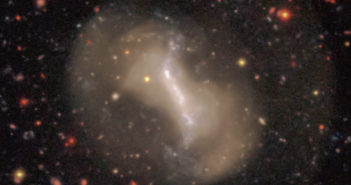
What happens when the large-scale drama of a violent galaxy merger plays out on small scales for a pair of dwarf galaxies?
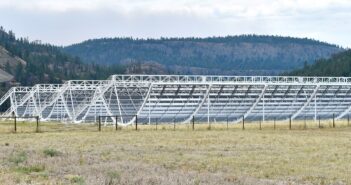
The discovery of nine more repeating fast radio bursts brings us a little closer to understanding their origin.
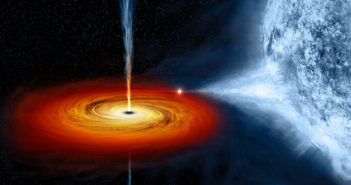
What can infrared emission from black hole X-ray binaries tell us about the speeds of their powerful jets?
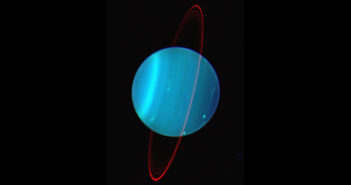
Astrobites reports on how Uranus may have gained its unusual 90-degree tilt.
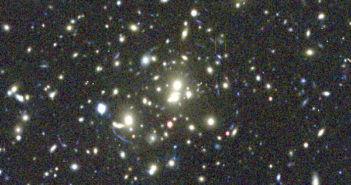
The South Pole Telescope has uncovered the signatures of hundreds of large clusters of galaxies.
Meet AAS Lead Editor Chris Lintott, a man of many hats.
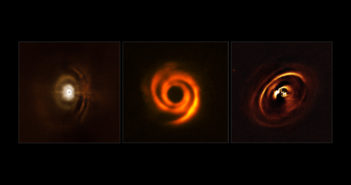
A new study proposes that the rings and spirals we see in protoplanetary disks may have a dramatic origin.

What could explain Betelgeuse’s recent odd dimming? Astrobites follows the red supergiant’s rise to fame (and in magnitude).

Can radioactive decay keep a planet warm enough that it could host liquid water — and life — even outside of its star’s habitable zone?

Planet-finding missions don’t just help us discover new planets — they can also be used to study internal motions in stars!

Why are some cluster stars unusually bright and blue? A closer look at the Collinder 261 open cluster sheds some light on these straggling members.