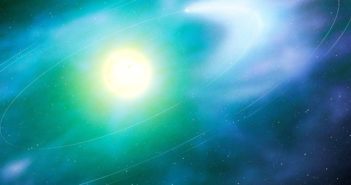
Are We Watching a Planet Disintegrate?
New observations have revealed a particularly inhospitable environment: a planet literally disintegrating as it orbits its host.

New observations have revealed a particularly inhospitable environment: a planet literally disintegrating as it orbits its host.
Astrobites reports on how searching for molecules in astronomical settings is a bit like looking for Waldo.
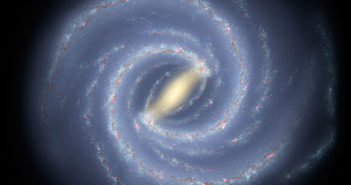
A new code allows astronomers to realistically model galaxies, accurately reproducing both their structures and their motions.
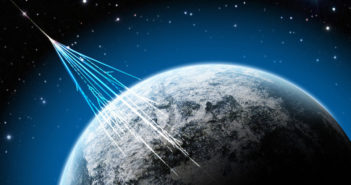
Why is life built from molecules with preferred orientation? There’s a chance cosmic rays are to blame.
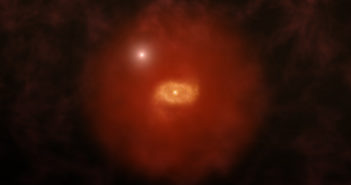
Astrobites reports on the relationship between stellar mass, metallicity, and star formation rate in early galaxies.
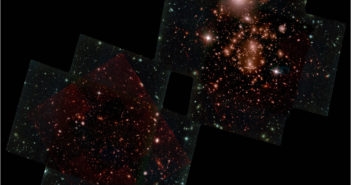
Want an even wider look at the rich galaxy clusters of the Hubble Frontier Fields? Take a walk with BUFFALO.
Astrobites reports on the discovery of … a relativistic koala in space?
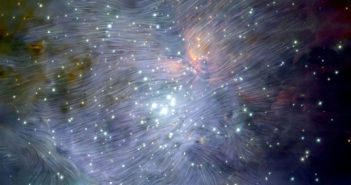
Molecular clouds act as stellar nurseries, creating environments for stars to form. Astrobites reports on an explosion in one such nursery that would disrupt any lullaby.
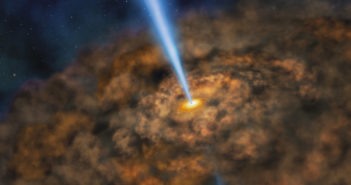
Astrobites reports on the centers of active galaxies that are lurking behind a veil of gas and dust.
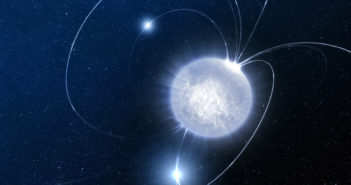
Neutron star mergers produce signals across the electromagnetic spectrum. But could these binaries also flare before their dramatic collisions?
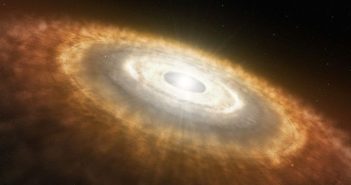
Protoplanetary disks contain less carbon monoxide gas than expected. How does this happen?
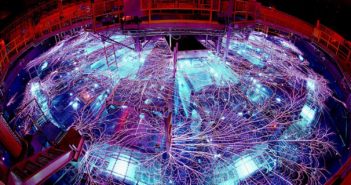
Have you ever wanted to examine the photosphere of a white dwarf up close and personal? A team of scientists has done so — by building a piece of a white dwarf in a laboratory.