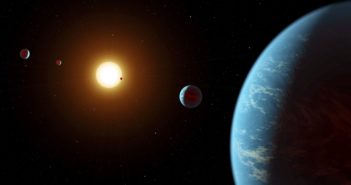
Mass-ive Implications for Exoplanetary Atmospheres
To study the atmosphere of an exoplanet, it turns out we need to have a solid handle on its mass.

To study the atmosphere of an exoplanet, it turns out we need to have a solid handle on its mass.
The Planetary Science Journal is a new home for your research articles investigating our own solar system and other planetary systems.
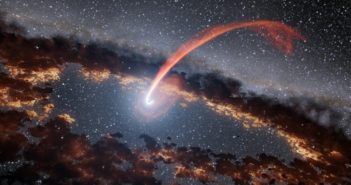
A new study explores what happens when a passing star has a close encounter with a supermassive black hole — and lives to tell the tale.
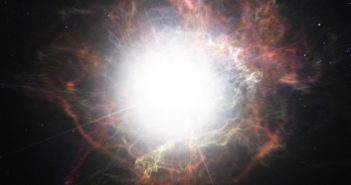
Supernovae may be among the most powerful events in the cosmos, but astronomers think that companion stars may be able to survive these intense explosions. Astrobites reports.
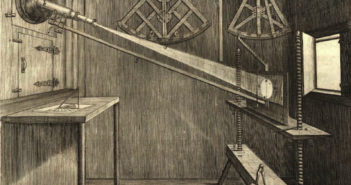
Observations from a Polish astronomer in the 1600s may be important for understanding a prolonged period of reduced sunspot activity.
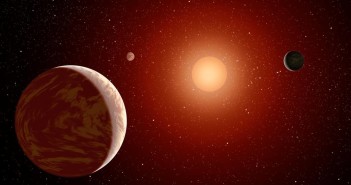
What determines the climate of an Earth-like planet orbiting its host star? A new study explores how distant worlds are shaped by their hosts.
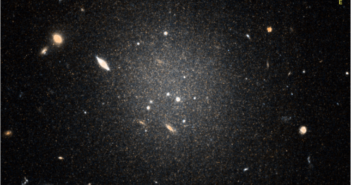
To confirm whether some galaxies have suspiciously low amounts of dark matter, we need to be sure how far away they are. Astrobites reports on a new approach for these measurements.
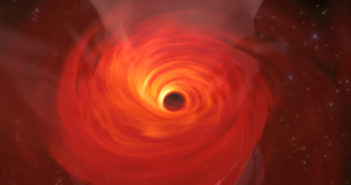
What determines the size and shape of the shadow of a black hole?
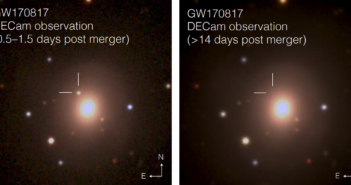
What caused the appearance of the fast transient SN2018kzr? A very interesting sort of neutron star may be involved.
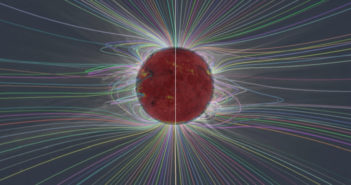
What’s to be done when theory and observation don’t match? A recent study may have found a missing piece in our models of the Sun’s magnetic field.
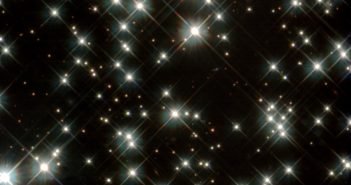
Astrobites reports on a previously unexplained branch of cooling white dwarfs that is likely a traffic jam caused by an 8-billion-year delay in cooling.
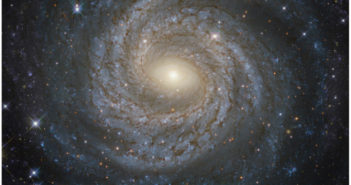
Variable stars help us measure distances to galaxies like this stunning nearby spiral, NGC 6814.