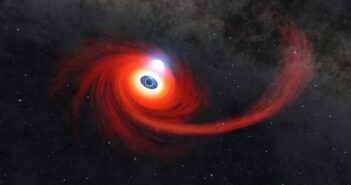
Selections from 2024: Sampling Shredded Stars in the Infrared
Dust might be responsible for hiding many tidally disrupted stars from view — but a new search at infrared wavelengths has revealed them at last.

Dust might be responsible for hiding many tidally disrupted stars from view — but a new search at infrared wavelengths has revealed them at last.
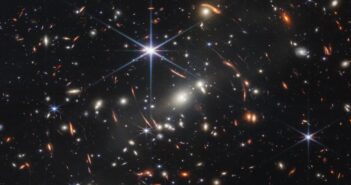
Researchers have proposed a new solution to a cosmic chicken-and-egg problem, suggesting a new role for supermassive black holes in the formation of stars in young galaxies.
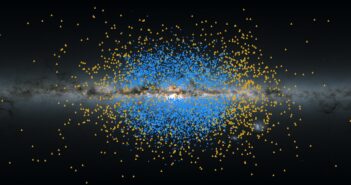
Two stellar structures discovered in the Milky Way this year may be fragments of proto-galaxies that formed before our galaxy was assembled.
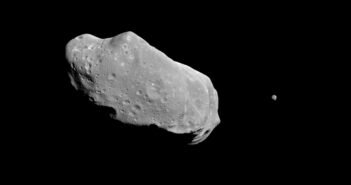
Researchers have spotted what might be water on asteroids before, but 2024 brought the first definitive detection.
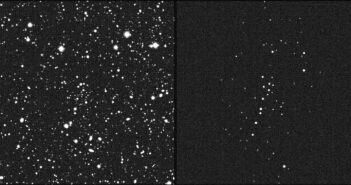
The Milky Way’s faintest known satellite contains just 57 stars and has a total mass of 16 solar masses: meet Ursa Major III/UNIONS 1.
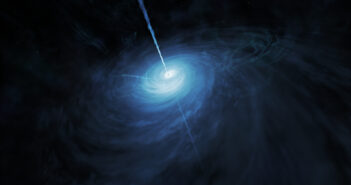
Need more than a million quasars for your study of large-scale structure, accretion, or black hole growth? The Quaia catalog has you covered.
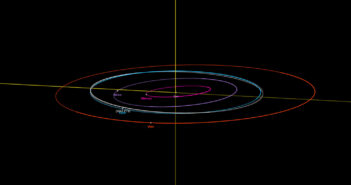
In September 2024, researchers predicted that the asteroid 2024 PT5 would soon join Earth as a short-lived “mini-moon.” Today, we’re giving a brief recap of how the prediction played out.
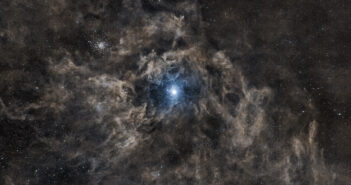
Though the North Star appears to be an unwavering single star, it’s actually a variable star belonging to a triple star system. This year, researchers reported a new mass estimate for the North Star and discovered spots on its surface.
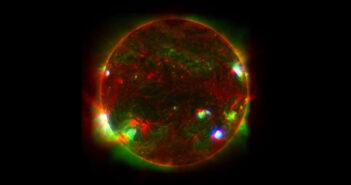
As the solstice nears, we’re taking a look at four recent articles that share new findings from our home star.
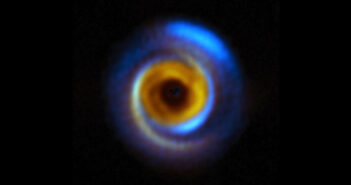
What’s the origin of the dusty crescents in the disk around the young star MWC 758? Researchers have tracked the movements of two crescents to find out.