Features RSS

extreme-ultraviolet image of the Sun

Editor’s Note: For the remainder of 2025, we’ll be looking at a few selections that we haven’t yet discussed on AAS Nova from among the most-downloaded articles published in AAS journals this year. The usual posting schedule will resume January 2nd.

The Sun Reversed Its Decades-Long Weakening Trend in 2008

Published September 2025

Main takeaway:

plots of solar wind parameters from 2008 to 2025

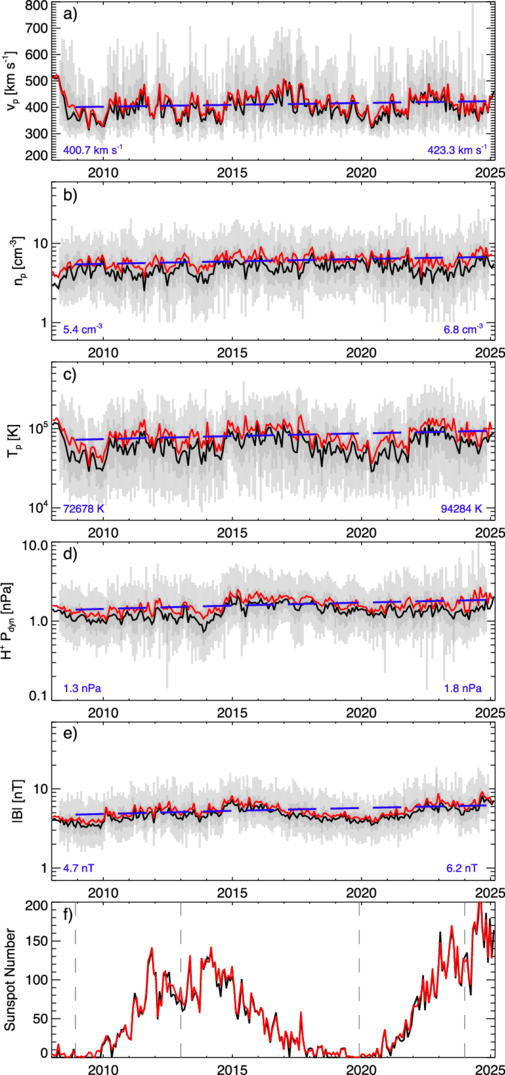
Various solar wind parameters measured at Earth’s orbital distance from 2008 to 2025. [Jasinski and Velli 2025]

Jamie Jasinski (NASA’s Jet Propulsion Laboratory) and Marco Velli (NASA’s Jet Propulsion Laboratory and the University of California, Los Angeles) analyzed solar wind data from 2008 to 2025 and found that many solar wind parameters such as speed, density, temperature, and magnetic field strength increased over that time period. This increase ran counter to expectations that the Sun may be entering a historically low period of activity in 2008.

Why it’s interesting:

The Sun undergoes an 11-year activity cycle that is driven by a change in its internal magnetic field structure. As the Sun’s magnetic activity changes, the number of sunspots, the frequency of solar flares and coronal mass ejections, and the intensity of the solar wind vary as well. Atop these mostly regular 11-year changes are longer-term variations. A recent example of this longer-term behavior began in the 1980s, when an overall weakening trend was stamped upon the usual 11-year cycle. This decline led to an exceptionally deep solar minimum in 2008, leading researchers to suspect that the Sun’s activity level might remain low for decades.

The historical context for a prolonged weak period:

Though the Sun reversed its weakening activity trend in 2008, a prolonged period with little solar activity wouldn’t have been unprecedented. Astronomers have monitored and counted sunspots for centuries, allowing modern-day researchers to investigate the Sun’s behavior long before spacecraft began to study our home star. In the historical record, there are two instances of weak solar activity spanning multiple decades: the Maunder minimum in 1645–1715 and the Dalton minimum in 1790–1830. Compared to the 11-year solar cycle, these longer-term behaviors are more difficult to predict, and their causes are uncertain.

Citation

Jamie M. Jasinski and Marco Velli 2025 ApJL 990 L55. doi:10.3847/2041-8213/adf3a6

CHIME radio telescope

Editor’s Note: For the remainder of 2025, we’ll be looking at a few selections that we haven’t yet discussed on AAS Nova from among the most-downloaded articles published in AAS journals this year. The usual posting schedule will resume January 2nd.

A Repeating Fast Radio Burst Source in the Outskirts of a Quiescent Galaxy

Published January 2025

Main takeaway:

FRB 20240209A localization region and likely host galaxy

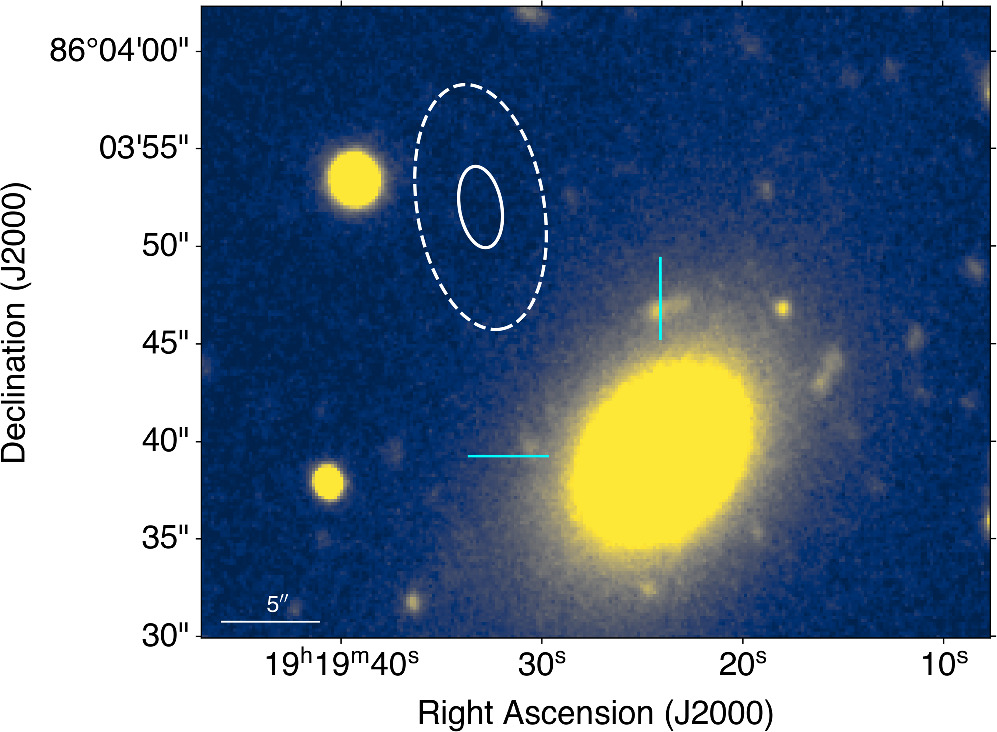
Gemini-North image of the FRB 20240209A localization region (white lines) and the source’s likely host galaxy (cyan crosshairs). [Shah et al. 2025]

Using the Canadian Hydrogen Intensity Mapping Experiment (CHIME), Vishwangi Shah (McGill University) and collaborators discovered the repeating fast radio burst source FRB 20240209A. The team localized the source to roughly 130,000 light-years from the center of a quiescent elliptical galaxy about 1.8 billion light-years away. This suggests that the bursts originated from a globular cluster on the outskirts of the galaxy, pointing to a delayed formation pathway for the source.

Why it’s interesting:

Fast radio bursts are brief, intense flashes of radio waves from sources across the universe. Aside from one fast radio burst that has been associated with a magnetar within our own Milky Way, the source of these outbursts remains mysterious, and precise localization of these bursts is key to pinning down their origins; fast radio bursts that come from galaxies with active star formation may be linked to “prompt” formation channels like core-collapse supernovae or young magnetars, while bursts that arise in quiescent galaxies might be due to “delayed” formation pathways such as neutron stars that are born from merging white dwarfs.

How FRB 20240209A compares to other fast radio bursts, and what may have caused it:

FRB 20240209A is similar to other repeating fast radio bursts in terms of the shape of its individual bursts as well as its tendency to undergo periods of high and low bursting activity. Its location makes it quite unusual, though: it’s the only repeating fast radio burst known to come from a quiescent galaxy, and it’s the only burst — repeating or not — that has been found in an elliptical galaxy. If confirmed to originate from a globular cluster, FRB 20240209A would also be only the second known fast radio burst source to come from this type of environment. Shah’s team explored multiple possible origin stories for FRB 20240209A, including the possibility that the source was ejected from its host galaxy. The team favors an origin involving a magnetar formed through the collapse or merger of a compact object.

Citation

Vishwangi Shah et al 2025 ApJL 979 L21. doi:10.3847/2041-8213/ad9ddc

Messier 101 and SN 2023ixf

Editor’s Note: For the remainder of 2025, we’ll be looking at a few selections that we haven’t yet discussed on AAS Nova from among the most-downloaded articles published in AAS journals this year. The usual posting schedule will resume January 2nd.

Search for Gravitational Waves Emitted from SN 2023ixf

Published May 2025

Main takeaway:

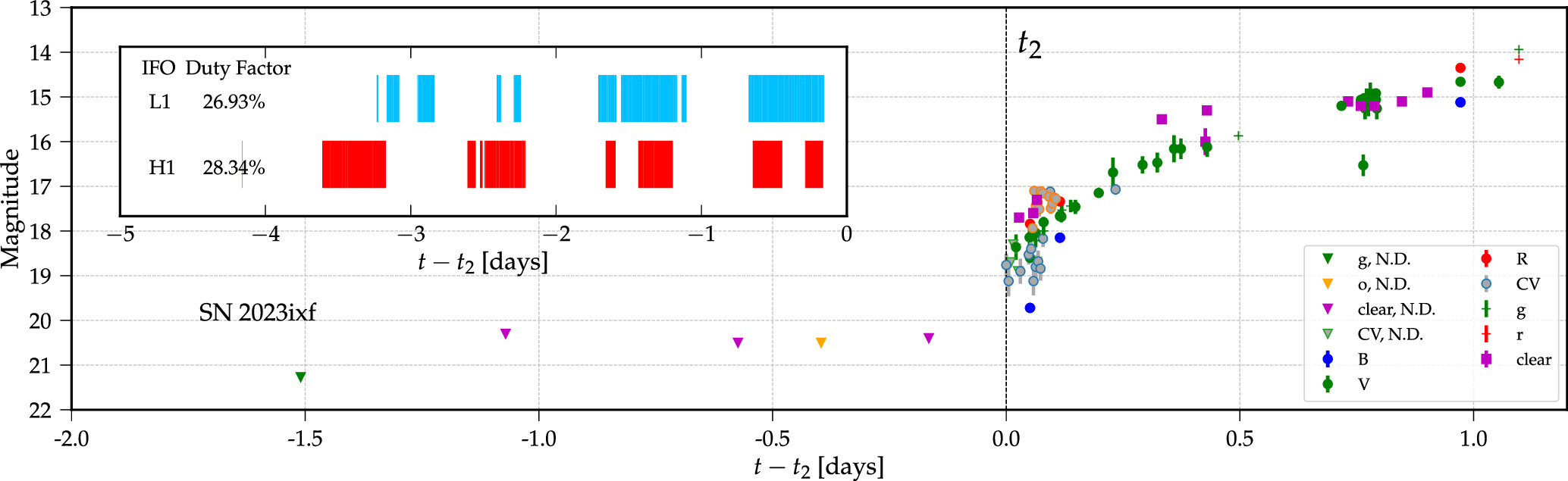
The LIGO, Virgo, and KAGRA collaborations searched for gravitational waves from the core-collapse supernova SN 2023ixf. Though no significant gravitational wave events were detected during times when two or more gravitational wave detectors were online, the non-detection of gravitational waves from this nearby supernova places constraints on the amount of energy emitted by the explosion in the form of gravitational waves, the shape of the proto-neutron star produced in the collapse, and more.

Why it’s interesting:

When a massive star expires in a core-collapse supernova, the collapse of the stellar core into a neutron star or black hole produces gravitational waves. These gravitational waves, along with a stream of neutrinos, should arrive at Earth before the light from the explosion does; gravitational waves and neutrinos can easily escape the dense, roiling ejecta from the explosion, but photons take some time to claw their way through the debris. Gravitational waves from a supernova have never been detected, but the nearby supernova SN 2023ixf, which occurred in a galaxy about 20 million light-years away, offered the best recent opportunity to detect these waves.

photometric evolution of SN 2023ixf and gravitational wave coverage of the event

Photometric evolution of SN 2023ixf in its early days and gravitational wave coverage leading up to the supernova’s discovery (inset image). [LIGO-Virgo-KAGRA Collaborations 2025]

What we learned from this non-detection:

Using the non-detection of SN 2023ixf, researchers placed stringent constraints on the gravitational wave energy and luminosity of a supernova explosion, but an even closer supernova is still needed to begin to rule out model predictions for these quantities. To estimate the distance out to which we can expect to detect gravitational waves from collapsing stars, the collaboration members injected synthetic supernova signals into their data. The majority of non-rotating explosions can be detected out to about 22,000 light-years — meaning events on the far side of our galaxy remain inaccessible to current detectors — while rapidly rotating explosions should be detectable out to nearly 100,000 light-years, pushing the detection horizon beyond the borders of the Milky Way.

Citation

A. G. Abac et al 2025 ApJ 985 183. doi:10.3847/1538-4357/adc681

3I/ATLAS

Editor’s Note: For the remainder of 2025, we’ll be looking at a few selections that we haven’t yet discussed on AAS Nova from among the most-downloaded articles published in AAS journals this year. The usual posting schedule will resume January 2nd.

Hubble Space Telescope Observations of the Interstellar Interloper 3I/ATLAS

Published August 2025

Main takeaway:

3I/ATLAS

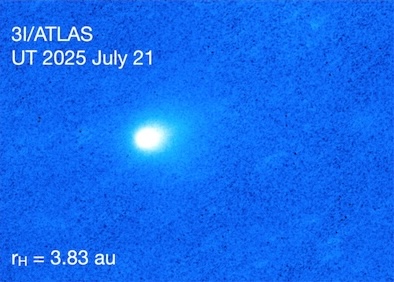
3I/ATLAS as seen by Hubble on 21 July 2025, when the comet was 3.83 au from the Sun. [Adapted from Jewitt et al. 2025]

David Jewitt (University of California, Los Angeles) and collaborators used the Hubble Space Telescope to observe the interstellar object 3I/ATLAS just a few weeks after it was discovered. These observations allowed the team to constrain the object’s mass-loss rate and the size of its nucleus, placing its radius between 0.22 and 2.8 kilometers.

Why it’s interesting:

3I/ATLAS is just the third known object to visit our solar system from another planetary system. With such a small sample size, every interstellar object discovered is a source of fascination. Are these objects more like comets or asteroids? How many of them roam the space between the stars? What, exactly, launches them into interstellar space? Using all available tools, including powerful observatories like Hubble, researchers can extract as much information as possible when interstellar objects make their brief journeys through our solar system, and get us closer to answering these key questions.

How these observations were planned, and what happened afterward:

After interstellar objects 1I/ʻOumuamua and 2I/Borisov zipped through the solar system in 2017 and 2019, respectively, researchers knew it was only a matter of time before the next interstellar interloper paid a visit. In preparation for the next arrival, Jewitt’s team proposed a target-of-opportunity observation with Hubble. This allowed them to disrupt the telescope’s planned observing schedule once 3I/ATLAS was discovered, getting an early high-resolution look that could guide further observations. Since then, researchers have published more than 30 articles in the AAS journals alone about 3I/ATLAS. In these articles, researchers have sought to understand where 3I/ATLAS came from, investigated its polarization properties, collected JWST data of the object, found it in pre-discovery data, and much more, crafting a comprehensive view of a rare visitor to our neighborhood.

Citation

David Jewitt et al 2025 ApJL 990 L2. doi:10.3847/2041-8213/adf8d8

quasar artist's concept

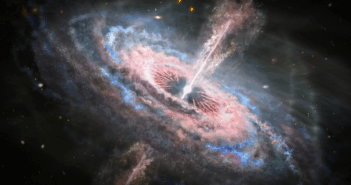
Emitting powerful radiation into their surroundings, quasars had the ability to significantly influence their local environments. A recent study using JWST observations focuses in on one of the most powerful known quasars to determine its intergalactic impact.

Quasar Questions

Beacons of light from the very distant universe, quasars are incredibly luminous galactic cores powered by active supermassive black holes. During the first few billion years after the Big Bang, quasars pumped radiation not only into their host galaxies but also out into intergalactic space and subsequently into nearby galaxies. This radiation was strong enough to ionize any intervening material and even break up (or photodissociate) molecular hydrogen gas. With their star formation fuel evaporated, a quasar’s unsuspecting galactic neighbors were stymied from growth.

Sky map

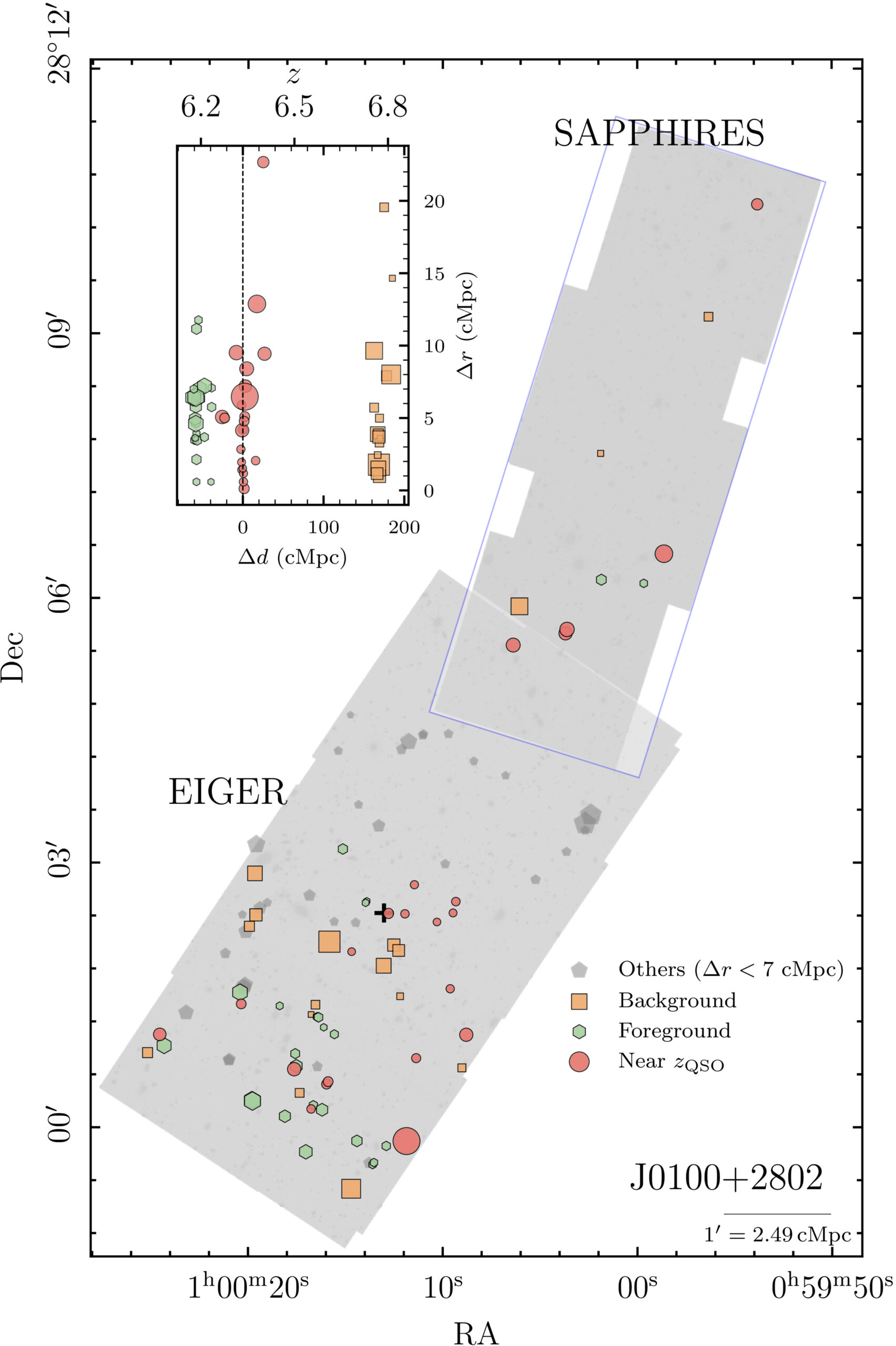
Sky map showing the location of quasar J0100+2802 (marked with black cross) and the [OIII]-emitting galaxies detected in the field. The red points are within the same redshift window as J0100+2802, and the green and orange points show foreground and background galaxies respectively. Click to enlarge. [Zhu et al 2025]

When the universe went from neutral to ionized during the epoch of reionization, quasars are thought to have occupied dense regions, tracing out the beginnings of galaxy clusters. However, studies thus far have been unable to decipher the environmental influence of quasar radiation from other mechanisms impacting the evolution of nearby galaxies. With the advent of JWST, direct measurements of rest-frame star formation tracers during the epoch of reionization are now possible, allowing astronomers to explore high-redshift quasar environments in new ways.

Searching for Suppressed Star Formation

To investigate how quasars may impact their environments, Yongda Zhu (University of Arizona) and collaborators set their gazes on J0100+2802 — the most ultraviolet-luminous quasar known at redshift z > 6. This powerful quasar lies in an overdensity, surrounded by galaxies filled with hot, young stars, making it an ideal candidate to test the impacts of luminous quasars on their neighbors. The authors used spectroscopy and photometry obtained from JWST to explore the space around J0100+2802.

Searching within the expected reach of the quasar’s radiation field, the authors identified galaxies with doubly ionized oxygen emission ([OIII] λ5008), which traces a galaxy’s recent star formation activity. After carefully separating background and foreground galaxies from galaxies at the same redshift as J0100+2802, the authors measured the total [OIII] emission and compared it to the overall ultraviolet stellar emission. From their sample, galaxies closer to J0100+2802 tend to exhibit lower [OIII]/UV ratios than those farther away, indicating that the powerful quasar may be suppressing star formation activity in nearby galaxies. 

[OIII]/UV versus distance from quasar

[OIII]/UV ratio versus distance from quasar J0100+2802. There is a clear positive correlation indicating that closer to the powerful quasar, [OIII] emission declines. The dashed line shows the expected radiation field of J0100+2802. Click to enlarge. [Modified from Zhu et al 2025]

Confirming the Culprit

To verify that the quasar is truly responsible for this declining trend, other environmental factors and intrinsic galaxy properties must be ruled out. Could the galaxies nearby J0100+2802 just happen to have elevated ultraviolet stellar continuum? Or could the overdense environment itself drive this trend? The authors performed additional analysis to control for these variables and found no strong global factors that could explain the decline in [OIII] emission — radiation from the quasar is likely the driver.

To further bolster their results and determine whether this behavior is more widespread, the authors investigated the environments around three other quasars at the same redshift as J0100+2802. Though these quasars are not as powerful as J0100+2802, a similar trend is uncovered for galaxies within the radiation field of these quasars. From this study, radiative feedback from quasars appears to disrupt the star formation activity in nearby galaxies, suppressing their growth and changing the way early galaxy formation progresses. 

Further wide-field studies are necessary to understand the full extent to which reionization-era quasars can impact their environments, but this study provides a clear path forward with JWST.

Citation

“Quasar Radiative Feedback May Suppress Growth on Intergalactic Scales at z = 6.3,” Yongda Zhu et al 2025 ApJL 995 L5. doi:10.3847/2041-8213/ae1f8e

artist's impression of a magnetar in a binary system

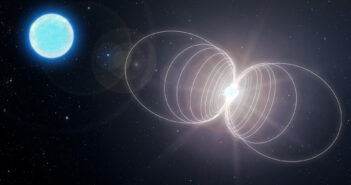
A discovery that linked a fast radio burst to a magnetar in the Milky Way showed that certain fast radio bursts come from magnetars. A new study explores whether all fast radio bursts could have magnetar origins.

Varied Bursts

magnetar SGR 1935+2154

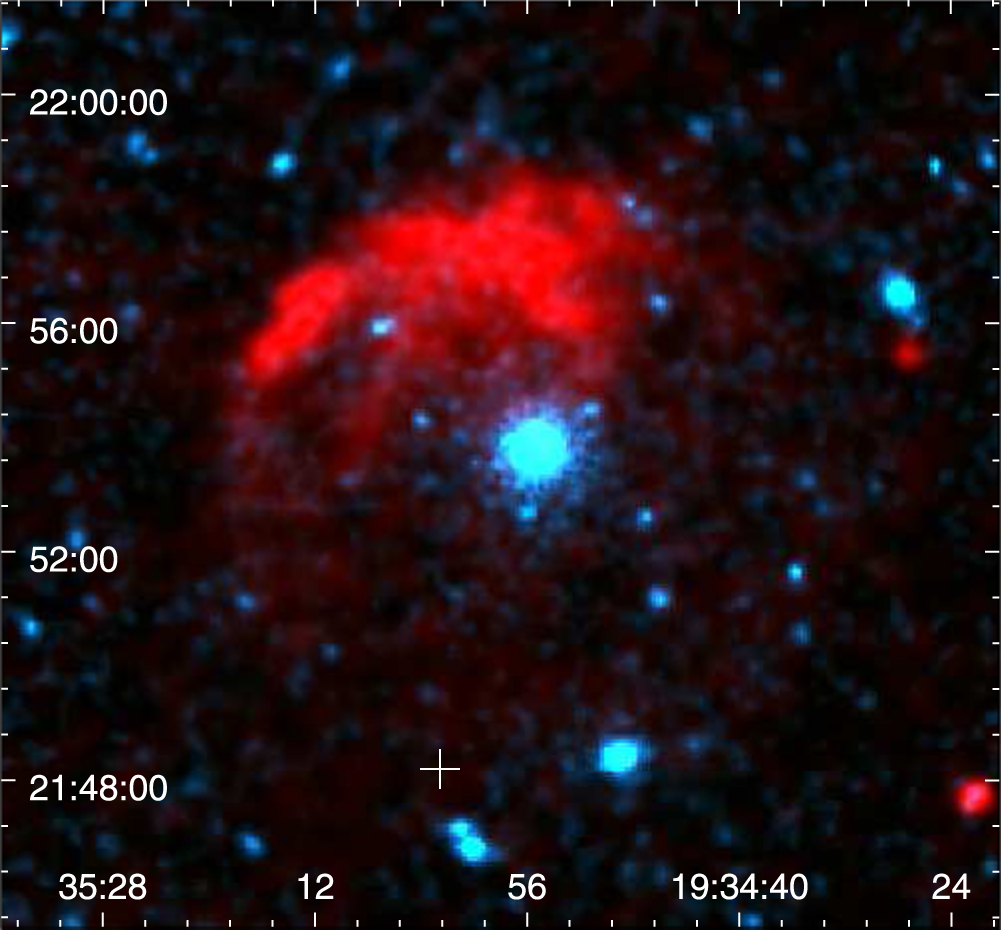
The bright blue source at the center of this X-ray image is SGR 1935+2154, the first magnetar to be associated with a fast radio burst. [Zhou et al. 2020]

Fast radio bursts — extremely bright radio blips lasting anywhere from a fraction of a millisecond to a few seconds — have provided researchers with one of the best recent astronomical mysteries. What causes these brilliant radio flashes, and why are they so varied? Most fast radio bursts seem to happen just once, while others repeat frequently or infrequently on irregular or regular timescales.

In July 2020, astronomers reported the discovery of a fast radio burst likely associated with a magnetar in the Milky Way. This discovery suggested that at least some fast radio bursts come from magnetars, the rapidly spinning, intensely magnetized remnants of certain massive stars. However, it’s still not known whether all fast radio bursts share this origin, or if their varied behaviors can be traced to equally varied origins.

Mystery Solved by Magnetars?

In a recent research article, Bing Zhang (University of Hong Kong; University of Nevada) and Rui-Chong Hu (University of Nevada) set out to explore the possibility that all fast radio bursts have magnetar origins.

illustration of magnetar origins

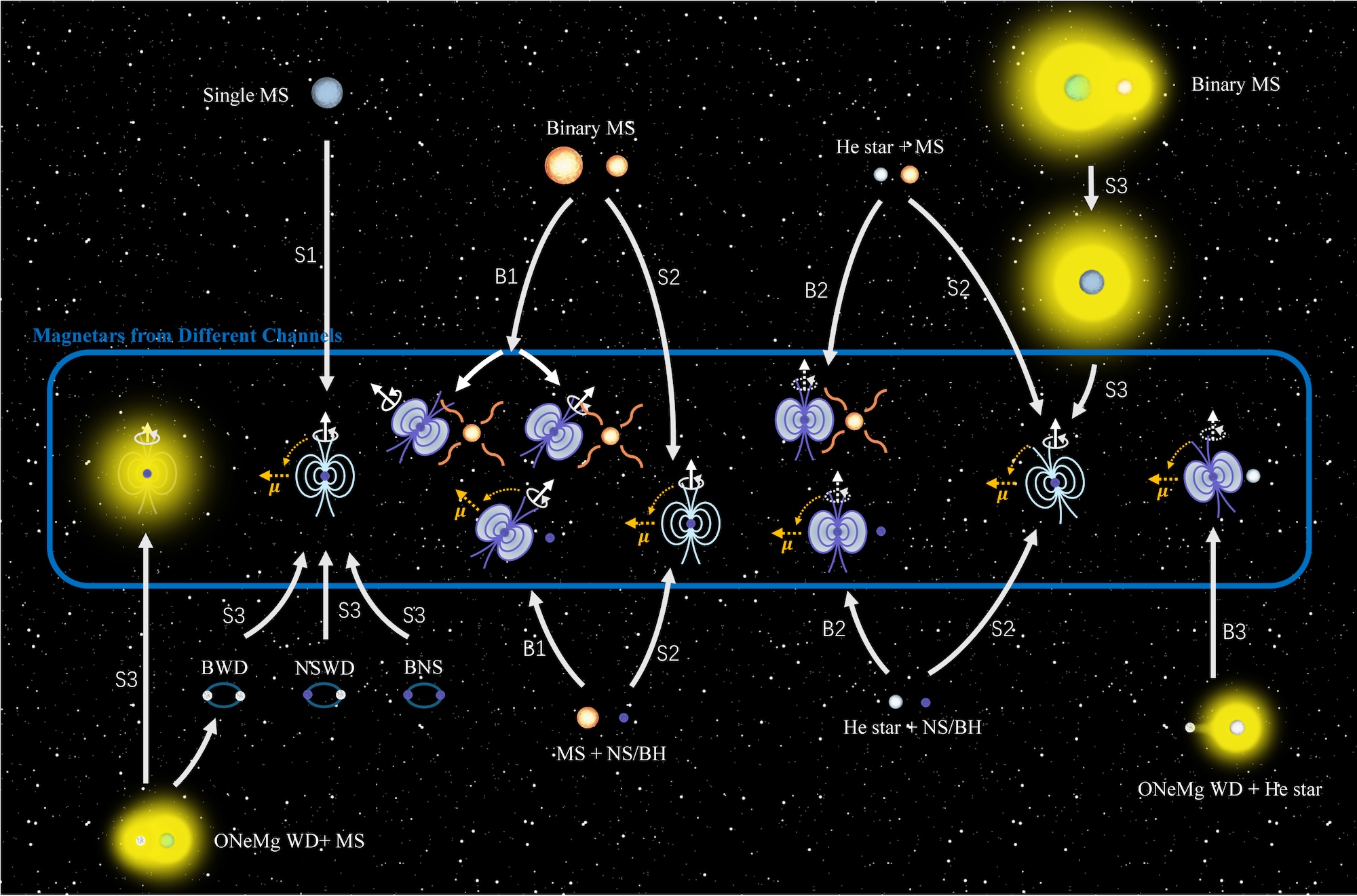
Magnetar formation pathways. The magnetic field lines of isolated magnetars have a black background, while the field lines of magnetars in binary systems have a white background. Click to enlarge. [Zhang & Hu 2025]

Zhang and Hu examined the different pathways through which magnetars form, as well as what properties they tend to have in each of these scenarios. This analysis suggested that the vast majority of magnetars in our universe are singletons, having formed from isolated stars, disrupted binary systems, or stellar mergers. This aligns with observations of magnetars in the Milky Way, none of which appear to have companions.

The remaining few percent of magnetars reside in binary systems. These coupled-up magnetars largely have companions more than twice as massive as the Sun, though some are paired with helium stars or compact objects.

Multiple Possible Arrangements

illustration of a magnetar in a binary system

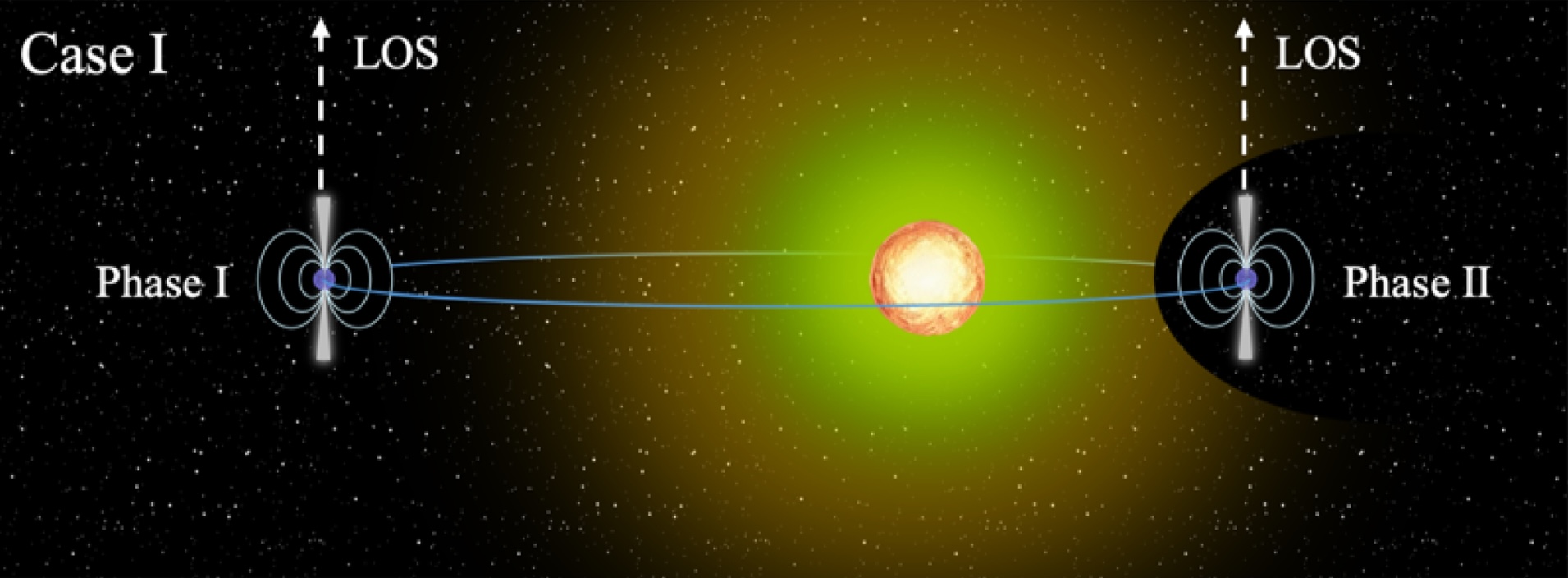
Illustration of a magnetar in a binary system with a star with a stellar wind. As the magnetar moves along its orbit, it encounters differing amounts of stellar wind. This affects the polarization angle of the bursts. Click to enlarge. [Adapted from Zhang & Hu 2025]

Zhang and Hu found that both isolated and paired-up magnetars tend to form with their spin and magnetic axes in close alignment — a setup that likely enables the production of rapid-fire fast radio bursts. For isolated magnetars, these axes may become misaligned over time, sapping their ability to produce repeated bursts. In binary systems, magnetars that accrete mass from the stellar winds of a companion likely retain their alignment, creating a long-lasting engine of repeating fast radio bursts. The presence of winds from a stellar companion may also explain several curious traits of some fast radio bursts, such as rapid changes in polarization angle.

In this framework, actively repeating fast radio bursts arise from aligned magnetars in binary systems, while one-off or infrequently repeating bursts come from isolated magnetars or misaligned magnetars in binary systems. Isolated magnetars could also be responsible for some actively repeating bursts, though this ability is likely short lived.

Though this work demonstrates that magnetars could be the source of all fast radio bursts, it doesn’t rule out the possibility that fast radio bursts have diverse origins instead. Further work is needed to explore other pathways and make even more headway on the mystery of fast radio bursts.

Citation

“Magnetars in Binaries as the Engine of Actively Repeating Fast Radio Bursts,” Bing Zhang and Rui-Chong Hu 2025 ApJL 994 L20. doi:10.3847/2041-8213/ae1023

luminous fast blue optical transient

Fast blue optical transients are a rare class of emerging transients, the source of which is not yet known. A recent study of the most luminous known object in this class, AT2024wpp, reveals clues about their identity.

A New Class of Transients

In 2018, a network of robotic survey telescopes spotted a new transient source toward a galaxy 200 million light-years away. It was bright and getting brighter rapidly, rising in just a few days to become 10–100 times brighter than the brightest supernovae.

That transient, AT2018cow, was the first of now tens of known sources like it that are too blue, too rapidly evolving, and too luminous to be ordinary supernovae. Despite the growing number of luminous fast blue optical transients (FBOTs) discovered, exactly what causes them is still up for debate.

Brightest of the Bright

Enter AT2024wpp: the most luminous known fast blue optical transient to date. In about a month and a half, this record-breaking event radiated away more than 1044 Joules — which is roughly equivalent to the Sun’s radiative output over 8 billion years. Nayana A. J. (University of California, Berkeley) and collaborators carried out an extensive multi-wavelength observing campaign to track the behavior of AT2024wpp from 2 to 280 days after it was first discovered, making it only the second FBOT to undergo such detailed study. This research article describes the team’s findings at radio and X-ray wavelengths.
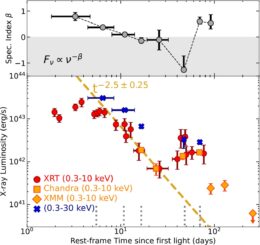
X-ray behavior of AT2024wpp

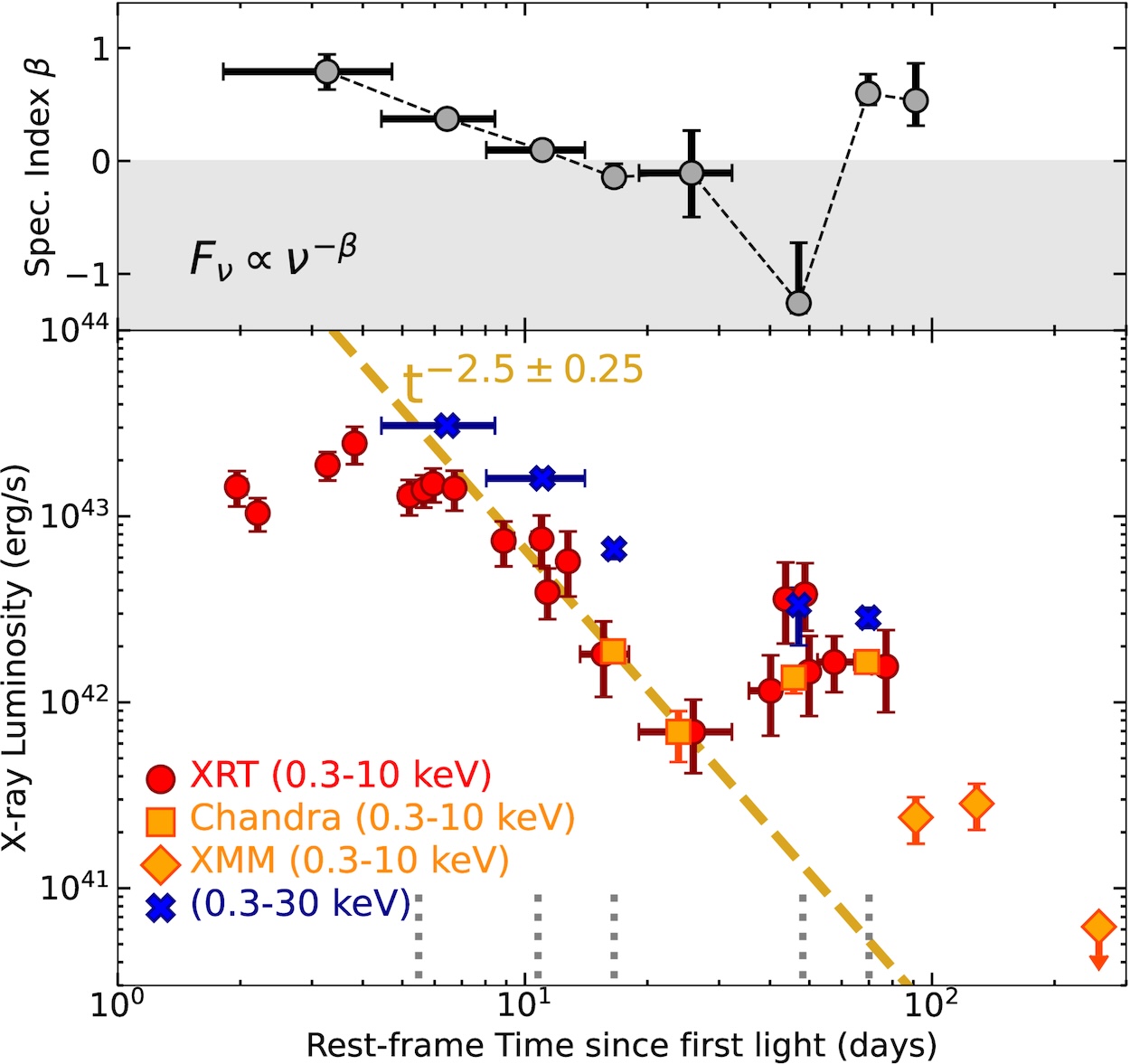
X-ray behavior of AT2024wpp. The top plot demonstrates the hardening of the spectral index (i.e., shifting toward higher energies) around the peak at 50 days. Click to enlarge. [Nayana A. J. et al. 2025]

The team enlisted the Atacama Large Millimeter/submillimeter Array, the Australian Telescope Compact Array, the Allen Telescope Array, the MeerKAT array, and the Giant Metrewave Radio Telescope to survey the source from 0.25 to 203 GHz. On the opposite end of the spectrum, they collected observations from the Neil Gehrels Swift Observatory, the Chandra X-ray Observatory, XMM-Newton, and NuSTAR to probe AT2024wpp’s X-ray emission from 0.2 to 79 keV.

These observations revealed that AT2024wpp’s X-ray emission remained bright and constant for 7 days before plummeting until day 30. The emission then rocketed up again, peaking at day 50, and shifted toward higher energies. Finally, things settled down to a lower brightness around day 75. In the radio, AT2024wpp’s behavior was complex, showing a never-before-seen meteoric rise at millimeter wavelengths around 17–32 days.
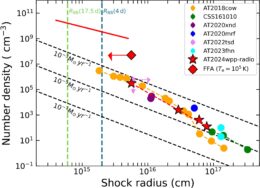
Comparison of the density of the material surrounding AT2024wpp and other FBOTs

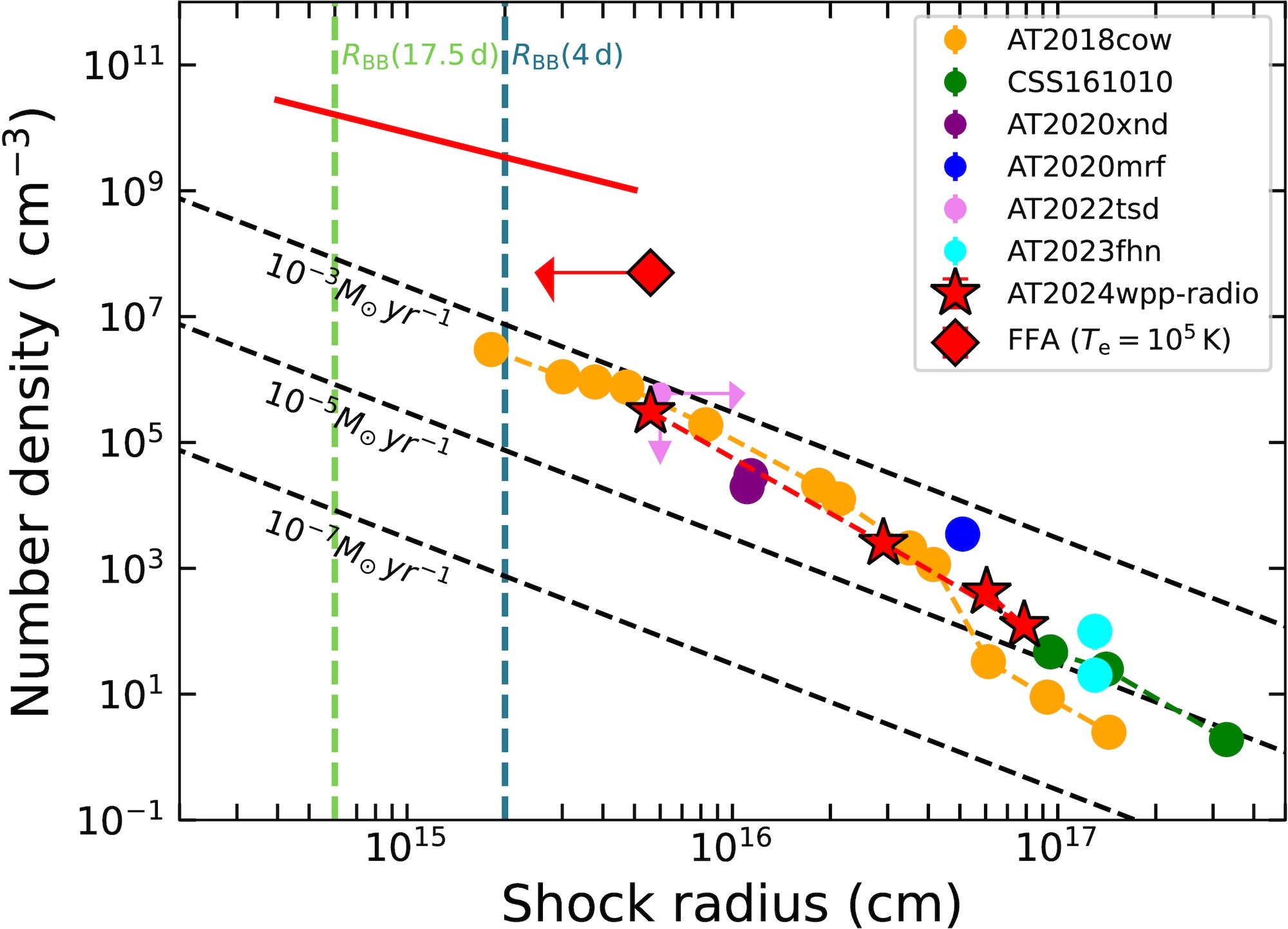
Comparison of the density of the material surrounding AT2024wpp (red stars) and other FBOTs. Click to enlarge. [Nayana A. J. et al. 2025]

Possible Scenarios

Based on these observations, the team favors a scenario involving a central compact object — a black hole or a neutron star — that is rapidly accreting matter from its surroundings. This accretion powers outflows that accelerate to more than 40% the speed of light and send a shock through dense material around the system. Notably, the team found that the density of the surrounding material is similar among FBOTs that have bright radio emission, including AT2024wpp. This suggests that similar processes are responsible for setting up these events.

The team pointed to two scenarios from the literature that are compatible with their data. In the first, a newborn neutron star or black hole collides with a stellar companion, ripping the star apart and accreting its remains. In the second, a Wolf–Rayet star (a massive star that has shed much of its atmosphere and is nearing its eventual end as a supernova) is tidally disrupted by a neutron star or a black hole. Though it’s not possible to narrow the possibilities further, the immense energies involved tilt things in favor of a black hole rather than a neutron star.

Though FBOTs remain mysterious, additional multi-wavelength studies like this one can help to illuminate their origins. And with the Ultraviolet Transient Astronomy Satellite (ULTRASAT) and UltraViolet EXplorer (UVEX) missions slated to launch within the next five years, we can expect many more FBOT discoveries in the near future.

Citation

“The Most Luminous Known Fast Blue Optical Transient AT 2024wpp: Unprecedented Evolution and Properties in the X-Rays and Radio,” Nayana A. J. et al 2025 ApJL 993 L6. doi:10.3847/2041-8213/ae0b4d

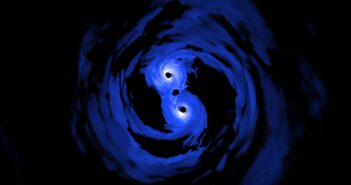
Simulation of a supermassive black hole binary

The gravitational wave background — the constant, low-frequency hum of colliding supermassive black holes across the universe — seems to have a larger amplitude than expected. Can preferential accretion explain why?

Larger than Expected

Arp 122

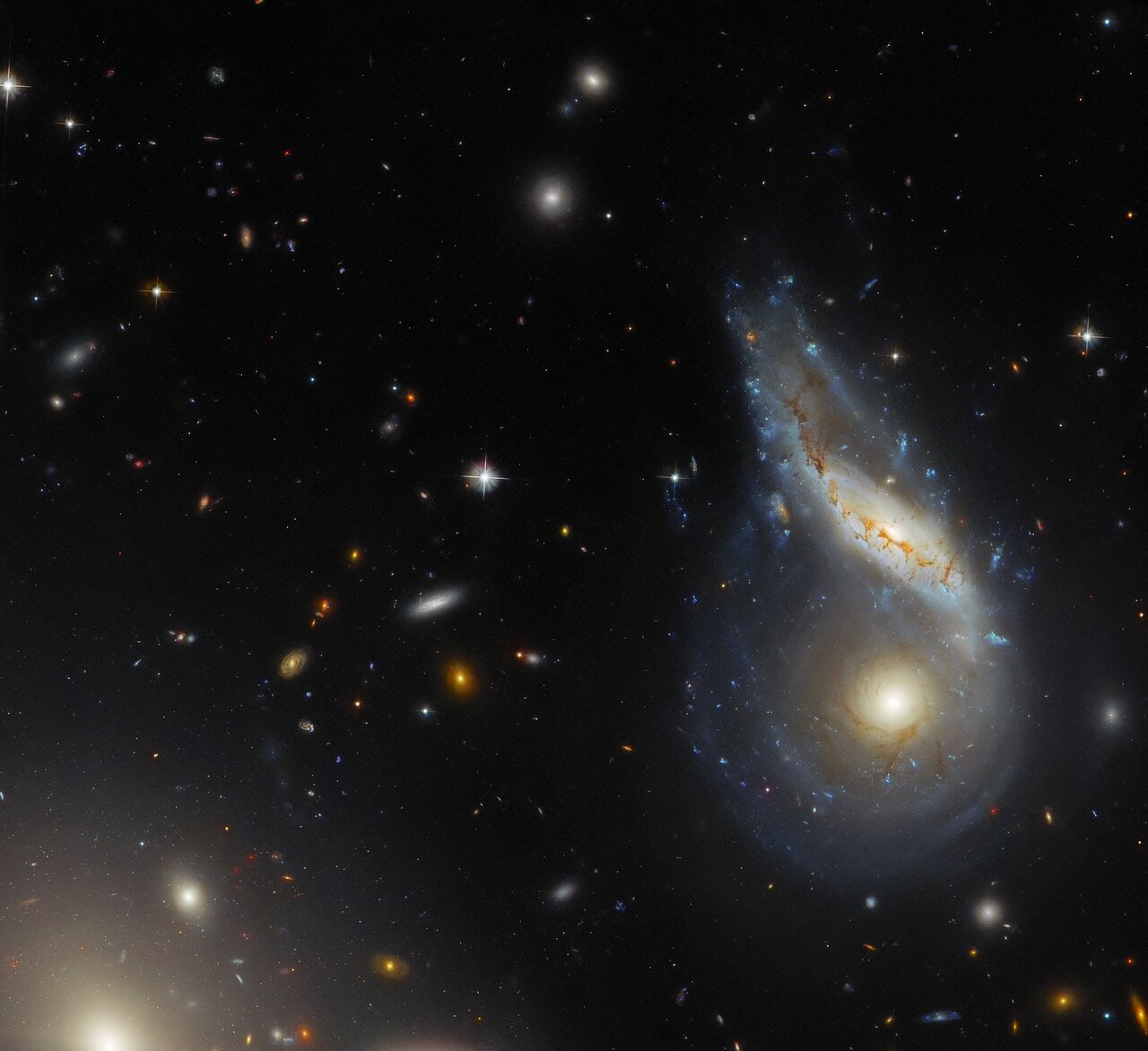
The peculiar galaxy Arp 122, shown here in a Hubble Space Telescope image, is in the process of merging. When two galaxies merge, the supermassive black holes at their centers eventually merge as well. [ESA/Hubble & NASA, J. Dalcanton, Dark Energy Survey/DOE/FNAL/DECam/CTIO/NOIRLab/NSF/AURA; Acknowledgement: L. Shatz; CC BY 4.0]

In 2023, researchers announced the discovery of compelling evidence for the gravitational wave background: a low-frequency, low-amplitude signal that is likely due to supermassive black hole binaries across the universe steadily trundling toward mergers. The amplitude of the background, however, is larger than expected for a population of merging supermassive black holes.

Though some researchers have invoked new physics to explain this discrepancy, all that may be required is an adjustment to our understanding of the supermassive black hole binary population in our universe. In a recent research article, Julia Comerford (University of Colorado Boulder) and Joseph Simon (University of Colorado Boulder; Oregon State University) tackled one of the underlying assumptions about the masses of merging supermassive black holes.

Preferential Accretion Pathway

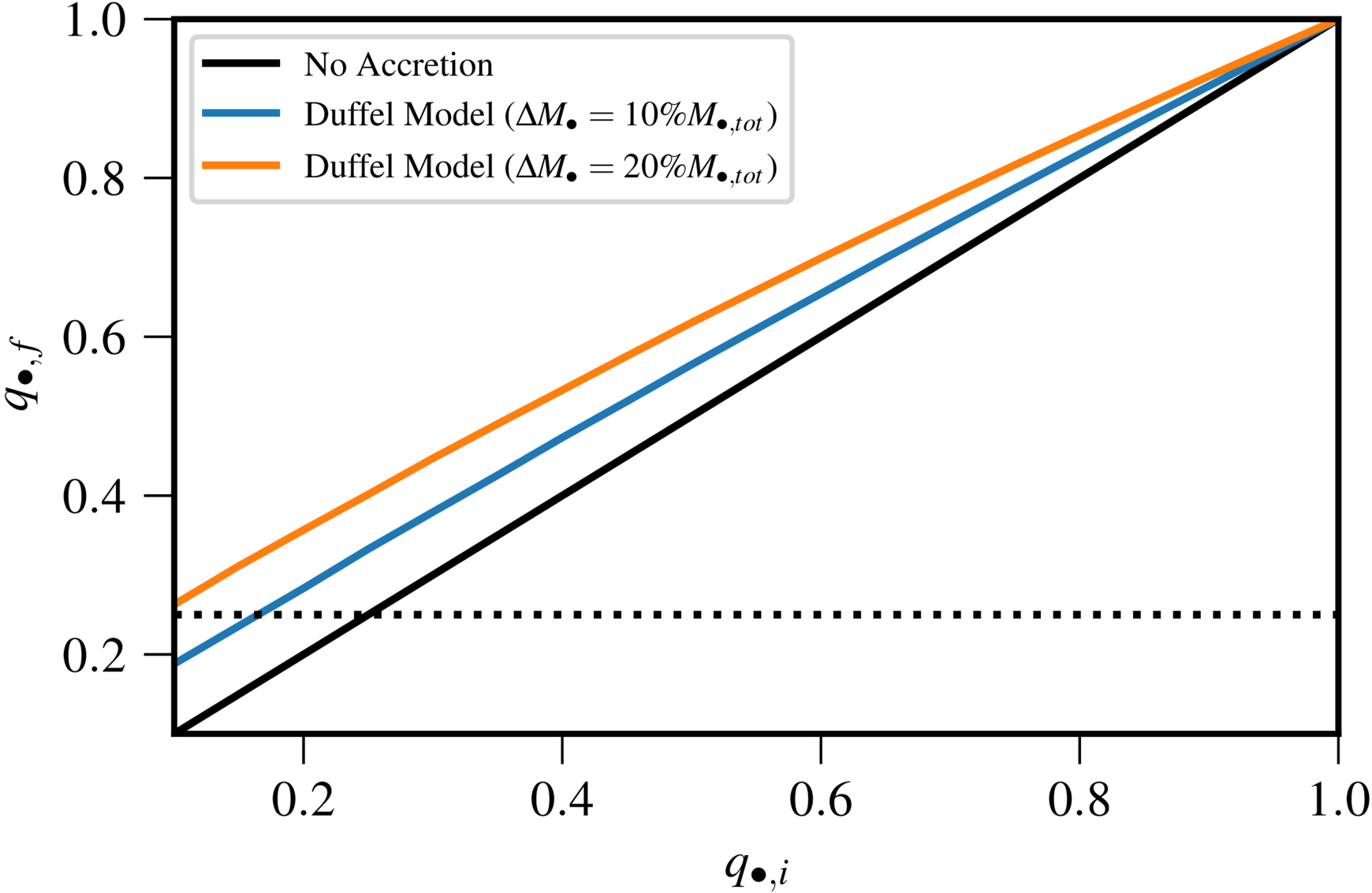
When supermassive black holes merge, the strength of the gravitational wave signal depends on how similar the black holes were in mass; merging equal-mass black holes produce stronger signals than mismatched black holes do. What if, Comerford and Simon proposed, the masses of merging supermassive black holes scattered across the universe are more similar than previously thought?

initial and final black hole mass ratios

The initial and final black hole mass ratio, q. The blue and orange lines show a 10% and 20% increase in the total mass of the binary, respectively. The dotted line divides major mergers (q ≥ 0.25) and minor mergers. [Comerford & Simon 2025]

Observations and simulations of supermassive black holes within colliding galaxies appear to support this hypothesis. Rather than staying the same mass as they approach one another, as models tend to assume, supermassive black holes likely gather material from their surroundings and gain mass.

What’s more, it appears that the smaller of the two black holes tends to pack on more mass, meaning that the masses of the black holes grow more similar as they wind toward a merger. (This somewhat counterintuitive result arises because the smaller of the two black holes encounters more gas as it spirals inward.)

Boosting the Signal

If accretion tends to even out the masses of the binary members, is the resulting increase in signal strength large enough to explain the observed amplitude of the gravitational wave background?

plot of estimated gravitational wave amplitude

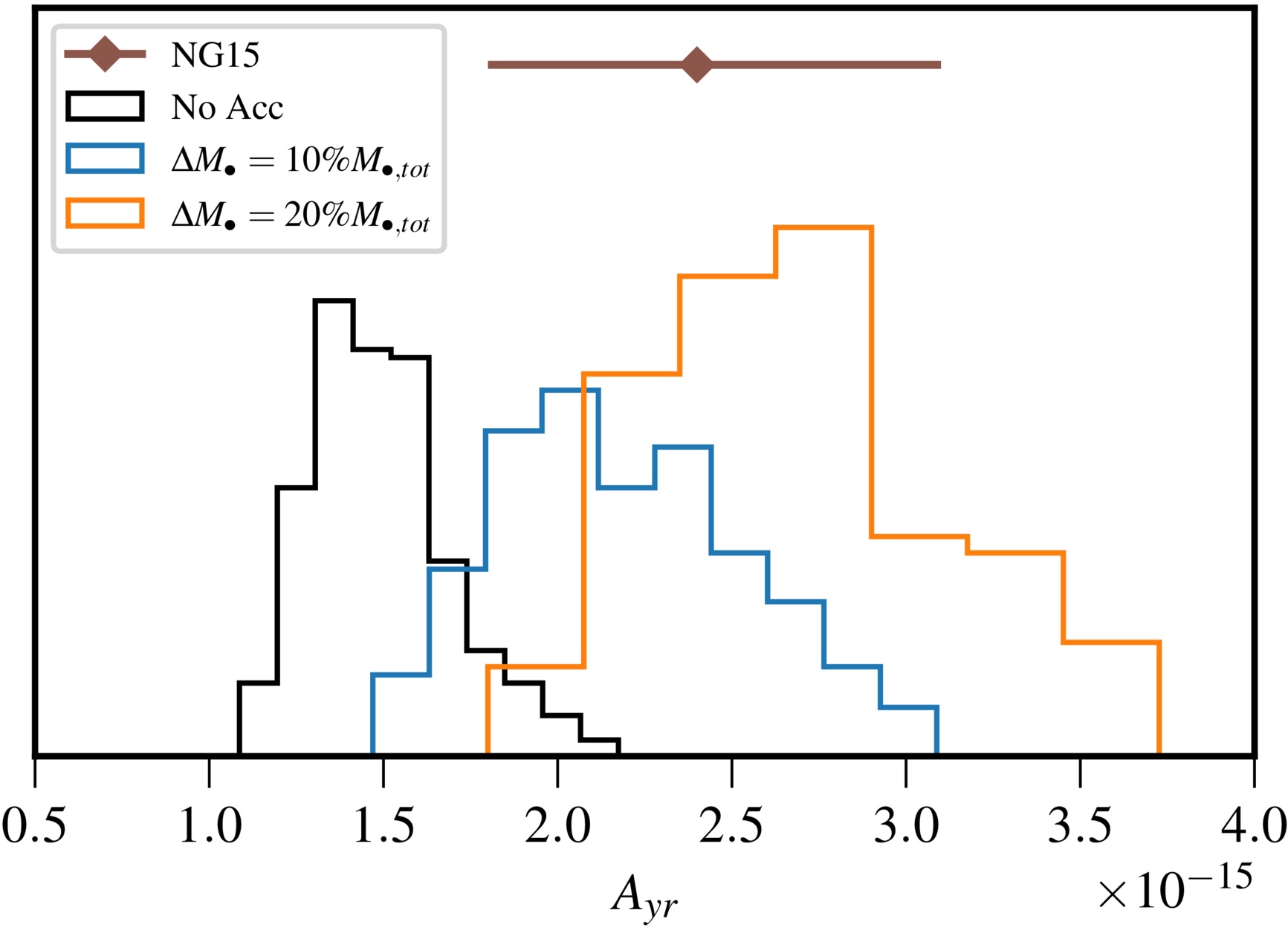
Probability distribution functions for the calculated gravitational wave background amplitude for different accretion conditions. The brown diamond shows the median amplitude from the NANOGrav data set. [Adapted from Comerford & Simon 2025]

Comerford and Simon modeled the gravitational wave background from supermassive black hole binaries undergoing preferential accretion onto the smaller black hole. Benchmarking their model with observations wherever possible, they found that just a 10% increase in the total mass of the merging black holes can raise the gravitational wave background to the median observed value — easing the discrepancy without the need for speculative new physics.

The signal-boosting effect from preferential accretion may be especially important if the binary evolution timescale — the time it takes for black holes approaching a merger to reach a separation at which their gravitational waves become accessible to pulsar timing arrays — is longer than the estimated 1.8 billion years. At longer timescales, models without this accretion become entirely inconsistent with observations. Future research that examines the masses and accretion rates of supermassive black holes as they approach make their way toward a merger can provide further clues to the role of preferential accretion.

Citation

“Preferential Accretion onto the Secondary Black Hole Strengthens Gravitational-Wave Signals,” Julia M. Comerford and Joseph Simon 2025 ApJ 994 168. doi:10.3847/1538-4357/ae1133

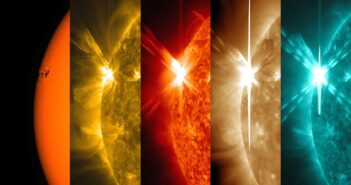
Images of a solar flare at different wavelengths

Forecasting solar flares is one of the major challenges facing solar physicists today. New research finds that non-thermal emission can precede a solar flare by more than an hour, and this early emission may signal whether the flare will be accompanied by an explosion of plasma.

Flare Flavors

photograph of a coronal mass ejection

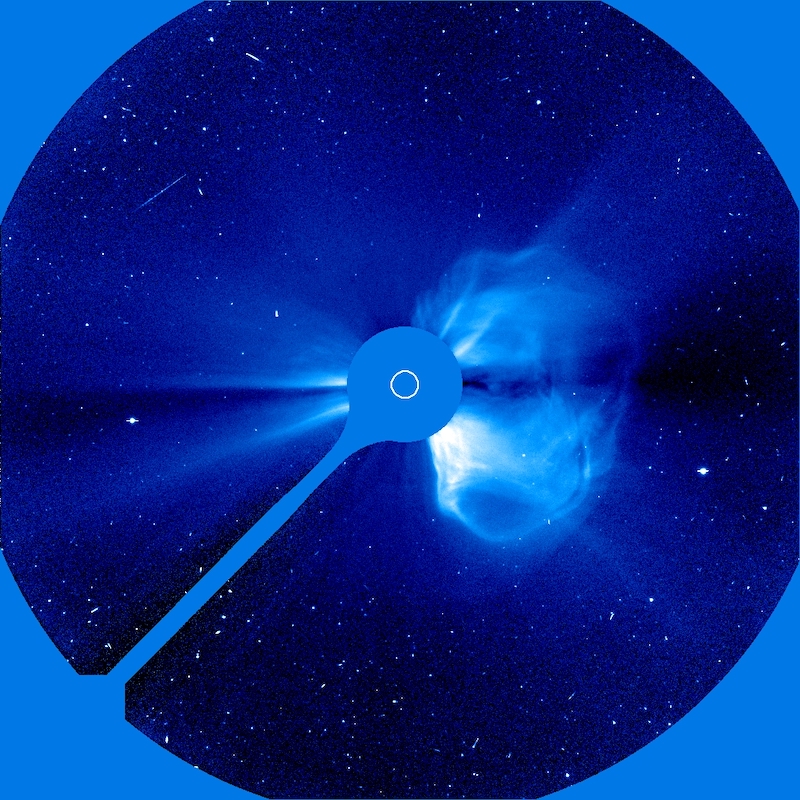
The Solar & Heliospheric Observatory (SOHO) took this coronagraphic image of a coronal mass ejection on 20 April 1998. [SOHO (ESA & NASA)]

Solar flares come in two basic flavors: eruptive and confined. Eruptive flares are accompanied by the launch of tangled clouds of plasma and magnetic fields called coronal mass ejections. Confined flares, so called because the solar plasma remains confined to the Sun, feature only a brief blast of high-energy radiation.

Both solar flares and coronal mass ejections can disrupt everyday life on Earth, with flares knocking out radio communications and coronal mass ejections threatening spacecraft electronics and power grids. Given these real-life risks, as well as the potential for probing the physics behind the activity on the Sun and other stars, it’s critical to be able to identify signs of upcoming flares.

Looking at the Lead-Up

Luckily, there’s growing evidence that the Sun sends out subtle signals that a flare is soon to happen. One early sign of an impending flare is an increase in the non-thermal velocity of the plasma at the flare’s location. This phenomenon has been spotted in individual flares, but it hasn’t been studied and characterized for a large sample of flares — until now.

example of increasing non-thermal velocity before a solar flare

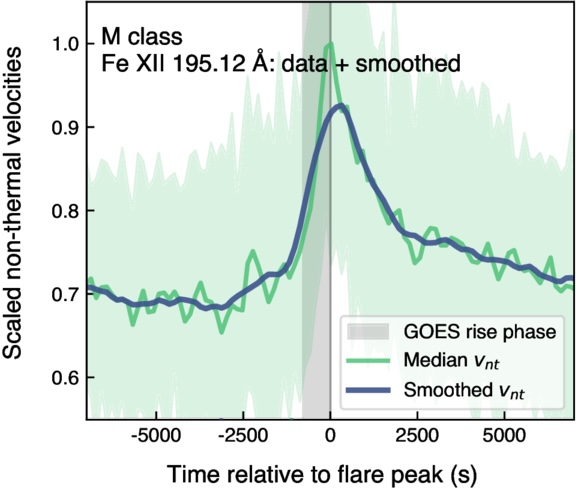
Demonstration of the increase in non-thermal velocity seen in an M-class flare compared to the onset and rise time of the soft X-ray flux (gray shaded area). [Adapted from To et al. 2025]

A recent research article led by Andy S. H. To (European Space Agency) takes the first systematic, large-scale approach to studying the non-thermal velocity changes that precede solar flares. The team amassed a sample of 1,449 solar flares that were seen by the Hinode spacecraft, the Geostationary Operational Environmental Satellite (GOES), and the Solar Dynamics Observatory (SDO). Hinode provided the spectral information needed to identify increases in the non-thermal velocity, GOES provided the flare start times, and SDO provided detailed information on the location and appearance of each flare.

Of the flares in the sample, 83% were moderately powerful C-class flares, 18% were stronger M-class flares, and 1% were the most powerful X-class flares. To’s team identified a clear trend across all types of flares: the non-thermal velocity increases 4–25 minutes before the flare’s X-ray emission begins to rise, peaks when the X-ray emission peaks, and decays as the flare decays. The team found some evidence that for smaller flares, the velocity increase begins in spectral lines that trace cooler plasma before spreading to lines probing hotter plasma, but more work is needed to confirm this trend.

More Details

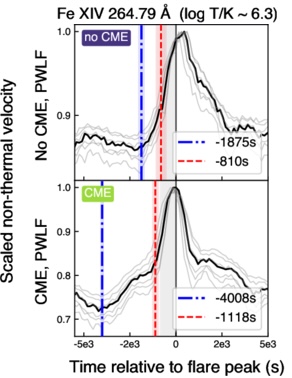
Examples of flares with and without coronal mass ejections

Examples of flares with and without coronal mass ejections. [Adapted from To et al. 2025]

Certain flares give even earlier hints of upcoming activity. M-class flares and some C-class flares exhibit what To’s team calls “precursor emission,” which emerges roughly 30–60 minutes before the flare’s X-ray emission peaks. The team also identified differences in precursor emission between confined and eruptive flares: eruptive flares display precursor emission over a broad range of spectral lines starting 45–74 minutes before the flare peaks, while confined flares show precursor emission later (31–54 minutes before peak) and in only a few spectral lines.

These results suggest that changes in the non-thermal velocity of solar plasma can not only signal when and where a flare is likely to arise, but also whether the flare will be accompanied by a potentially destructive coronal mass ejection. Upcoming missions like the Multi-slit Solar Explorer and SOLAR-C will give an even better view of the early stages of solar flares, helping to illuminate the physics behind them and enhancing our ability to forecast them.

Citation

“Systematic Nonthermal Velocity Increase Preceding Soft X-Ray Flare Onset: A Large-Scale Hinode/EIS Study,” Andy S. H. To et al 2025 ApJ 993 102. doi:10.3847/1538-4357/ae07de

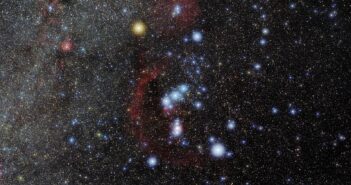
constellation Orion

Multiple research teams have turned to the famous red supergiant Betelgeuse in search of a possible companion star hiding in its glare. A carefully designed spectroscopic search has placed new constraints on the identity of Betelgeuse’s stellar buddy.

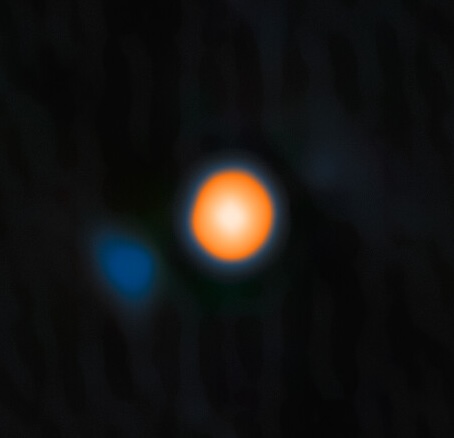
Betelgeuse and its companion star

An image of Betelgeuse and its probable companion star from the ‘Alopeke instrument on the Gemini North telescope. [International Gemini Observatory/NOIRLab/NSF/AURA; Image Processing: M. Zamani (NSF NOIRLab); CC BY 4.0]

Betelgeuse and Its Buddy

Betelgeuse, a nearby red supergiant, is a variable star with a 400-day primary pulsation period and a 2,100-day secondary variation period. Recent studies have speculated that this secondary period is due to the presence of an 0.5–2.0-solar-mass companion star (often nicknamed “Betelbuddy”), and researchers using a speckle imaging technique likely spotted this companion earlier this year.

As is often the case when there’s an intriguing astronomical possibility, multiple research teams have sought out Betelgeuse’s purported stellar companion in different ways. One avenue recently described in a published paper was spectroscopic, searching for signs of ultraviolet emission lines from a growing young star.

Spectroscopic Search

In just 10 million years, Betelgeuse has sped through its main-sequence lifetime and taken on a new starring role as a red supergiant. In contrast, a 0.5–2.0-solar-mass companion star would not have even reached the main sequence in the same span of time. How is it possible to spot a tiny young stellar object next to a much brighter supergiant?

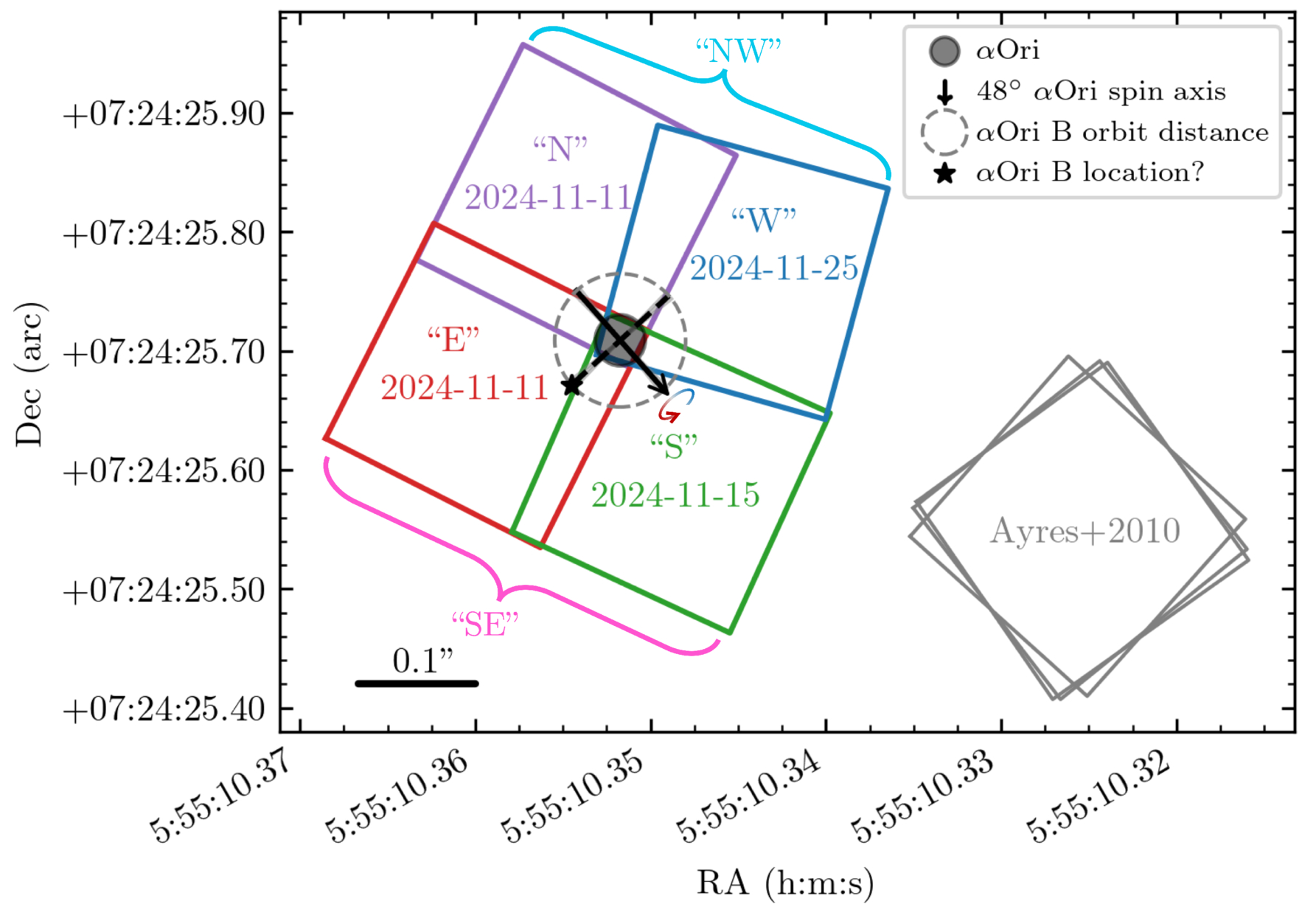
Hubble's observing pattern of Betelgeuse

Hubble observing pattern, showing how the quadrants are arrayed around Betelgeuse. Click to enlarge. [Goldberg et al. 2025]

A team led by Jared Goldberg (Flatiron Institute) found a possible way forward in the far-ultraviolet, where young stellar objects and red supergiants both display prominent emission lines. Though Betelgeuse would greatly outshine its stellar buddy, the companion’s orbital motion should shift its emission lines relative to those of Betelgeuse, bringing them into view. To guide their search, the team consulted spectra of known young stellar objects, finding a dozen ultraviolet spectral lines that either rival the strength of those from Betelgeuse or aren’t present in Betelgeuse’s spectrum at all.

The search is on: Goldberg and collaborators observed Betelgeuse with the Hubble Space Telescope in November 2024, timed to when the companion star’s emission lines would be shifted relative to Betelgeuse. The observations split Betelgeuse’s disk into quadrants, only one or two of which should contain the companion, helping the team tease out the signal from the smaller star, if present. Ultimately, though, no statistically significant signals were found.

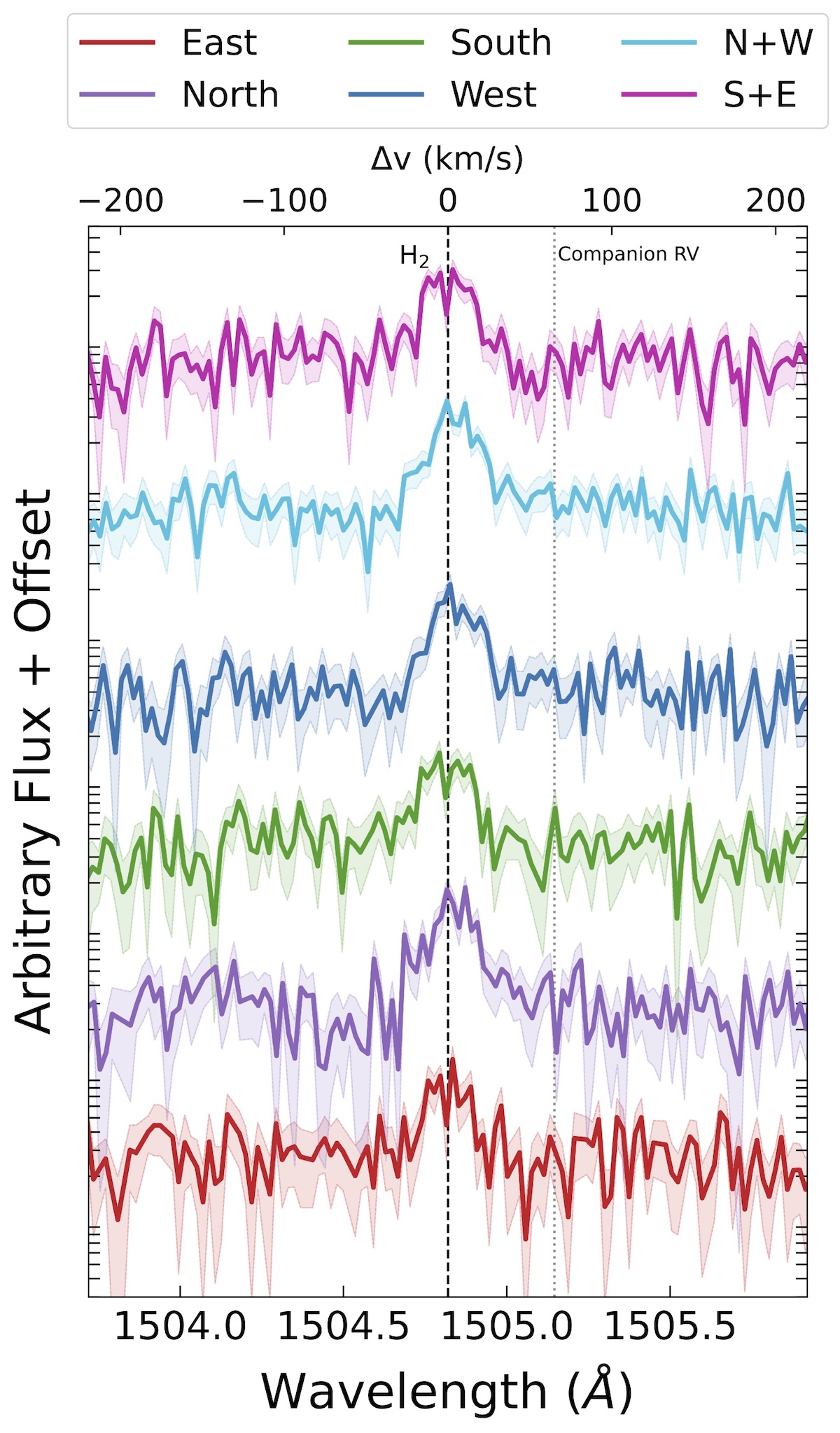
spectra of Betelgeuse

Emission around Betelgeuse’s 1504.82 Angstrom H2 line from each of the four observed quadrants as well as combinations of two quadrants. No significant signals were detected at the expected radial velocity of the companion star. [Goldberg et al. 2025]

When Finding Nothing Tells You Something

A lack of a significant detection doesn’t mean that the companion isn’t there, but it does place constraints on its identity. The data confidently rule out a companion star twice as massive as the Sun, marginally permit a star in the 1.1–1.5-solar-mass range, and favor a star lower than 1.1 solar masses.

Researchers assigned a likely mass of about 1.5 solar masses to the probable companion star imaged earlier this year. Though this is at the limit of what’s permitted by the ultraviolet observations, Goldberg and coauthors note that the companion star’s ultraviolet output could be suppressed due to tidal coupling with Betelgeuse or other processes. If the star’s ultraviolet emission is lower than expected, a 1.5-solar-mass companion remains consistent with Hubble’s non-detection of the star.

This is a fantastic example of how multiple lines of inquiry can converge on similar solutions. With the companion star expected to swing around to a favorable observing position again in 2027, this is certainly not the last chapter in the tale of Betelgeuse and Betelbuddy.

Citation

“Betelgeuse, Betelgeuse, Betelgeuse, Betel-buddy? Constraints on the Dynamical Companion to α Orionis from HST,” Jared A. Goldberg et al 2025 ApJ 994 101. doi:10.3847/1538-4357/ae0c0c

1 2 3 114