
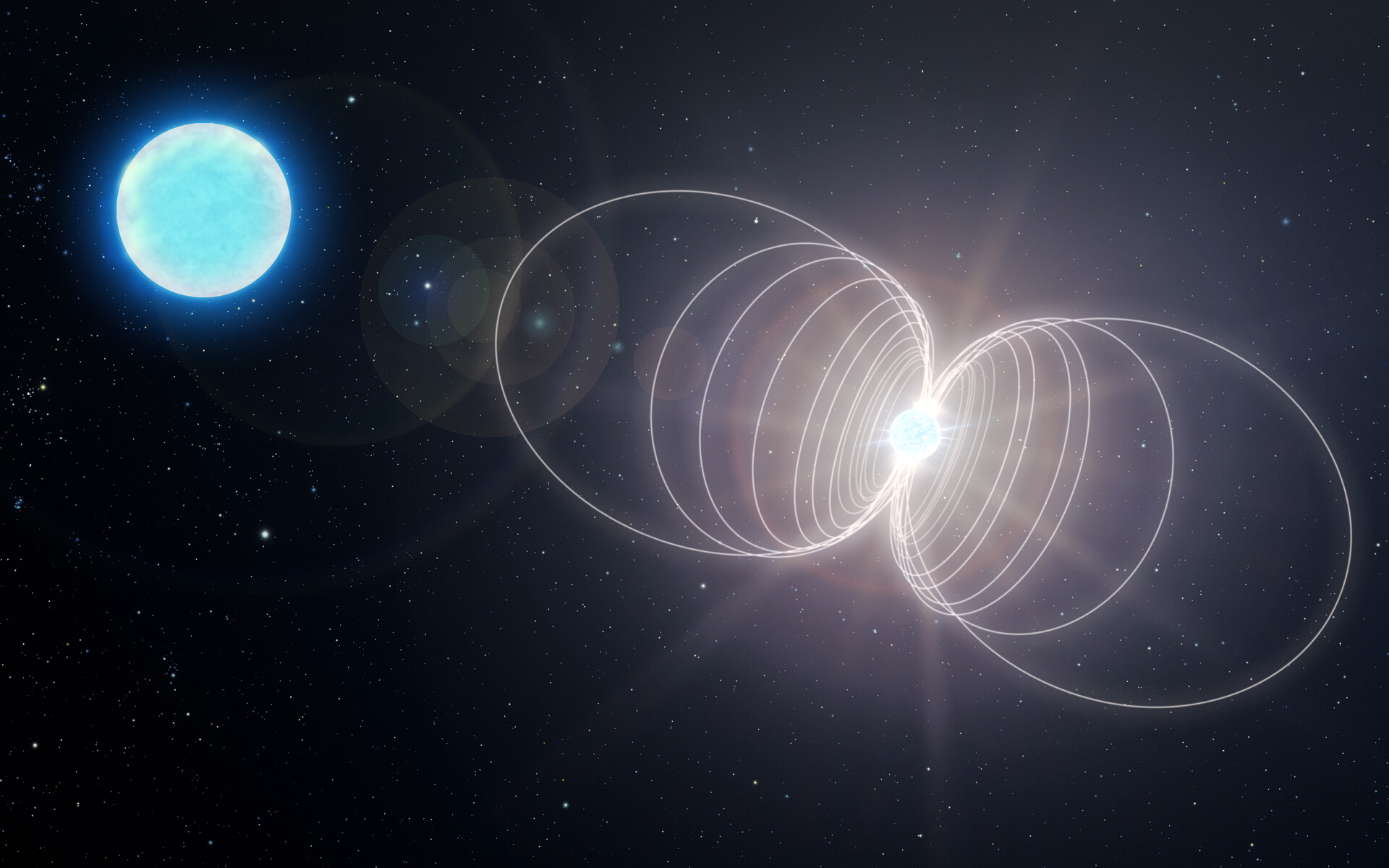
A discovery that linked a fast radio burst to a magnetar in the Milky Way showed that certain fast radio bursts come from magnetars. A new study explores whether all fast radio bursts could have magnetar origins.
Varied Bursts
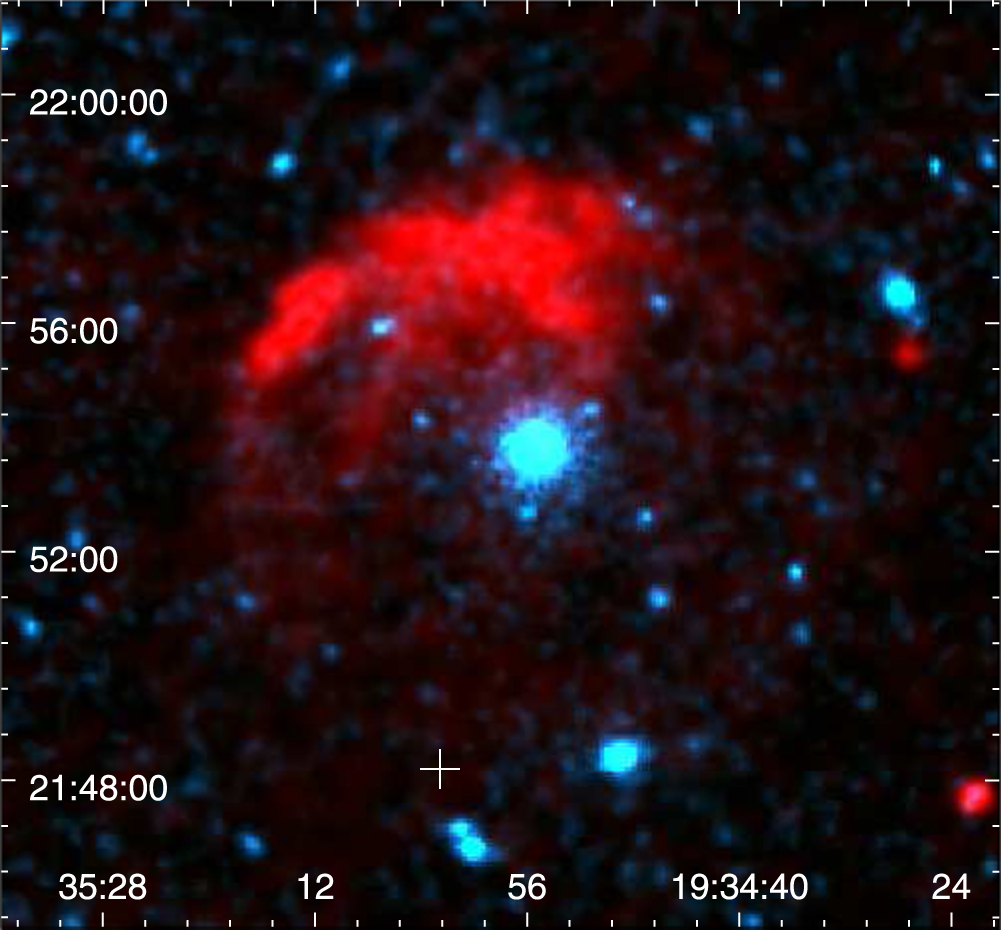
The bright blue source at the center of this X-ray image is SGR 1935+2154, the first magnetar to be associated with a fast radio burst. [Zhou et al. 2020]
In July 2020, astronomers reported the discovery of a fast radio burst likely associated with a magnetar in the Milky Way. This discovery suggested that at least some fast radio bursts come from magnetars, the rapidly spinning, intensely magnetized remnants of certain massive stars. However, it’s still not known whether all fast radio bursts share this origin, or if their varied behaviors can be traced to equally varied origins.
Mystery Solved by Magnetars?
In a recent research article, Bing Zhang (University of Hong Kong; University of Nevada) and Rui-Chong Hu (University of Nevada) set out to explore the possibility that all fast radio bursts have magnetar origins.
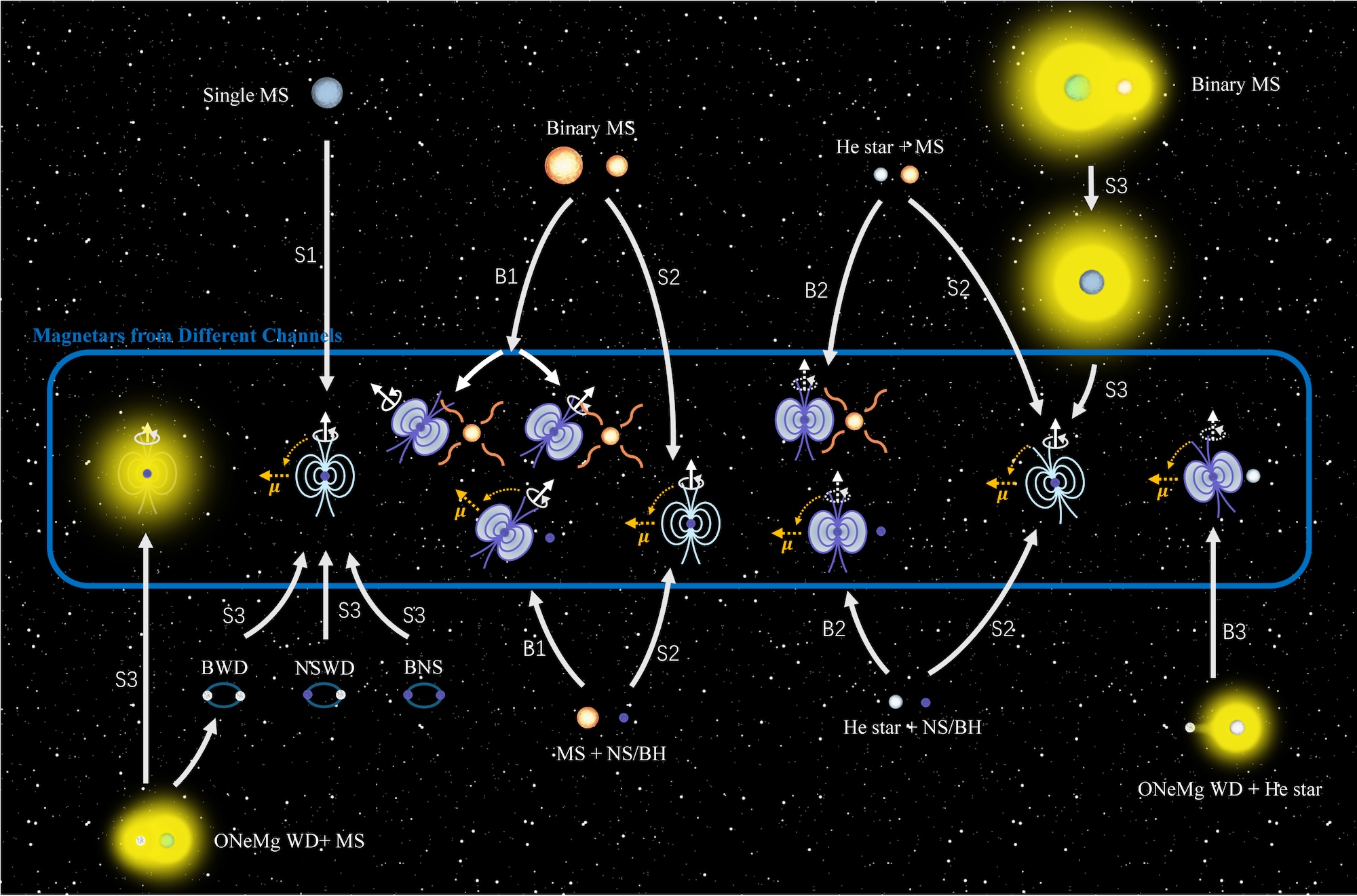
Magnetar formation pathways. The magnetic field lines of isolated magnetars have a black background, while the field lines of magnetars in binary systems have a white background. Click to enlarge. [Zhang & Hu 2025]
The remaining few percent of magnetars reside in binary systems. These coupled-up magnetars largely have companions more than twice as massive as the Sun, though some are paired with helium stars or compact objects.
Multiple Possible Arrangements
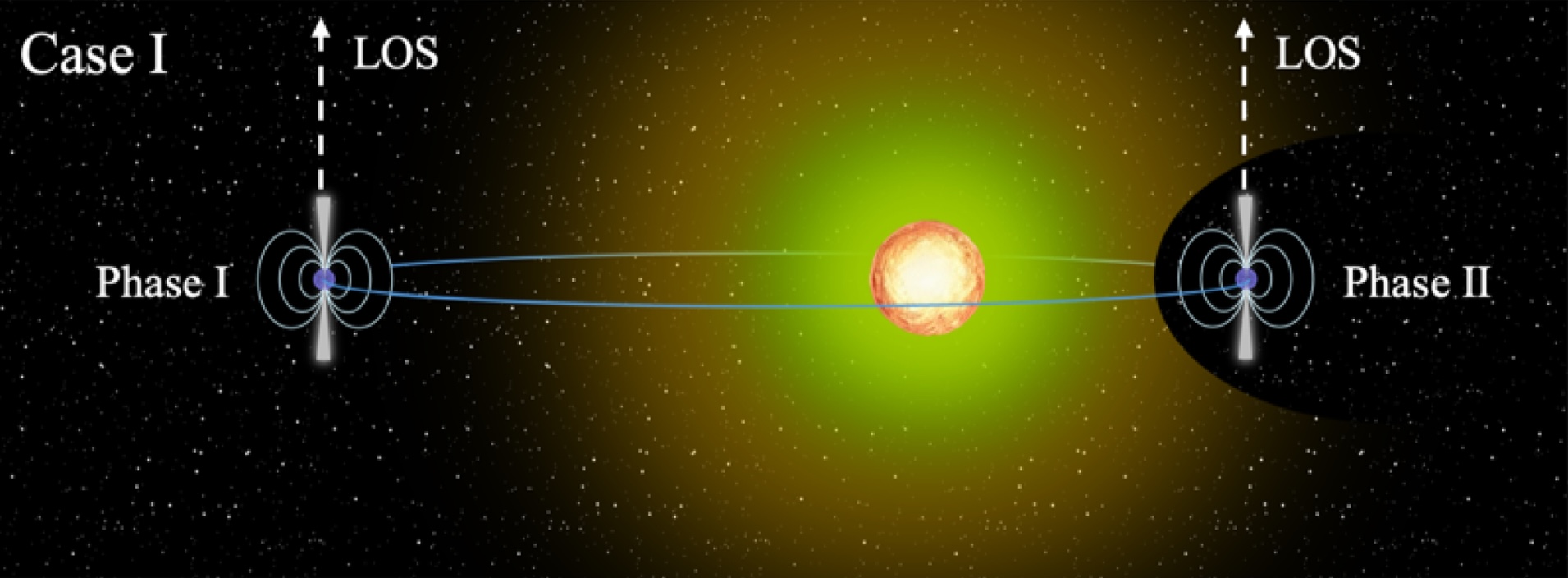
Illustration of a magnetar in a binary system with a star with a stellar wind. As the magnetar moves along its orbit, it encounters differing amounts of stellar wind. This affects the polarization angle of the bursts. Click to enlarge. [Adapted from Zhang & Hu 2025]
In this framework, actively repeating fast radio bursts arise from aligned magnetars in binary systems, while one-off or infrequently repeating bursts come from isolated magnetars or misaligned magnetars in binary systems. Isolated magnetars could also be responsible for some actively repeating bursts, though this ability is likely short lived.
Though this work demonstrates that magnetars could be the source of all fast radio bursts, it doesn’t rule out the possibility that fast radio bursts have diverse origins instead. Further work is needed to explore other pathways and make even more headway on the mystery of fast radio bursts.
Citation
“Magnetars in Binaries as the Engine of Actively Repeating Fast Radio Bursts,” Bing Zhang and Rui-Chong Hu 2025 ApJL 994 L20. doi:10.3847/2041-8213/ae1023