
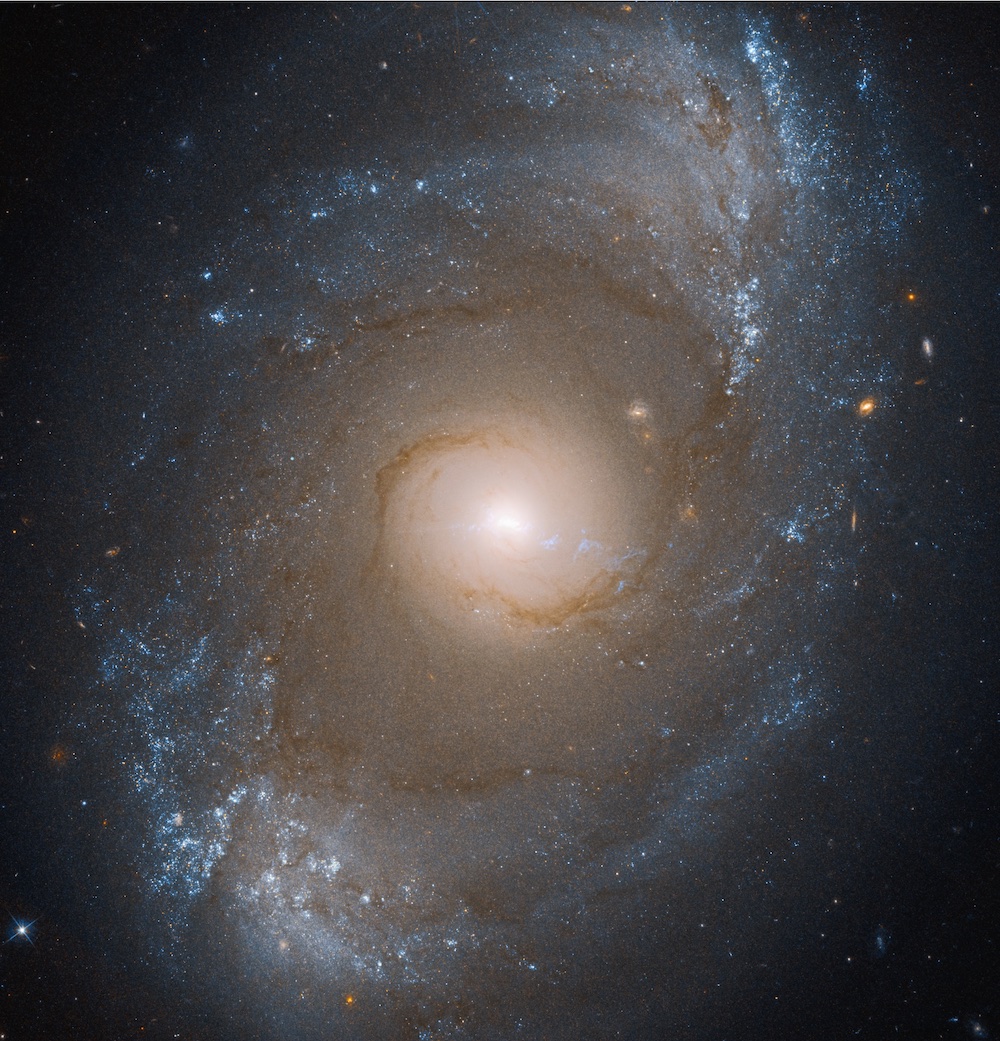
Astronomers have known about NGC 4151’s X-ray-emitting active galactic nucleus since the 1970s. Now, observations from the X-Ray Imaging and Spectroscopy Mission (XRISM) show it in a whole new light.
Getting Feedback
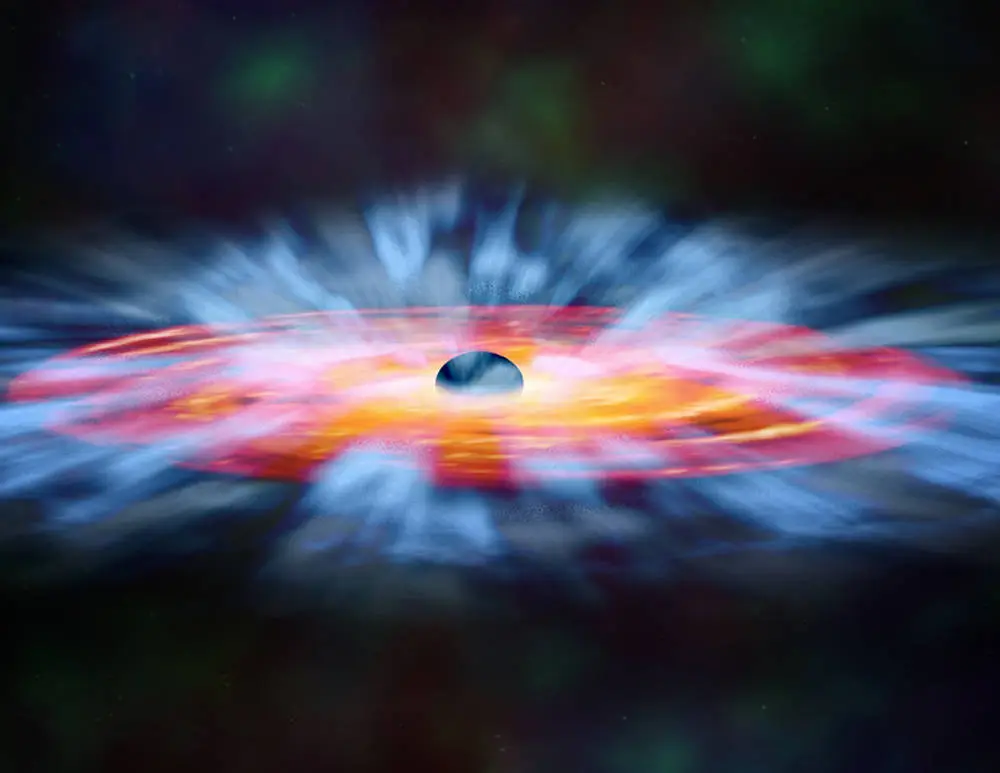
Illustration of the winds and accretion disk of an active galactic nucleus. [NASA, and M. Weiss (Chandra X -ray Center)]
AGN feedback can dramatically reshape a galaxy’s star formation and evolution. One of the most powerful ways an accreting supermassive black hole can influence its host galaxy is through ionized winds, which can scour the surrounding galactic bulge clear of star-forming material. There is much still to learn about these winds, including how they are structured and what physical processes drive them.
New Insights from XRISM
NGC 4151 provides an excellent opportunity to learn about active galactic nucleus winds. Only about 60 million light-years away, NGC 4151 hosts an accreting 34-million-solar-mass black hole that is luminous, highly variable, and shows a complex absorption spectrum that suggests that the AGN’s intense radiation is filtering through outflowing winds.
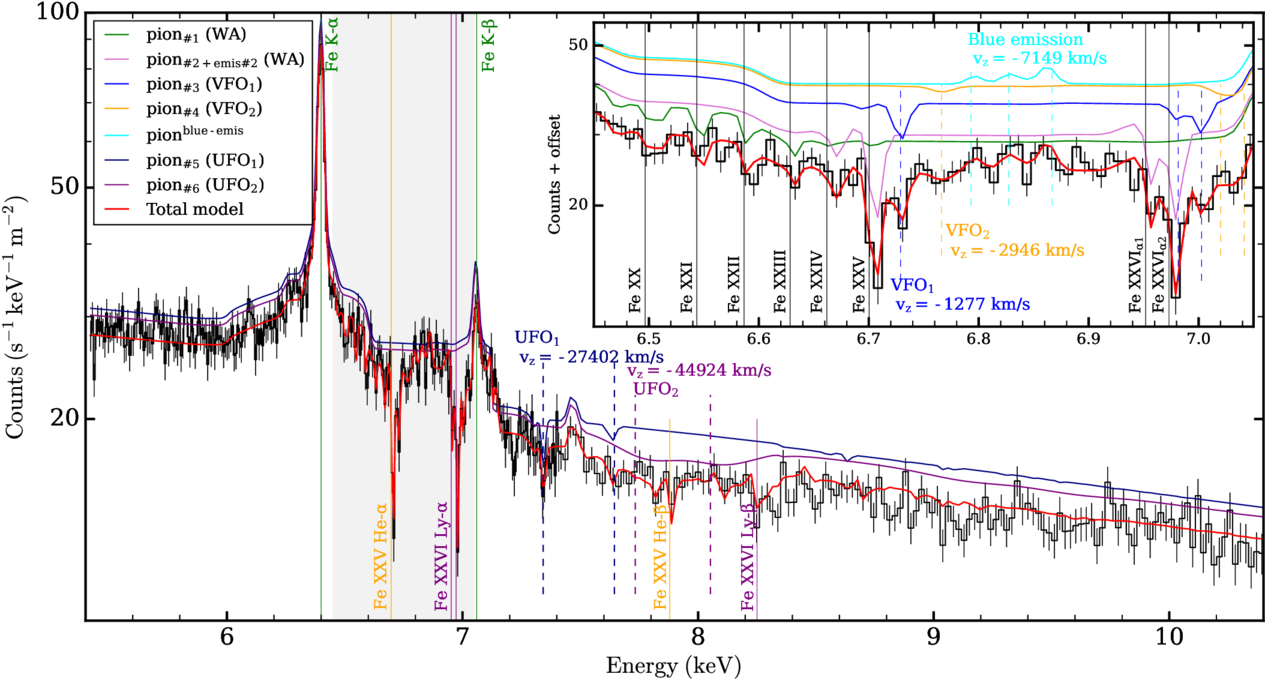
XRISM spectrum of NGC 4151, showing the multi-component model fit. Click to enlarge. [Xiang et al. 2025]
Xiang’s team modeled the array of absorption and emission lines in the XRISM spectra to tease out the properties of NGC 4151’s winds. They found that the best match to the spectra required up to six layers of absorbing material, showing that NGC 4151’s winds are highly structured. These absorbing layers took the form of slow warm absorbers (velocities between 100 and 1,000 km/s), very fast outflows (1,000–10,000 km/s), and ultra-fast outflows (10,000–100,000 km/s; up to one-third of the speed of light). While most of these components carry away mass as fast as or faster than the black hole accretes, some appeared to lack the oomph to escape the oncoming accretion flow, suggesting that they might be “failed” winds that curl back toward the AGN.
Being Blown Away
The data showed that the winds are likely magnetocentrifugally driven, meaning that material is lifted and accelerated from the surface of the disk along magnetic field lines as the disk rotates. For some of the wind components, especially warm absorbers emerging farther from the black hole, radiation pressure may be a driver as well.
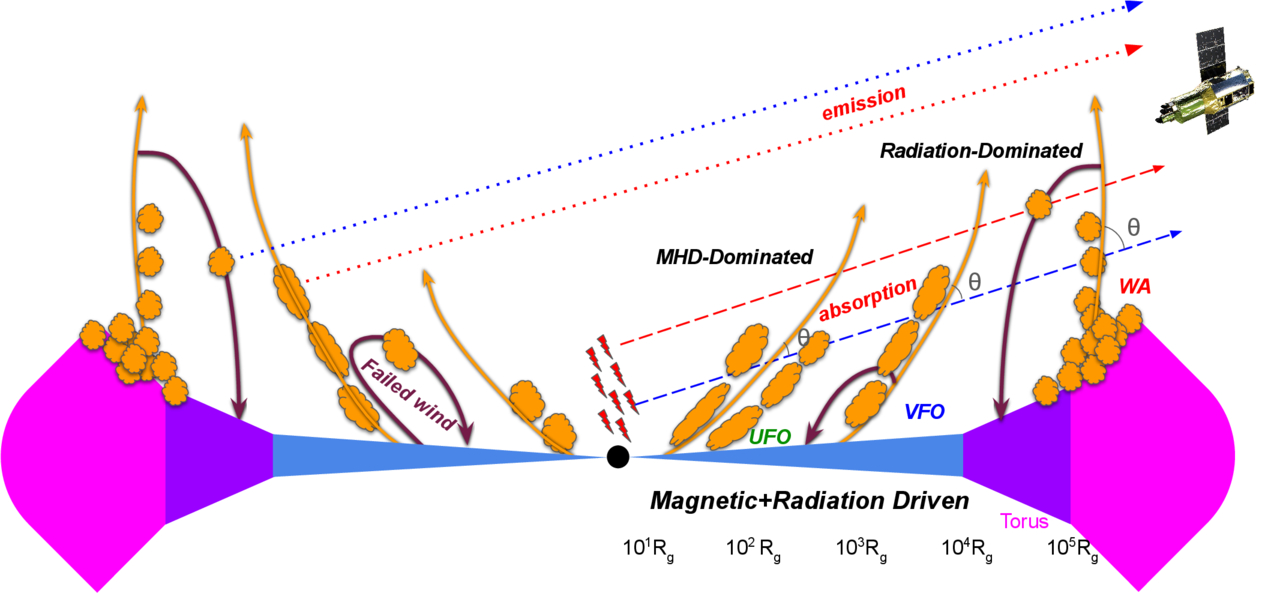
Diagram of the wind components of NGC 4151, including ultra-fast outflows (UFOs), very fast outflows (VFOs), and warm absorbers (WAs). [Xiang et al. 2025]
Citation
“XRISM Spectroscopy of Accretion-Driven Wind Feedback in NGC 4151,” Xin Xiang et al 2025 ApJL 988 L54. doi:10.3847/2041-8213/adee9b