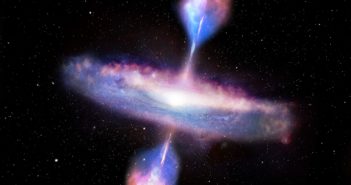
Clues from Quasars in the Early Universe
The most luminous objects in the universe can help us understand how supermassive black holes gained mass in the earliest galaxies.

The most luminous objects in the universe can help us understand how supermassive black holes gained mass in the earliest galaxies.
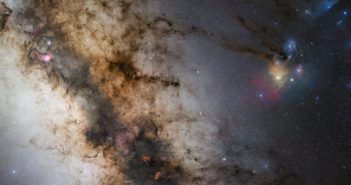
Astronomers study remarkably Sun-like stars to understand how the Milky Way gets its heavy metals.

Elusive black hole binaries can arise from isolated pairs of stars or in the heart of dense star clusters — and gravitational waves can reveal their secrets.
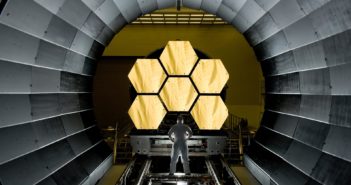
Astrobites reports on what JWST might bring for detections of biosignatures in the atmospheres of exoplanets.
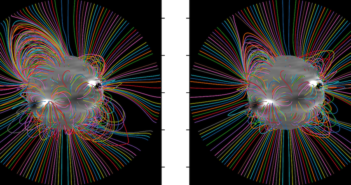
New models of the Sun’s magnetic field seek to solve a long-standing conflict between simulations and spacecraft observations.

What cosmic engine is accelerating particles to up to quadrillions of electronvolts?
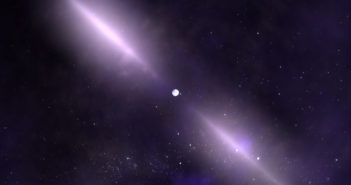
Astronomers put Einstein’s famous theory of gravity to the test using a type of extreme stellar remnant not yet discovered when the theory was published in 1915.

Astrobites reports on the retrograde orbits of K2-290A’s two close-in planets. Could dynamical interactions in this triple star system have caused this misalignment?
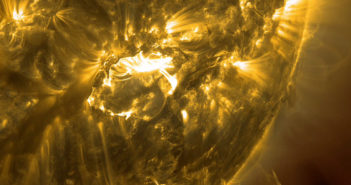
Can machine learning help researchers find the tell-tale signs of solar flares hidden in mountains of data?
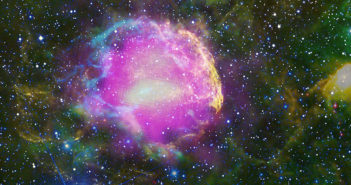
It’s a tale as old as time: explosion makes shock wave, shock wave accelerates electrons, electrons emit radio waves. Could this scenario explain everything from radio supernovae to ultra-luminous transient events?
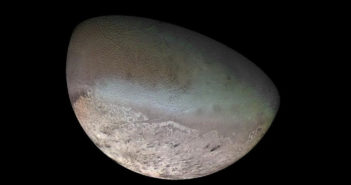
A focus issue of the Planetary Science Journal discusses missions and methods to explore the distant, icy, and potentially life-hosting ocean worlds in our solar system.
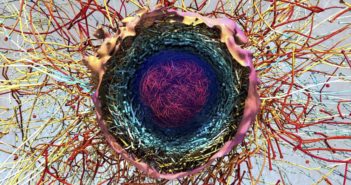
Astrobites reports on the magnetic fields in neutron stars — how do these ultra-dense stellar remnants get their strong magnetic fields, and why are their fields different from those of pulsars and magnetars?