AAS 248: Day 2
On Day 2 of AAS 248: roasted exoplanets, globular clusters, the cost of losing our dark night skies, and more.

On Day 2 of AAS 248: roasted exoplanets, globular clusters, the cost of losing our dark night skies, and more.
Day 1 of AAS 248 in Pasadena, CA: cosmology, early results from Rubin Observatory, a discussion of AI in astronomy, and much more!
AAS 248 in Pasadena, CA, is underway! Here are some education, outreach, and related sessions that you might want to check out at the meeting.
AAS Publishing will be attending the upcoming AAS meeting in Pasadena. Here’s where you can find the publishing team during the conference.
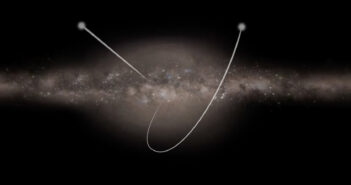
A recent study presents the first strong evidence of an old, low-mass hypervelocity star flung from the galactic center.

The gamma-ray burst GRB 250702B displayed several unusual behaviors that researchers are still finding ways to explain.
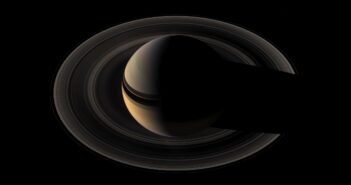
Astrobites reports on an explanation for the appearance of Saturn’s A ring.

Although 3I/ATLAS stayed clear of Earth during its passage through the solar system, astronomers repurposed a spacecraft around Mars for a good look as it flew by.
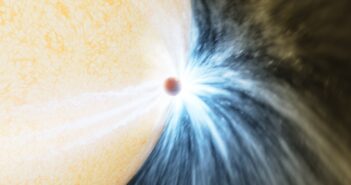
Stars gobbling up their close-in planets is likely common throughout the universe. Researchers explore the chemical signatures of these events and where they’re most likely to be seen.
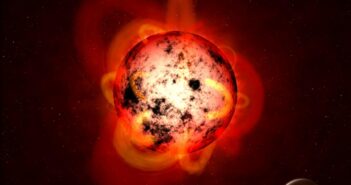
Astrobites reports on how researchers have taken advantage of the unique TOI-3884 system to directly probe a starspot with JWST.
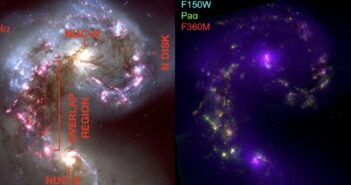
JWST peers through dusty, knotted gas to uncover young star clusters in the interacting Antennae galaxies.
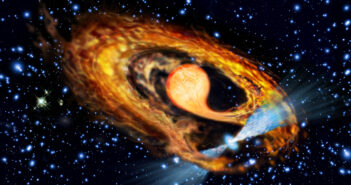
Researchers have discovered six faint millisecond pulsars by stacking FAST radio observations.