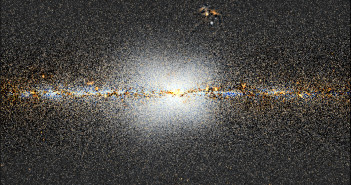
Featured Image: The Milky Way’s X
This contrast-enhanced image of the Milky Way from the WISE satellite reveals the X-shaped morphology of our galactic bulge.

This contrast-enhanced image of the Milky Way from the WISE satellite reveals the X-shaped morphology of our galactic bulge.
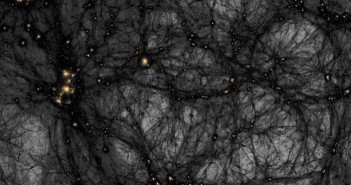
Is dark matter “cold”, “warm”, or “hot”? New observations are helping us identify what makes up our universe.
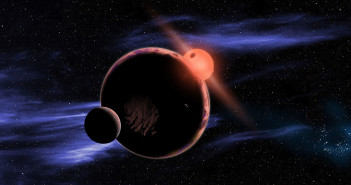
We’ve spent the last couple decades searching for planets around our nearest stellar neighbor, the red dwarf Proxima Centauri. Here’s a look at what we’ve learned so far.
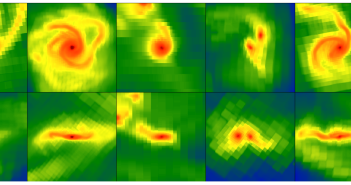
Astrobites reports on simulations of the first groups of stars in our universe, which reveal how these groups evolve and where they might be hiding in the local universe.
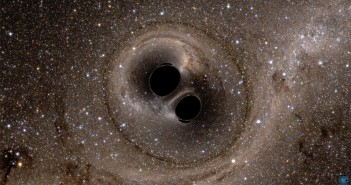
New research shows that mergers of charged black holes could generate a variety of observable signatures, from fast radio bursts to gamma-ray bursts.
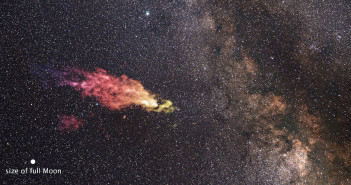
A new study finds evidence that a high-velocity cloud may have smashed into the Milky Way’s disk five million years ago.
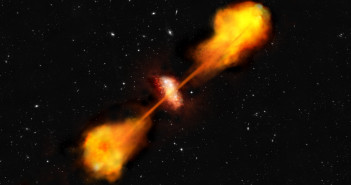
The unusual structure of a recently discovered radio galaxy gives scientists clues about its temperamental past.
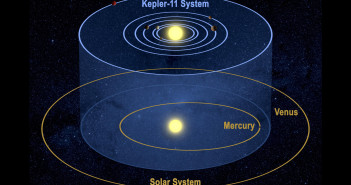
Why is Mercury’s orbit so large, compared to the close-in orbits of the planets observed in many exoplanetary systems? Astrobites reports on a recent study seeking to answer this question.
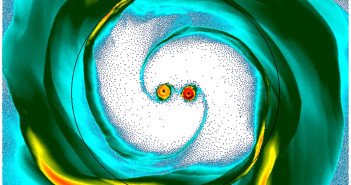
This image captures a scene from a simulation of a binary star system surrounded by a circumbinary disk.

Can we find life beyond Earth? A new experiment in the Search for ExtraTerrestrial Intelligence (SETI) has been conducted at the Murchison Widefield Array in Australia.
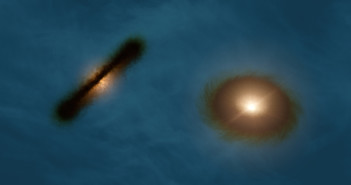
More than half of all stars are thought to be in binary or multiple star systems. But how do these systems form? The misaligned spins of some binary protostars might provide a clue.
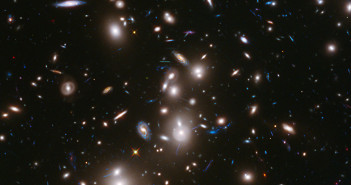
Astrobites reports on a study of nearby galaxies that mimic the properties of those found in the distant universe.