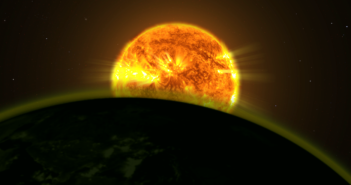
Modeling Limitless Skies
Astrobites reports on how we can better understand the signatures in exoplanet atmospheres — something that we can use in our search for life on other planets.

Astrobites reports on how we can better understand the signatures in exoplanet atmospheres — something that we can use in our search for life on other planets.
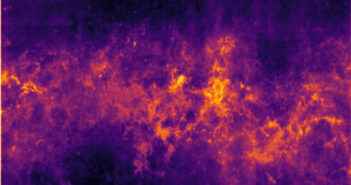
Gas and dust can get in the way of our view of the Milky Way’s center! A new study uses tens of millions of stars to map this extinction.
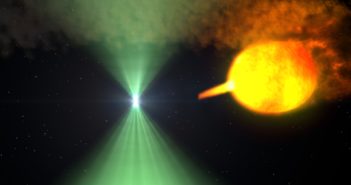
Astrobites reports on the unusually behaving pulsar PSR J1023+0038.
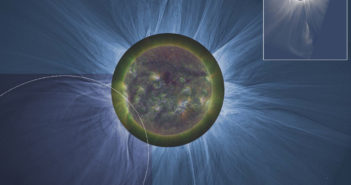
It seems like science is increasingly being done with advanced detectors on enormous ground- and space-based telescopes. One might wonder: is there anything left to learn from observations made with small telescopes?
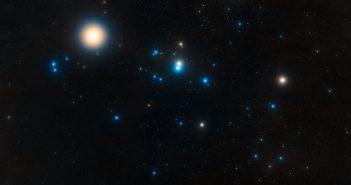
Astrobites reports on a new Neptune-like planet discovered orbiting in a close binary system.
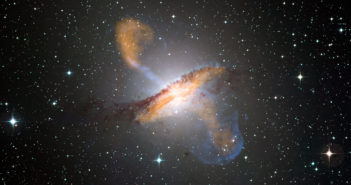
How do the supermassive black holes that live at the centers of galaxies influence their environments?
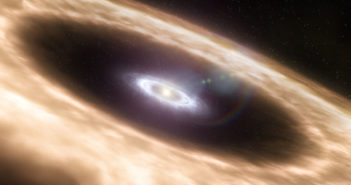
Growing a planet from a dust grain is hard work! A new study explores how vortices in protoplanetary disks can assist this process.
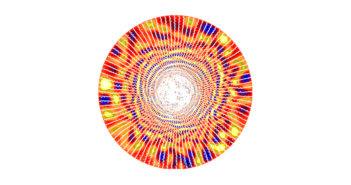
How do stars mix chemicals in their interiors, leading to the abundances we measure at their surfaces?
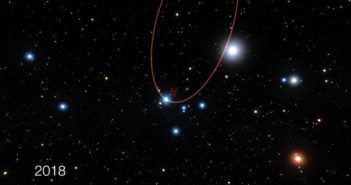
The most exciting discoveries in astronomy all have something in common: they let us marvel at the fact that nature obeys laws of physics. Astrobites reports on the star S0-2, one of these exciting discoveries.
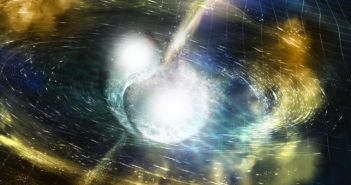
It’s rare that science progresses forward in a giant leap, with years of theories confirmed in one fell swoop. The simultaneous detection of a neutron-star merger in gravitational waves and photons marks one of these leaps.
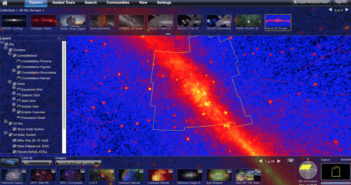
Astronomers, have you missed out on WorldWide Telescope (WWT) because you’re not on a Windows computer? Good news: WWT can now be accessed via a web interface.
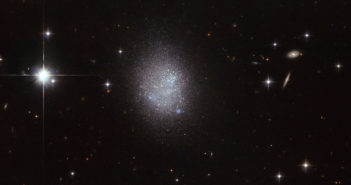
Taking advantage of a program offered by the National Radio Astronomy Observatory, an undergraduate class has observed local dwarf galaxies to learn about their properties.